Posts

Showing posts with the label Business

Baywatch Star Erika Eleniak's $1 Million OnlyFans Payday Saved Her From Eviction

Erika Eleniak — the Baywatch star whose $1 million OnlyFans payday saved her from eviction

Baywatch icon Erika Eleniak has opened up about the money troubles that nearly cost her home — and the unlikely $1 million payday that saved it. The 57-year-old actress says she went from an eviction notice to a seven-figure turnaround in a matter of months.

From Eviction Notice to $1 Million

Speaking on Tuesday's episode of the "Miss Understood" podcast, Eleniak said she was facing serious financial hardship before she launched her OnlyFans profile in August. Other jobs, she admitted, didn't seem "beneath" her — but they simply "weren't going to pay the rent." At one point, she received an eviction notice.

The subscription platform changed everything. TMZ reported she was earning $10,000 a week within weeks of launching, and by early November she had banked nearly $300,000 in just three months — putting her on pace to make roughly $1 million in her first year on the platform.

The Baywatch Comeback

Eleniak played lifeguard Shauni McClain on Baywatch from 1989 to 1992, becoming one of the show's original stars. She says she joined OnlyFans after years of fan requests, and now counts more than 1,100 subscribers. The comeback doesn't stop there: she is set to reprise her Baywatch role in a guest appearance on Fox's upcoming Baywatch reboot, scheduled to premiere January 6, 2027.

It's a reminder that even a '90s television icon can hit hard times — and that Eleniak turned a platform many dismissed into a lifeline, on her own terms.

Source: Page Six (Nov 18, 2026), reporting TMZ. Portrait image is an AI illustration.

Shah Rukh Khan's $1.78 Billion KKR Gets a New American Owner as Jay Mehta Sells a $400 Million Stake to Ares

Shah Rukh Khan's Kolkata Knight Riders — Jay Mehta sells a $400 million stake to Ares Management, valuing the IPL team at $1.78 billion

Shah Rukh Khan's Kolkata Knight Riders are getting a new American owner. Co-owner Jay Mehta is selling half of his stake in the three-time IPL champions to US investment giant Ares Management in an all-cash deal worth about $400 million — a transaction that values the franchise at a staggering $1.78 billion.

According to multiple sources cited by Cricbuzz, Mehta is transferring a 22.5% stake — exactly half of his 45% holding — to Ares, the Los Angeles-based firm that already owns stakes in Chelsea FC, the Miami Dolphins and Inter Miami. The deal is understood to be close to completion, pending formal approval from the Board of Control for Cricket in India (BCCI).

A $1.78 Billion Valuation

The price tag puts KKR among the most valuable franchises in world cricket. The $1.78 billion valuation lines up almost exactly with Sportico's recent independent valuation of $1.738 billion — and matches the $1.78 billion price paid for Royal Challengers Bengaluru, while sitting just above the $1.65 billion Rajasthan Royals deal.

The BCCI also stands to cash in. Under its rules, the board is entitled to 5% of the transaction value — roughly $20 million — and will carry out due diligence on Ares before giving the sale its formal approval.

Shah Rukh Khan Keeps Control

Bollywood's biggest star is not going anywhere. Shah Rukh Khan will keep his 55% majority stake in the franchise he has owned since 2007, when he joined Mehta and his actress wife Juhi Chawla to buy the team through Kolkata Knight Riders Sports Pvt Ltd in the IPL's first franchise auction.

Under their ownership, KKR have won the IPL three times — in 2012, 2014 and 2024 — and reached the final again in 2021. After the sale, Mehta and Chawla will hold 22.5% between them, while Ares takes the other 22.5%.

Ares' Growing Sports Empire

For Ares, KKR is the latest stop in a rapid global sports shopping spree — and not its first in cricket. The firm already co-owns Trent Rockets in England's The Hundred alongside Cain International.

American money has been pouring into the IPL since CVC Capital bought Gujarat Titans in 2022. Blackstone and Bolt Ventures have since invested in Royal Challengers Bengaluru alongside the Aditya Birla Group, and CVC sold Gujarat Titans to the Torrent Group last year while keeping a 33% minority stake.

The message from the market is clear: an IPL franchise is no longer just a cricket team — it is a billion-dollar asset, and the world's biggest investors want in.

Source: Cricbuzz (Nov 18, 2026); CricTracker; Sportico. Portrait image is an AI illustration.

Razon Barely Stays a Trillionaire as ICTSI Sheds ₱620 Billion From Its July Peak

Enrique Razon — the Philippines' richest man, barely holding on to trillionaire status as ICTSI sheds ₱620 billion

Enrique "Ricky" Razon Jr. is still a trilyonaryo — but only just. The Philippines' richest man has watched his flagship ports operator lose nearly a third of its value since July, and his fortune is now clinging to the trillion-peso mark.

Forbes estimated Razon's fortune at $16.7 billion as of November 17 — roughly ₱1.07 trillion. Just three months ago, he topped the 2026 Forbes Philippines rich list with a record $21.8 billion. That is a $5.1 billion slide in a single quarter, driven almost entirely by the sell-off in International Container Terminal Services Inc. (ICTSI), the company he chairs.

The ₱620 Billion Slide

ICTSI has shed about ₱620 billion in market value since July 20, when its shares closed at ₱1,027 and gave the company a record capitalisation of ₱2.07 trillion. By November 17, the stock was trading at ₱718 — a 30% decline that left ICTSI worth ₱1.45 trillion.

Razon is not standing by idly. The port operator has kept buying back its own shares through the downturn, repurchasing 400,000 shares for ₱290.72 million on November 16 at prices between ₱710 and ₱745. Cumulative buybacks now total 86.93 million shares worth ₱16.53 billion since the programme began in September 2015.

Still the Philippines' Most Valuable Company

Even after the rout, ICTSI remains the Philippine stock market's most valuable listed company — worth more than twice as much as the Sy family's SM Investments Corp., which had a market capitalisation of ₱662.03 billion.

And the business itself is far healthier than the share price suggests. ICTSI's nine-month profit jumped 20% to $899 million, with revenue up 24% to $2.9 billion, as newly added terminals in South Africa and Indonesia delivered. Razon's fortune is also cushioned by investments in gaming, energy and water infrastructure, helping keep him above the trillion-peso line even as ICTSI's share price falls.

For now, the richest Filipino keeps his trilyonaryo crown — but the margin has never been thinner.

Source: Bilyonaryo (Nov 18, 2026); Forbes; Inquirer. Portrait image is an AI illustration.

Billionaire David Hoffmann Offers Just $37 Million for 342 Radio Stations — Townsquare's Board Is Expected to Say No

David Hoffmann — billionaire offers $37 million for Townsquare Media's 342 radio stations

Missouri-born billionaire David Hoffmann has made one of the boldest lowball offers in media history: just $37 million in cash for all of Townsquare Media — the company behind 342 radio stations across 74 American markets.

Hoffmann's family company sent an unsolicited letter to Townsquare's board on Monday, offering $2.03 per share. That is roughly a 50% premium over the stock's $1.35 intraday price — but the shares have lost about two-thirds of their value in the past month, closing at just $1.28 on Monday and leaving the whole company worth only around $25 million on the market.

The $467 Million Problem

The headline price is not the real price. Townsquare carries $467.5 million in debt against just $4.6 million in cash, so any buyer would be taking on close to half a billion dollars of obligations. Hoffmann's letter puts the enterprise value at roughly $490 million and warns the company could face insolvency without a restructuring.

Hoffmann already owns 112,941 Townsquare shares bought on the open market. His letter says he has stopped buying shares in favour of bidding for the whole company.

The Board Is Expected to Say No

Townsquare chief executive Bill Wilson told trade publications the board "feels that it does not reflect the underlying value of the company" and expects to reject the offer once its review is complete.

The bid is Hoffmann's second big radio move this year. In June he agreed to pay $20 million for six Audacy stations in St. Louis, including the legendary news-talk station KMOX. If the Townsquare deal ever closed, his media empire would stretch to 193 newspapers and 360 radio stations.

Source: Radio & Television Business Report / Radio Ink

Image: AI illustration. This is a commentary post based on public reporting.

Jay-Z's Duetti Just Raised $665 Million to Buy Up Independent Music — Roc Nation's Catalog Bet Hits $1.3 Billion

Stylized illustration of hip-hop mogul Jay-Z in a tailored suit before a wall of vinyl records — Jay-Z's Roc Nation-backed Duetti raised $665 million

Duetti Inc., the music investment company backed by Jay-Z's Roc Nation, has secured $665 million in fresh financing to buy up more independent music catalogs — the latest sign that song royalties have become one of Wall Street's favourite alternative assets.

The deal, announced on Tuesday, takes Duetti's total funding past $1.3 billion since the company was founded in 2022, and it is the biggest music-rights financing of its kind this year.

A $450 million securitization anchored by Carlyle

The centrepiece of the package is a $450 million asset-backed securitization anchored by global investment firm Carlyle. Viola Credit added $165 million of credit capacity, and a $50 million side facility came from Flexpoint Ford and Truist Bank. Barclays arranged the deal alongside Truist.

It is Duetti's third asset-backed securitization in two years — and more than five times the size of its first deal in 2024, a sign of how fast institutional money is moving into music royalties.

From $1.3 billion raised to 50,000 songs

Duetti has now made more than 1,600 catalog investments and owns over 50,000 masters and compositions representing the works of more than 3,000 recording artists. The company says it has partnered with artists, songwriters and other rights owners from over 50 countries.

Unlike the big catalog buyers chasing superstar estates, Duetti focuses on independent artists, buying portions of catalogs rather than full ownership, then managing and marketing the rights and earning from streaming and licensing.

Why billionaires and Wall Street want song rights

Music royalties pay out every time a song is streamed, licensed or played — steady, recurring income that does not move with the stock market. Carlyle's head of asset-backed finance, Akhil Bansal, said independent music royalties can generate "recurring, diversified cash flows" that suit asset-backed financing.

Jay-Z, hip-hop's first billionaire with a Forbes-estimated $2.8 billion fortune, founded Roc Nation in 2008 and has built a business portfolio spanning music, sports, entertainment and investments. Duetti, backed by Roc Nation and investment firm The Raine Group, is his latest bet on music as an asset class.

What happens next

Duetti says the new capital will "significantly accelerate the pace and breadth" of its investments across genres, geographies and types of music rights — as competition for valuable song catalogs intensifies, with private equity groups including Carlyle, Blackstone and Apollo all increasing their exposure to music royalties.

Source: Music Business Worldwide / PRNewswire, November 17, 2026. Image: AI illustration.

Ramaphosa Tells Musk to 'Give Back' to South Africa — the R12 vs R1 Schooling Gap Behind the Starlink Standoff

South African President Cyril Ramaphosa challenges billionaire Elon Musk to give back to South Africa — apartheid spent R12 on Musk's schooling for every R1 on his own, while Starlink stays locked out

South Africa's president has a message for the world's richest man: remember where you came from — and give something back. Speaking in California on Monday, Cyril Ramaphosa told ABC News that Elon Musk owes much of his success to the education he received growing up in South Africa, and that the billionaire should help develop the country he left at 17.

The R12 vs R1 line

Ramaphosa put it in stark numbers. "When the apartheid government spent R12 on his education, it spent R1 on my education," he said, arguing Musk has never fully grasped what apartheid did to Black South Africans. "I have met Elon Musk in the past, and I've been awed by his brilliance, but also I would like to chat to him about him remembering his country, because even as one is a citizen of a new country, you should still be loyal to your old country." His message to Musk in the room: "What you've become today is from your own origins, where you were initially educated... he should be one of those who would say, I would like to contribute to the development of South Africa and give back to this country."

Why Starlink still can't launch in South Africa

The clash sits on top of a long-running business standoff. Starlink still has no licence to operate in South Africa: the law requires individual licence-holders to have at least 30% ownership by historically disadvantaged groups, and SpaceX has refused to give up a 30% stake in its local operation. Musk has called the ownership rules "openly racist ownership laws." Communications minister Solly Malatsi has pushed an alternative — equity-equivalent investment instead of a share transfer — and Starlink has offered to connect 5,000 rural schools, but the regulator says changing the rules needs an act of parliament, and a business lobby group took the dispute to court on November 9. A meeting between Ramaphosa and Musk was discussed during the president's Silicon Valley visit — but their diaries did not line up.

Source: ITWeb. The portrait image above is a stylized AI illustration, not a photograph of Cyril Ramaphosa or Elon Musk.

Billionaire Tony Elumelu Just Bought $70 Million More of Seplat Energy — His Stake Is Now Worth $1.6 Billion

Tony Elumelu — the Nigerian billionaire just bought $70 million more of Seplat Energy, lifting his stake to 22.05%, now worth $1.6 billion

Nigerian billionaire Tony Elumelu is doubling down on the company at the heart of his oil empire. His investment vehicle, Heirs Energies, has bought another 5,888,341 shares in Seplat Energy Plc for about N98 billion — roughly $70 million — taking the Heirs Holdings Group's total holding to 22.05% of Nigeria's biggest listed oil producer.

A $1.6 Billion Bet on Nigerian Oil

The purchase lifts Elumelu's total Seplat holding to a value of about $1.6 billion. It is the second major top-up in two months: Heirs Energies bought a similar tranche of around $70 million on September 30. Seplat's shares have been on a tear — closing at N16,241.90 on Monday, nearly triple the N5,809 they traded at the end of 2025.

From Largest Shareholder to Chairman

Elumelu's Seplat journey began on December 31, 2025, when Heirs Energies agreed to buy the entire 20.07% stake held by French oil group Maurel & Prom for about $500 million, making Heirs the company's largest single shareholder. He joined Seplat's board as a non-executive director in January 2026, and in June the company announced he will become Chairman on January 1, 2027.

Why It Matters

With the stake now above 22% and the chairmanship weeks away, Elumelu is moving from investor to operator-in-chief of one of Africa's most valuable energy companies — a bet that Nigeria's oil story still has a long way to run.

Sources: Billionaires.Africa and Nairametrics (November 17, 2026). Image: AI illustration.

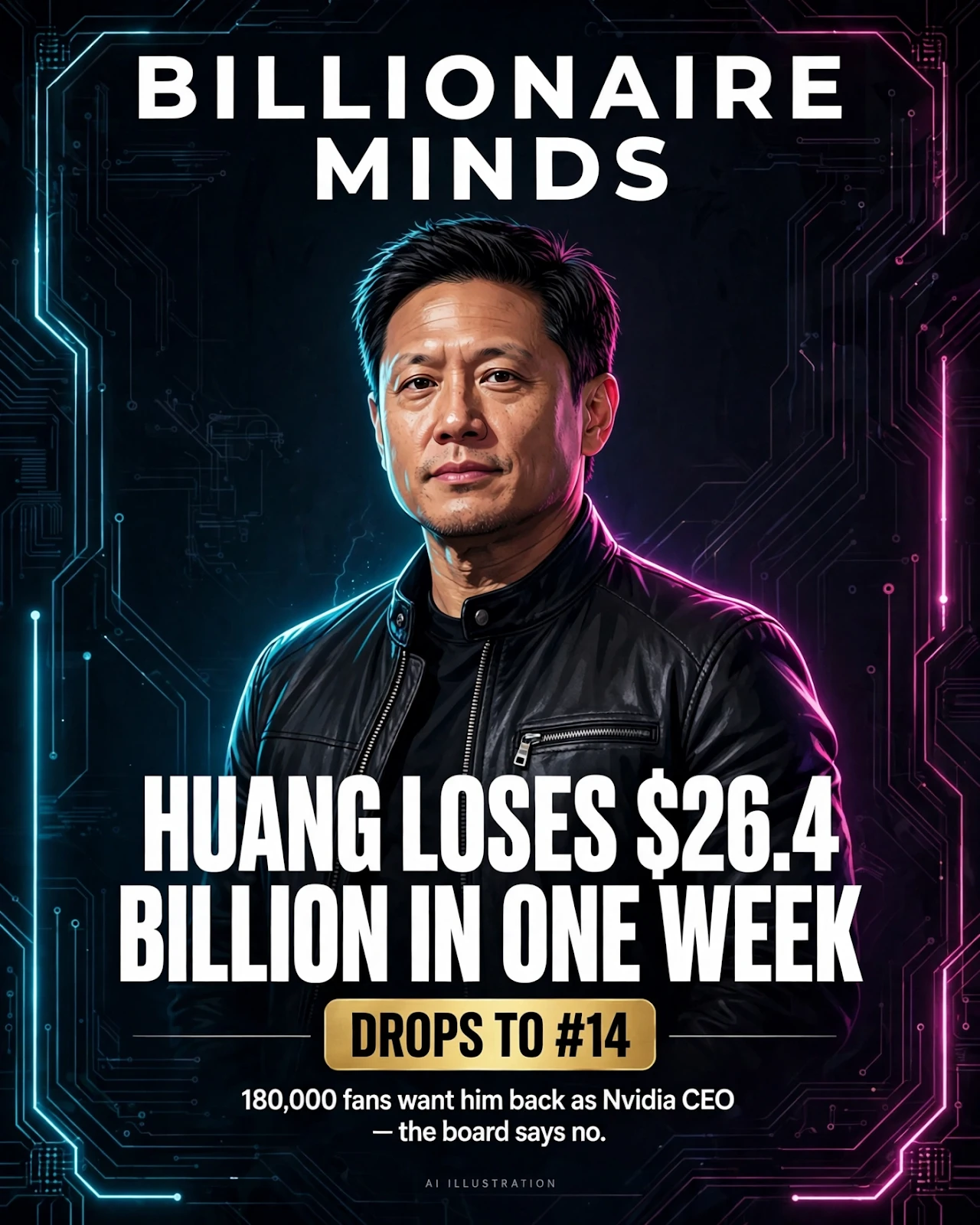
Jensen Huang Just Lost $26.4 Billion in a Week — Now 180,000 People Want Him Back as Nvidia CEO

Jensen Huang — the former Nvidia chief lost $26.4 billion in a week, dropping to No. 14 on Forbes' list, while 180,000 fans petition for his return as CEO.

Jensen Huang's fortune took another hit on Monday. The former Nvidia chief lost $6.1 billion in a single day as the chipmaker's shares slid about 4%, taking his net worth to $135.8 billion — down $26.4 billion in a week. Huang stepped down as CEO last Thursday after an investigation into his relationships with employees and a suspected Chinese intelligence asset.

A Brutal Week on the Forbes List

The slide has been relentless: minus $7.4 billion last Monday, minus $8.4 billion on Tuesday, a $5.9 billion recovery on Wednesday, then minus $8.2 billion on Thursday and minus $3.1 billion on Friday. His fortune is down 16.3% from $162.2 billion on November 9, and he has slipped six places on Forbes' ranking, landing at No. 14, behind Walmart heiress Alice Walton.

180,000 People Want Him Back

Yet while the market keeps punishing him, a campaign is demanding his return. The "Stand With Jensen" petition had attracted more than 180,200 signatures by Monday, with Elon Musk, Replit CEO Amjad Masad and Epic Games CEO Tim Sweeney listed among its supporters. It also claims more than 8,800 signatories as Nvidia employees and over 94,000 as shareholders — though those affiliations are self-reported and unverified.

The Board Says No — for Now

The campaign has not changed the board's position. Three people familiar with the matter told Reuters that Nvidia is not considering bringing Huang back. Nvidia reports its third-quarter earnings today — its first under new CEO Colette Kress, after guiding to revenue of about $108 billion.

Sources: The Economic Times, The Sunday Guardian Live. The portrait image above is a stylized AI illustration, not a photograph of Jensen Huang.

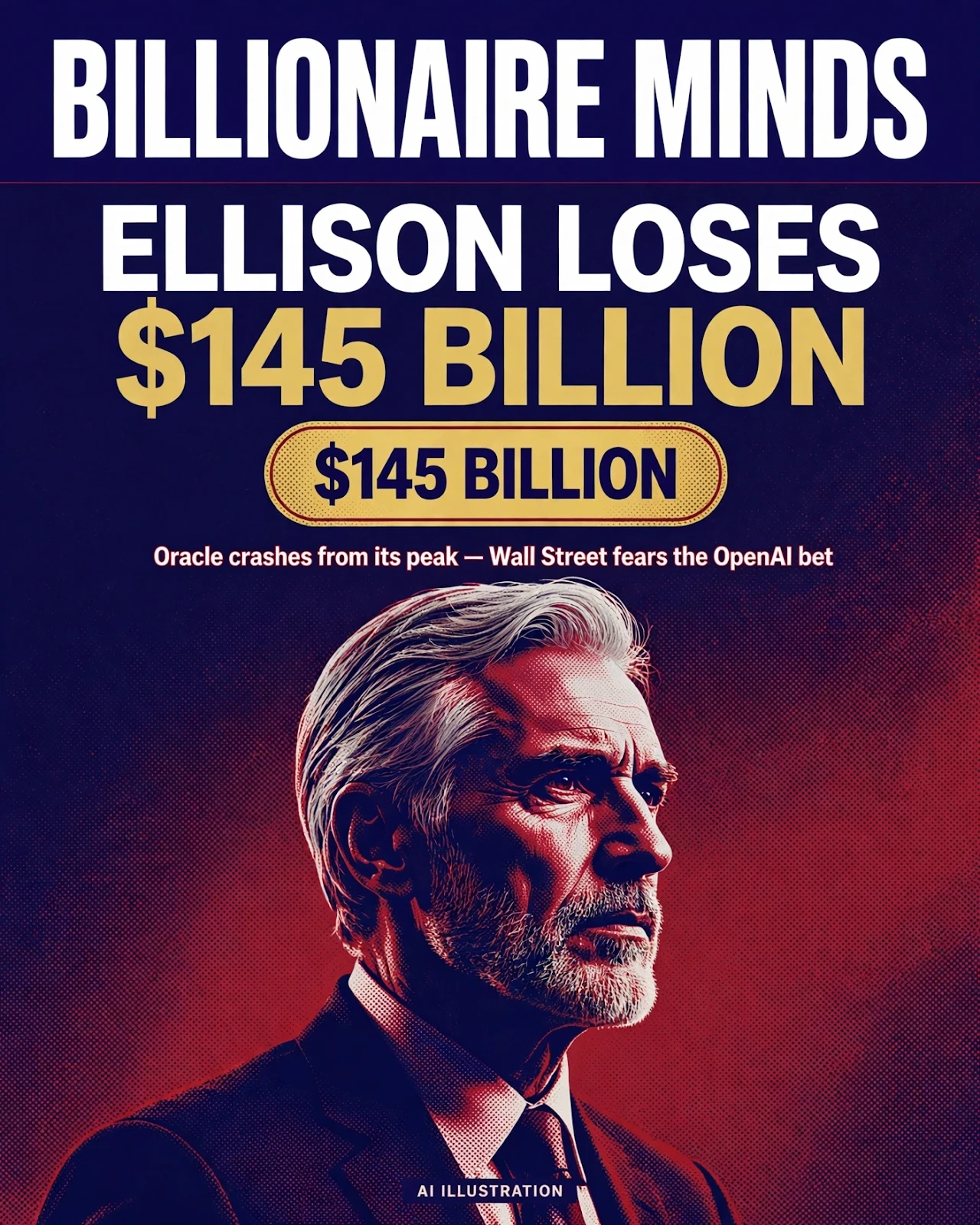
Larry Ellison Has Lost $145 Billion as Oracle Crashes From Its Peak — Wall Street Fears the OpenAI Bet

Larry Ellison — Oracle's co-founder has lost about $145 billion as Oracle stock crashes from its peak, with Wall Street worried about its OpenAI bet.

Larry Ellison, the co-founder of Oracle, has watched roughly $145 billion of his fortune evaporate as Oracle's stock crashes from its peak. The Motley Fool reports the wipeout is tied directly to Ellison's enormous stake in the company — about 1.16 billion shares, roughly 40% of Oracle, making him its largest shareholder by far.

Oracle's Slide Keeps Getting Worse

Oracle's shares are down roughly 44% over the past year and about 50% from their high, and the slide is still going — the stock fell another 4.99% on Monday, November 16, closing at $119.09. Just two weeks ago, Forbes had Ellison at $153.3 billion and ranked 11th richest in the world after Oracle dropped 7% in a day. Since then, the sell-off has only deepened.

The $300 Billion OpenAI Question

Wall Street's worry is not just the share price — it is what Oracle is betting on. The company reported a backlog of roughly $664 billion at the end of last quarter, and at least $300 billion of it is widely estimated to come from a single customer: OpenAI, the maker of ChatGPT. That means around half of Oracle's contracted future business depends on one company. If OpenAI ever scaled back or walked away, much of that backlog could be voided — cancellation fees would help, but there is no guarantee the contracts are ever fulfilled.

Growth Is Real — So Is the Spending

Oracle's business is still growing fast: revenue rose 30% to $19.3 billion in its latest quarter, cloud sales jumped 62% to $11.6 billion, and earnings per share climbed 30%. But the AI build-out is burning cash — Oracle spent $28 billion on data centres last quarter against $23 billion of operating cash flow, leaving free cash flow of roughly negative $5 million. The company expects $90–95 billion of capital spending this year, carries about $125 billion of debt, and will likely keep posting negative free cash flow in the near term. For Ellison, whose fortune is tied to Oracle's shares, that spending spree is the price of the AI bet — and the reason $145 billion has already vanished.

Source: Motley Fool. The portrait image above is a stylized AI illustration, not a photograph of Larry Ellison.

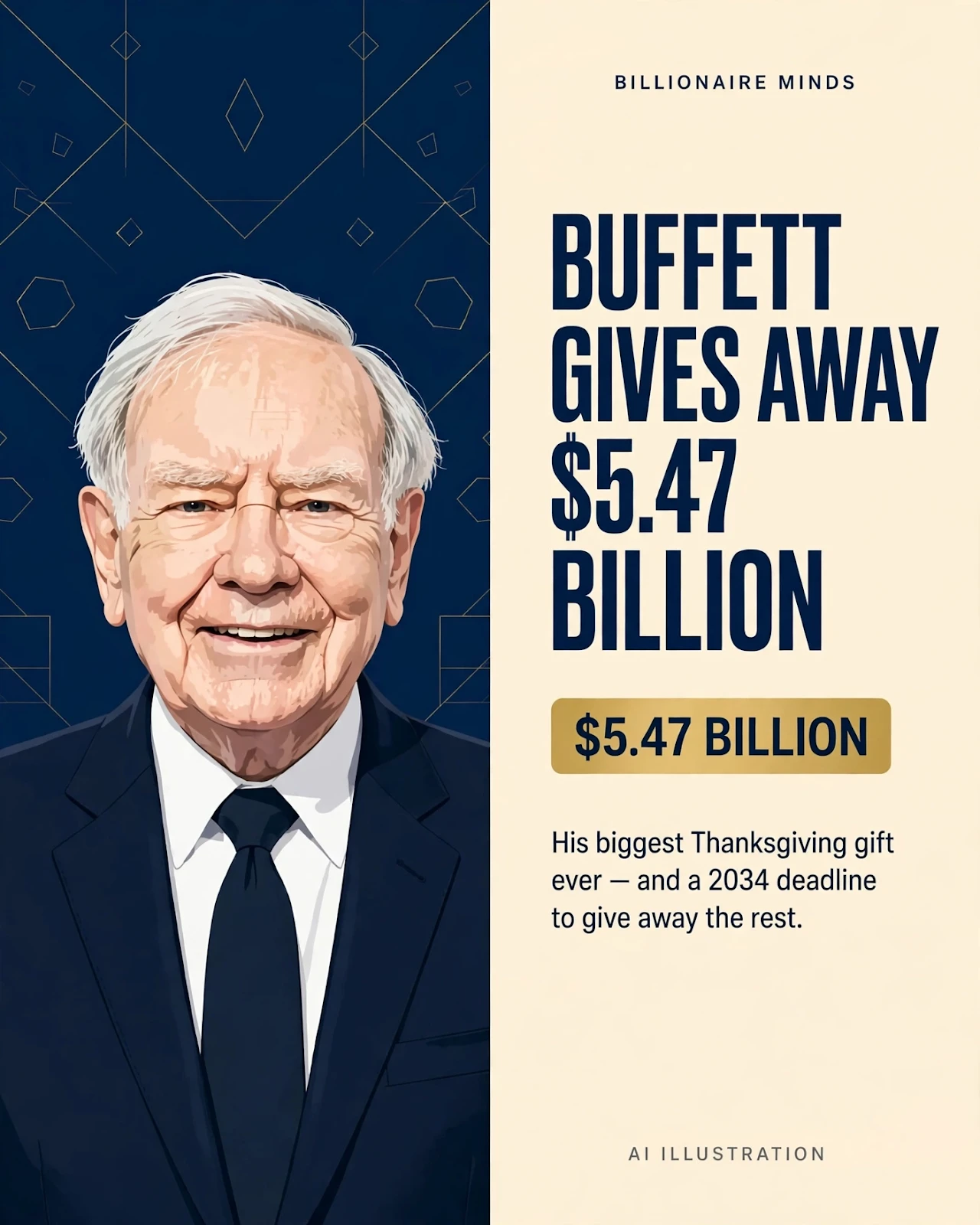
Warren Buffett Just Gave Away $5.47 Billion — and Set a 2034 Deadline to Give Away the Rest

Warren Buffett — the 96-year-old Berkshire Hathaway chairman emeritus — just gave away $5.47 billion of Berkshire stock to four family foundations

Warren Buffett just gave away $5.47 billion in a single day — and he has set a hard deadline to give away the rest. The 96-year-old Berkshire Hathaway chairman emeritus announced the gift in his annual Thanksgiving message to shareholders on Monday, November 16, calling it his biggest Thanksgiving donation ever: roughly four times the size of last year's.

The gift is 9,225,000 Berkshire Class B shares, created by converting 6,150 Class A shares. At Friday's closing price of $592.94 per B share, the donation is worth about $5.47 billion. Buffett also used the message to reassure shareholders about the company he built over 60 years, saying his confidence in Berkshire remains "as strong as ever" — and backing his successor, chief executive Greg Abel, who took over at the end of 2025.

Where the $5.47 Billion Goes

The shares go to four foundations run by Buffett's family. The Susan Thompson Buffett Foundation, named after his late first wife, receives the largest share — 3,690,000 shares, or 40% of the gift. The Sherwood Foundation, the Howard G. Buffett Foundation and the NoVo Foundation each receive 1,845,000 shares. The foundations are led by his children Susie, 73, Howard, 71, and Peter, 68. Including a separate donation of nearly $6 billion in July, Buffett has now given about $11.4 billion to the four charities in 2026 alone, taking his total giving to them past $29 billion.

A 2034 Deadline for the Rest

Buffett has given away more than 60% of his original Berkshire stake since 2006, yet he remains the company's largest individual shareholder. After this donation he still owns 182,140 Class A shares and 1,162 Class B shares, worth more than $160 billion. He has set a firm deadline to distribute the rest "one way or the other by December 31, 2034." The Bill & Melinda Gates Foundation, which has received more than $47 billion of Berkshire stock from Buffett since 2006, was not included in this latest gift. Berkshire shares rose about 0.4% in early trading on Monday and are up almost 20% for the year.

Source: Reuters / The Times of India, November 16, 2026. This is a fan/commentary summary of reported news; all figures are the sources' estimates. Image is an AI illustration.
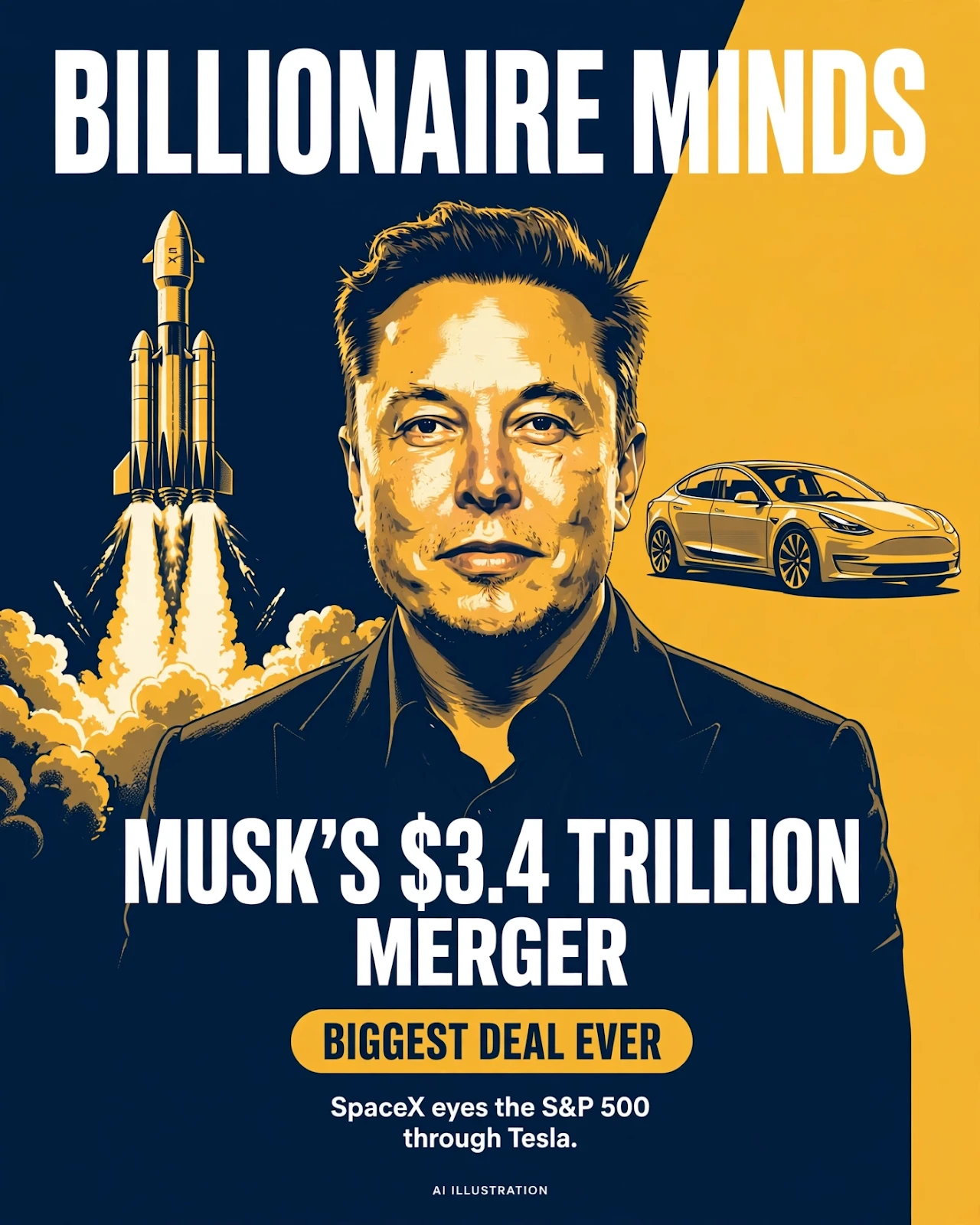
Elon Musk's SpaceX–Tesla Merger: A $3.4 Trillion Deal to Sneak SpaceX Into the S&P 500

Elon Musk's SpaceX and Tesla merger — a $3.4 trillion deal that could sneak SpaceX into the S&P 500

Elon Musk is chasing the biggest deal in corporate history — and the prize is a backdoor into the S&P 500. The world's richest person is pushing to merge SpaceX with Tesla, a combination worth about $3.4 trillion that would dwarf every merger ever attempted.

The logic, reported by Bloomberg on November 14, is simple. Tesla has been an S&P 500 member since December 2020, while SpaceX — which listed on Nasdaq in June — was refused a fast track into the index. Folding the rocket company into Tesla would hand it the membership it could not win alone, and index membership matters: trillions of dollars in index funds automatically buy member stocks.

A December Announcement?

Talks have moved faster in recent weeks, and an announcement could come as early as December, according to a November 12 report. Musk wants a deal that can close while President Donald Trump is still in office, Bloomberg reported in October. Both boards have set up special committees, and analysts at JPMorgan Chase expect an all-stock deal led by SpaceX. The pair were worth about $3.7 trillion combined in October; a slide in SpaceX shares since the US midterm elections has trimmed that to about $3.4 trillion.

Who Holds the Cards

Musk owns about 42% of SpaceX and controls more than 80% of its votes, so approval there is not in doubt. The harder sell is Tesla, where he holds about 20% and shareholders will have the final say — Musk himself has warned that winning them over could be difficult, and no terms have been agreed. The companies already work closely together, including a $16.8 billion joint chip plant in Texas, and SpaceX absorbed Musk's AI company xAI before its listing. Musk, 55, calls the merger a "good idea" — while comparing the negotiations to "tap dancing through a minefield."

Source: Bloomberg / The New York Times, November 16, 2026. This is a fan/commentary summary of reported news; all figures are the sources' estimates. Image is an AI illustration.
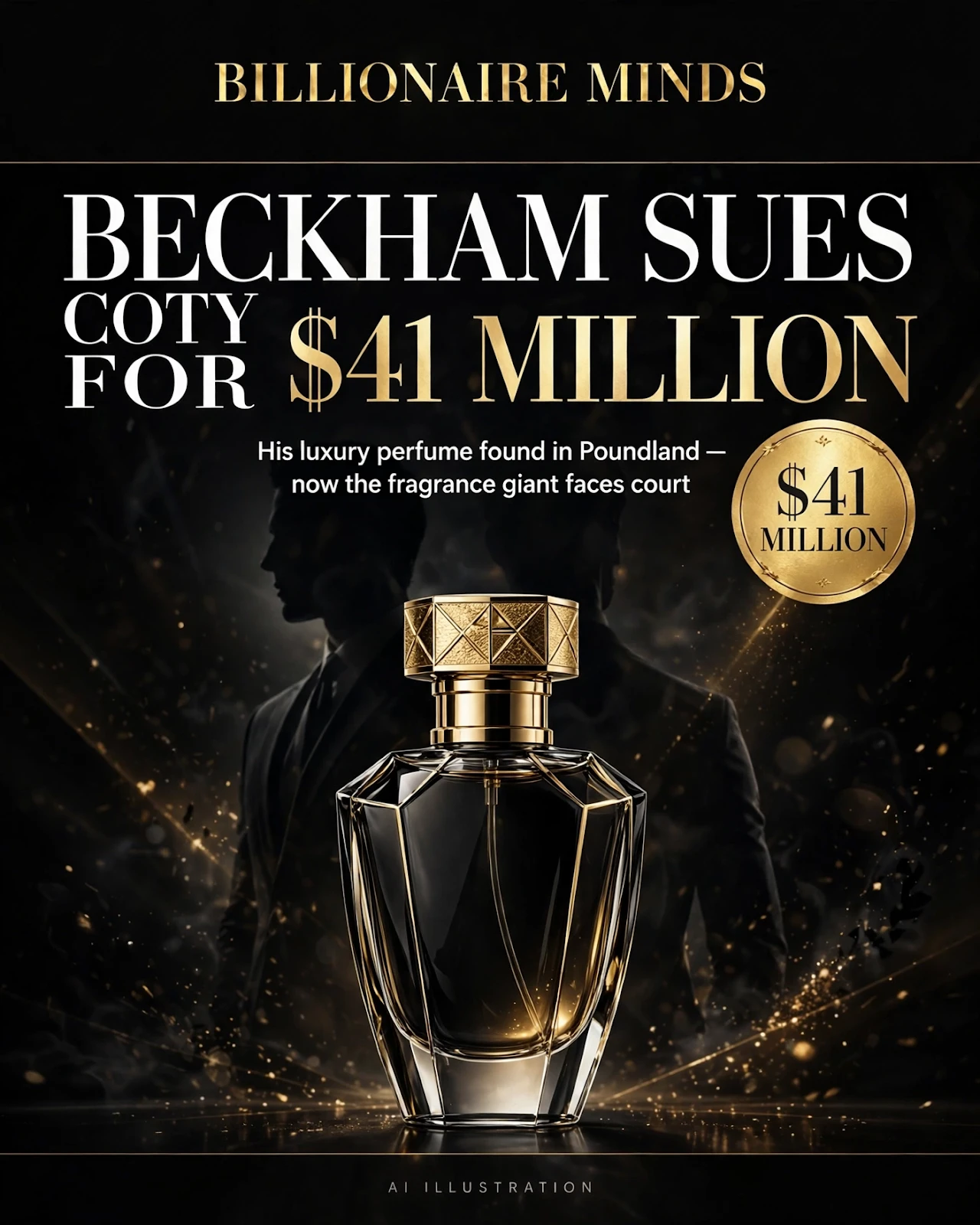
David Beckham Sues Coty for $41 Million After His Fragrance Turns Up in Poundland

David Beckham sues Coty for $41 million after his luxury fragrance was found on sale in Poundland and petrol stations

David Beckham spent decades building his name into a luxury brand — then found his own perfume in a Poundland bargain bin. Now he is suing the company behind it for $41 million.

Beckham's company, DB Ventures, has sued fragrance giant Coty in the New York Supreme Court, alleging the firm sold his perfumes and aftershaves through shops that were never approved — including the UK budget retailer Poundland and petrol stations. Court papers describe Beckham's "shock and dismay" at discovering his fragrances "in a bargain bin inside a gas station", according to reports in The Times and The Guardian.

$24 Million Through Unapproved Channels

The lawsuit alleges Coty sold at least $24 million (£18 million) of Beckham products through what the claim calls "unapproved distribution channels" — a move the papers say reflected "desperation and greed". DB Ventures also accuses Coty of under-reporting net sales by $123 million, which it says cost it $6 million in unpaid royalties. Coty has produced more than 30 — by some counts 45 — David Beckham fragrances over a partnership lasting more than a decade, each selling for around £20 a bottle.

Coty Denies It — and Blames a Rival Deal

Coty denies that Beckham fragrances were ever sold through Poundland and has filed a defence asking the court to dismiss the case, arguing its contract gives it the right to decide where the range is distributed. The company says the lawsuit is an attempt by DB Ventures to end the licensing arrangement early and move the business to rival Interparfums, which announced a 20-year exclusive licence for Beckham fragrances in January, taking effect in 2028 when the Coty agreement expires. The allegations remain unproven and the court has not yet ruled on Coty's request to dismiss. For Beckham — whose family brand empire, DRJB Holdings, paid him a $51 million dividend this year — the fight is about protecting a luxury image he has spent a career building.

Source: The Times / The Guardian, November 16, 2026. This is a fan/commentary summary of reported news; all figures are the sources' estimates. Image is an AI illustration.
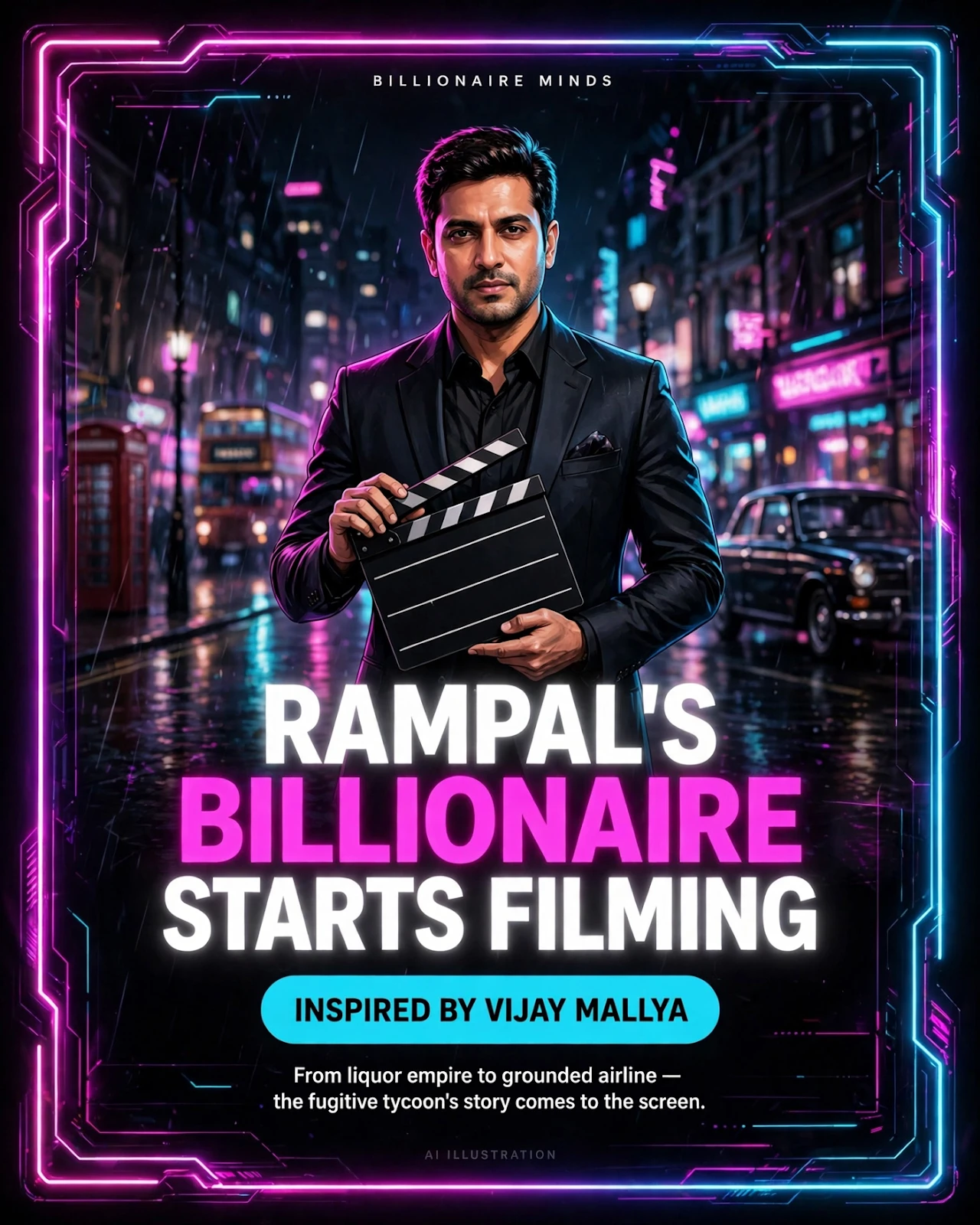
Arjun Rampal Starts Filming 'Billionaire' — the Web Series Inspired by Fugitive Tycoon Vijay Mallya

Arjun Rampal — filming 'Billionaire' in London, a web series loosely inspired by fugitive tycoon Vijay Mallya

Arjun Rampal has started filming Billionaire, a new web series loosely inspired by the life of fugitive tycoon Vijay Mallya — and cameras began rolling in London on Monday, November 16, 2026.

Rampal shared the moment himself, posting a video from his car on the way to the set. "Greetings from London. First day of shoot today, day one of 'Billionaire'. Very, very special show and something I'm really, really excited about," he said. "Woke up at 5 am, went to the gym, and now heading to shoot. We're in cold London."

The show: one tycoon's rise, from liquor to aviation

Billionaire is directed by Hansal Mehta and Robby Grewal, with Anubhav Chopra and Shantanu Sagara on writing duties. Rampal plays Viraj Shenoy, a powerful businessman who builds a liquor empire and then bets it all on an airline — a journey the makers describe as exploring ambition, power, wealth, and the personal cost of building a business empire.

It is the same arc that made Mallya famous — and then infamous. The series is fictionalised and "loosely inspired" by his life, not a documentary, but the parallels are the whole point.

The real tycoon behind the fiction

Mallya once headed the United Breweries Group and launched Kingfisher Airlines in 2005. The airline stopped flying in 2012, leaving behind loans of more than ₹9,000 crore (roughly $1.1 billion) from a 17-bank consortium led by the State Bank of India. Mallya left India for London in March 2016; a UK court ordered his extradition in December 2018, and he remains in the UK as of 2026 while the legal process continues. He denies any wrongdoing.

Indian authorities say more than ₹14,000 crore has since been recovered from his seized assets — more than the debt adjudicated by the Debt Recovery Tribunal.

Why this one matters

Mehta is the director behind the acclaimed Scam 1992, the series that turned a stock-market scandal into appointment viewing — so a prestige dramatisation of India's most famous business fall was only a matter of time. With filming now under way in London, the city where Mallya himself has lived since 2016, the story has come full circle: the fugitive tycoon's rise and fall is now the drama.

Source: News18 (IANS), November 16, 2026. This is a fan/commentary summary of reported news; all figures are the sources' estimates. Image: AI illustration.

Billionaire John Fisher Exits MLS — Sells the San Jose Earthquakes for $625 Million

Billionaire John Fisher sells the San Jose Earthquakes and PayPal Park for $625 million to Alden Global Capital co-founder Heath Freeman.

Billionaire John Fisher is out of Major League Soccer. The Gap heir has agreed to sell the San Jose Earthquakes — and their home stadium, PayPal Park — to Heath Freeman, co-founder and president of Alden Global Capital, in a deal valued at $625 million.

The sale was announced on Friday afternoon, November 13, and Major League Soccer's Board of Governors has already approved it unanimously. The deal is expected to close in the coming weeks, ending Fisher's nearly two-decade run as an MLS owner.

A $625 million exit — and a 31x return on the expansion fee

The club did not disclose financial terms, but a source familiar with the matter confirmed the $625 million enterprise value to Front Office Sports. Sportico first reported the deal and the valuation. The price sits above both Forbes' $550 million valuation of the club and Sportico's own $585 million estimate — a premium for one of MLS's founding franchises.

Fisher and his partners paid just a $20 million expansion fee to bring the Earthquakes back in 2007, two years after the original club relocated to Houston and became the Dynamo. On the $625 million valuation, that is more than a 31-fold return on the original fee — before counting the roughly $150 million spent building PayPal Park, which opened in 2015 and is included in the sale.

Who is buying — and what Fisher does next

Heath Freeman has led Alden Global Capital as president since 2014. The New York investment firm is best known as the second-largest newspaper publisher in the United States, with holdings including the Chicago Tribune, the Denver Post and the New York Daily News. Freeman is buying the club as an individual, and will become the Earthquakes' principal owner and represent the team on the MLS Board of Governors.

For Fisher, the sale closes a chapter that began with the sale process he launched in June 2025, when he hired investment bank Moelis & Co. to find a buyer. The Gap heir — whose family fortune comes from the retail empire founded by his parents — also owns Major League Baseball's Athletics, who left Oakland and now play in Sacramento while a new stadium is built for them in Las Vegas.

The Earthquakes finished fourth in the Western Conference this season (14-10-10, 52 points) and qualified for the 2026 MLS Cup Playoffs under manager Bruce Arena, facing Houston Dynamo FC in Round One.

Source: Front Office Sports, November 13, 2026; Sportico. This is a fan/commentary summary of reported news; all figures are the sources' estimates.

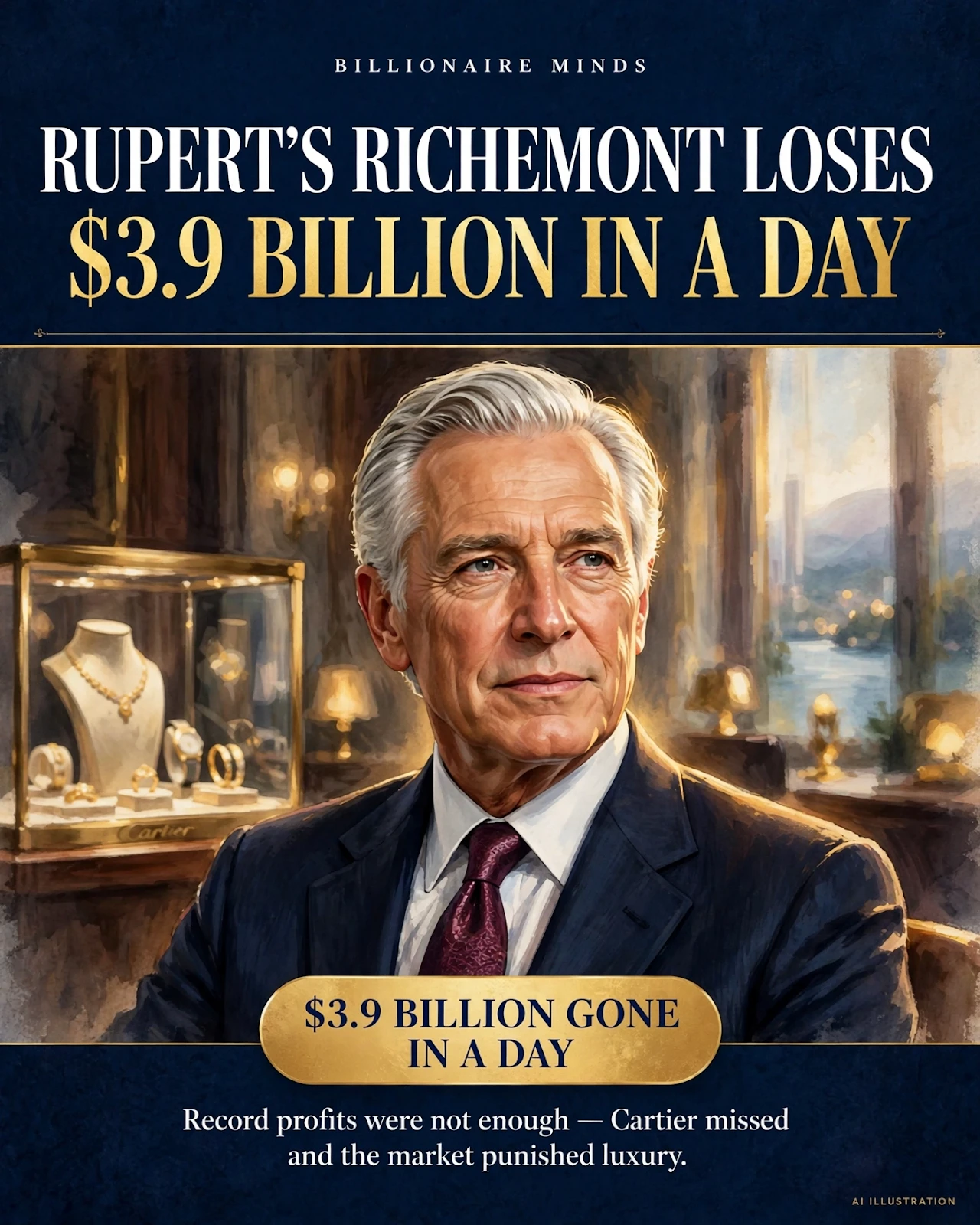
Luxury Billionaire Johann Rupert's Richemont Loses $3.9 Billion in a Day — Despite Record Profits

Johann Rupert — the luxury billionaire whose Richemont lost $3.9 billion in a day despite record profits

Johann Rupert's Richemont just delivered the strangest result of the luxury season: record profits — and a $3.9 billion wipeout on the same day. The Swiss luxury giant behind Cartier lost R65.82 billion of market value on Friday, November 13, after its shares slid 3.14%, having fallen as much as 10.41% during the session.

Record Profits, Falling Shares

The numbers themselves were strong. For the six months through September 2026, Richemont's sales grew 17% in constant currency to €12.28 billion, operating profit jumped 33% to €3.13 billion, and net profit shot up 39% to €2.53 billion. Operating cash flow rose nearly 35% to €2.5 billion, leaving the group sitting on €7.73 billion of net cash. Every division grew: Jewellery Maisons led with 19%, Specialist Watchmakers rose 10%, and the Other division added 9%.

Why Cartier Missed — and Why the Market Punished It

So why did the market sell? Expectations were sky-high going into the result, and Cartier — the crown jewel — came in just slightly below them. Analysts say the market is really pricing in a broader luxury slowdown: Richemont's peers have been, in one portfolio manager's words, "absolutely decimated" this year, and investors fear the jewellery boom that has cushioned the Swiss giant is starting to cool. The shares are now down 4.55% for the year.

The $15.5 Billion Man Behind the Empire

Rupert, 76, has chaired Richemont since 2002, after founding it in 1988 from his family's Rembrandt tobacco interests. His family owns roughly a tenth of the equity but controls just over half the votes through unlisted B shares. Forbes puts the Rupert family's fortune at $15.5 billion — South Africa's richest person and Africa's third-richest — down $2 billion since September. The empire spans Cartier, Van Cleef & Arpels, Montblanc, Chloé, Dunhill and IWC. Friday's lesson was brutal and simple: in luxury, even a record can disappoint.

Source: Daily Investor (Nov 13, 2026), reporting Richemont's H1 FY2027 results; Forbes real-time billionaire tracker via Billionaires.Africa (Nov 1–2, 2026). Rand figures converted at about R16.6 to the dollar. The portrait on this post is an AI-generated illustration.

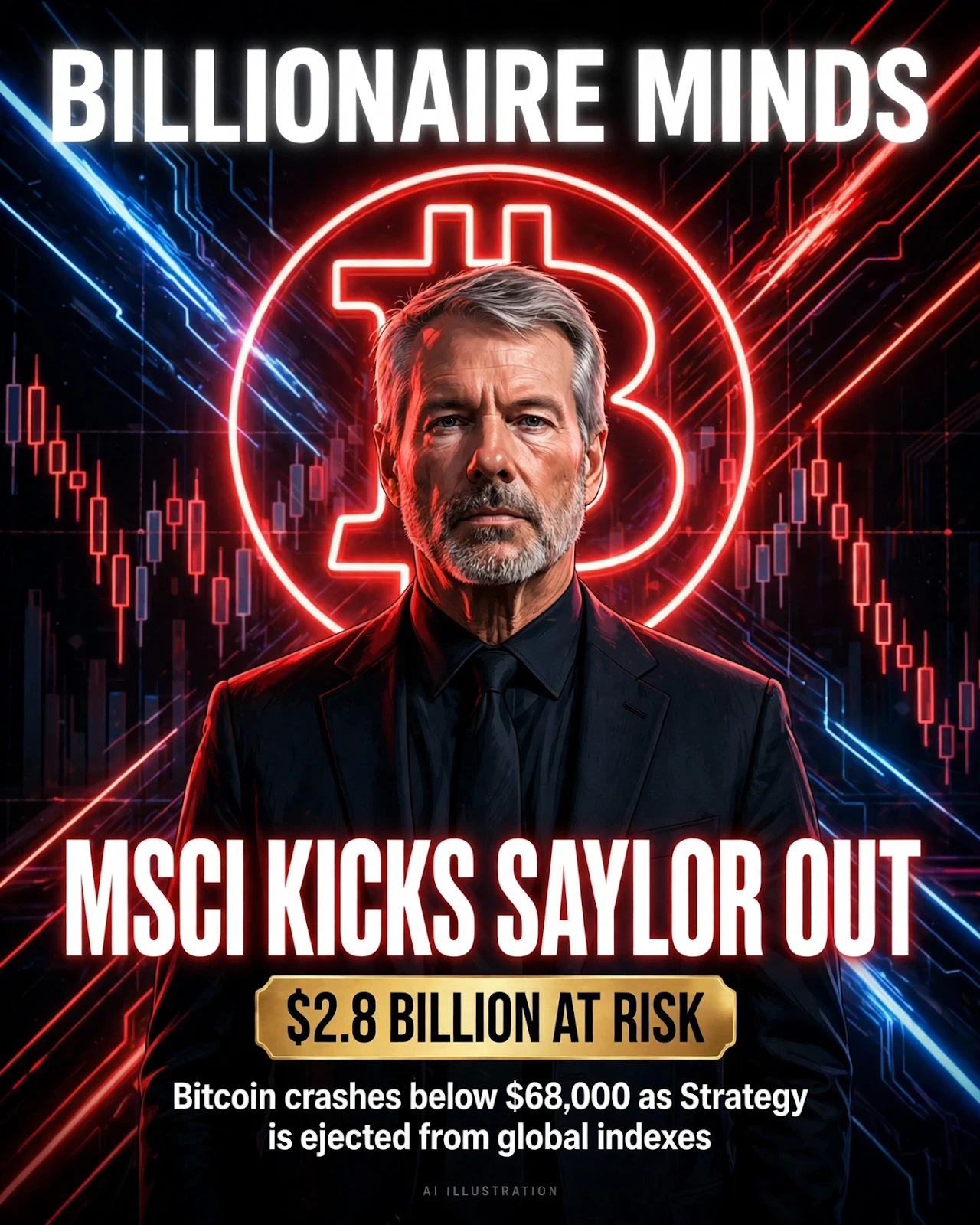
MSCI Just Kicked Michael Saylor's Strategy Out of Its Indexes — and Bitcoin Crashed Below $68,000

Michael Saylor — MSCI ejected his company Strategy from global indexes as Bitcoin crashed below $68,000

Image: AI illustration.

Michael Saylor built the boldest bet in corporate history — turning his software company into a giant Bitcoin vault holding roughly 4% of all the Bitcoin that will ever exist. This week, Wall Street's most powerful index provider decided that bet no longer belongs in its indexes. And the crypto market answered with a crash.

MSCI Says Strategy Is No Longer an Operating Company

Index giant MSCI confirmed on November 11 that it will remove Strategy — the company Saylor founded as MicroStrategy — from its global indexes, including the MSCI USA and MSCI World indexes, effective December 1. MSCI ruled that Strategy and other digital-asset treasury companies more closely resemble investment funds than operating businesses, after a review of what it calls "non-operating companies."

Strategy itself had warned that exclusion would force about $2.8 billion of its stock to be liquidated by index-tracking funds. JPMorgan has estimated the damage could reach $8.8 billion if other index providers follow MSCI's lead. Strategy shares fell 2.5% in extended trading on the news and are down around 20% so far this year — a world away from the $543 record they hit in November 2024.

Bitcoin Falls Below $68,000 as Fear Takes Over

The index blow landed as Bitcoin slid below the $70,000 level on November 13, dropping to about $67,500 — its lowest since August — after falling nearly 7% in a single day. Ether slipped below $1,900. Around $1.29 billion in leveraged crypto positions were liquidated in 24 hours, and the Crypto Fear & Greed Index sank to 20 — "Extreme Fear" — for the first time in about four months.

Strategy now holds 850,364 Bitcoin, bought for roughly $64 billion at an average of about $75,446 per coin, according to its November 9 SEC filing. Saylor, whose fortune Forbes put at about $4.6 billion in October, personally holds 17,732 Bitcoin he disclosed in 2020 — and says he has never sold a single one. The irony is rich: in 2013, Saylor famously declared Bitcoin dead. Then he bought 4% of it.

Japan's Metaplanet, another Bitcoin treasury copycat, was ejected from the indexes too — sitting on roughly a $1 billion unrealized loss. Saylor's machine once ran on a simple loop: issue stock and debt, buy Bitcoin, watch the stock rise. MSCI just broke the loop.

Source: Reuters (November 11, 2026); CoinJuice; CoinDesk (November 13, 2026).

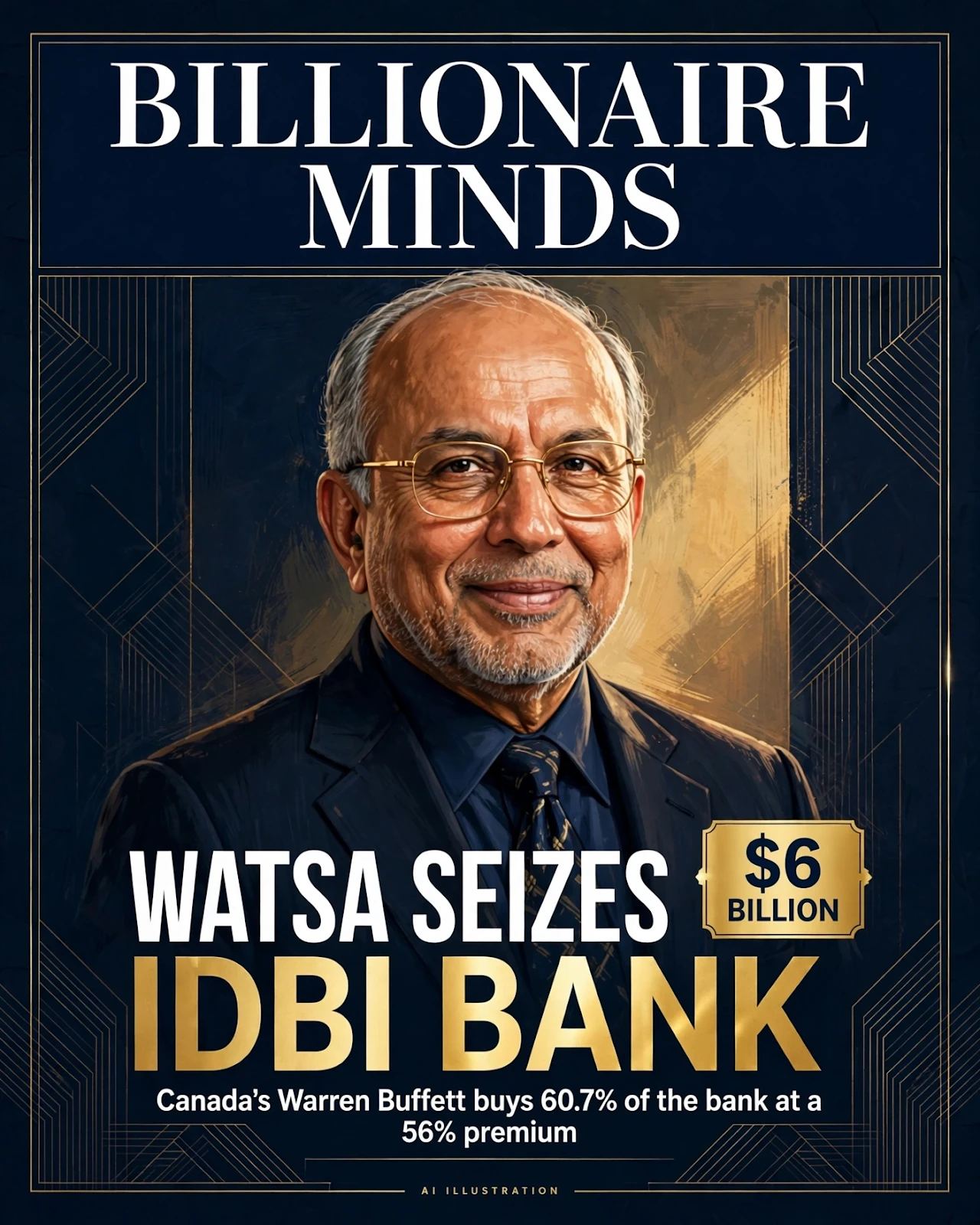
Billionaire Prem Watsa Just Seized Control of IDBI Bank — a $6 Billion Bet at a 56% Premium

Prem Watsa — billionaire investor whose Fairfax just seized control of IDBI Bank in a $6 billion deal at a 56% premium

Canada's Warren Buffett just pulled off one of the biggest bank takeovers in Indian history. Billionaire Prem Watsa's Fairfax Financial Holdings has clinched a landmark deal to buy a controlling 60.72% stake in IDBI Bank for Rs 52,878 crore — roughly $6 billion — beating rival bidders from around the world.

And he did not get it cheap. Fairfax offered Rs 81 per share, comfortably above the Indian government's own benchmark valuation of Rs 75.99 — and a full 56% premium over the bank's regulatory book value. When a value investor famous for never overpaying decides to pay up, the market pays attention.

A $6 Billion Bet on a Bank That Was Once on Life Support

IDBI Bank is a remarkable turnaround story in its own right. The lender spent four years — from 2017 to 2021 — under the Reserve Bank of India's Prompt Corrective Action framework, the regulator's intensive-care ward for struggling banks. Today it earns close to Rs 10,000 crore a year in profit.

Under the privatisation framework, the Indian government and the Life Insurance Corporation will keep a combined 34% stake, staying invested in the bank's future growth. Fairfax takes management control — and it has big plans for what comes next.

Fairfax Wants to Build a Financial Superstore

This is not just a bank purchase. Fairfax plans to fold its wider Indian financial portfolio into IDBI, bringing Go Digit General Insurance, Go Digit Life Insurance and IIFL Capital Services under the same roof. The goal: one integrated financial powerhouse offering banking, insurance, investment banking and wealth management — a challenger to giants like HDFC Bank and ICICI Bank.

Fairfax President and COO Peter Clarke said the lender "holds the potential to become a premier universal Indian bank with global reach." The deal still needs regulatory, shareholder and statutory approvals before it closes.

Why Watsa's Track Record Makes This One to Watch

Watsa, who built Fairfax from a small Canadian insurer into a global investment empire and earned the "Canada's Warren Buffett" nickname for his value-investing discipline, has done this before. Fairfax engineered successful turnarounds at CSB Bank and ICICI Lombard in India — buying unloved assets, fixing them, and holding them for the long term.

If IDBI follows the same playbook, the $6 billion cheque could look like a bargain in a decade. For now, one thing is clear: the quietest billionaire in the room just made the loudest banking move of the year.

Source: The Kolkata Mail (Nov 13, 2026); Lokmat Times. The portrait on this post is an AI-generated illustration.

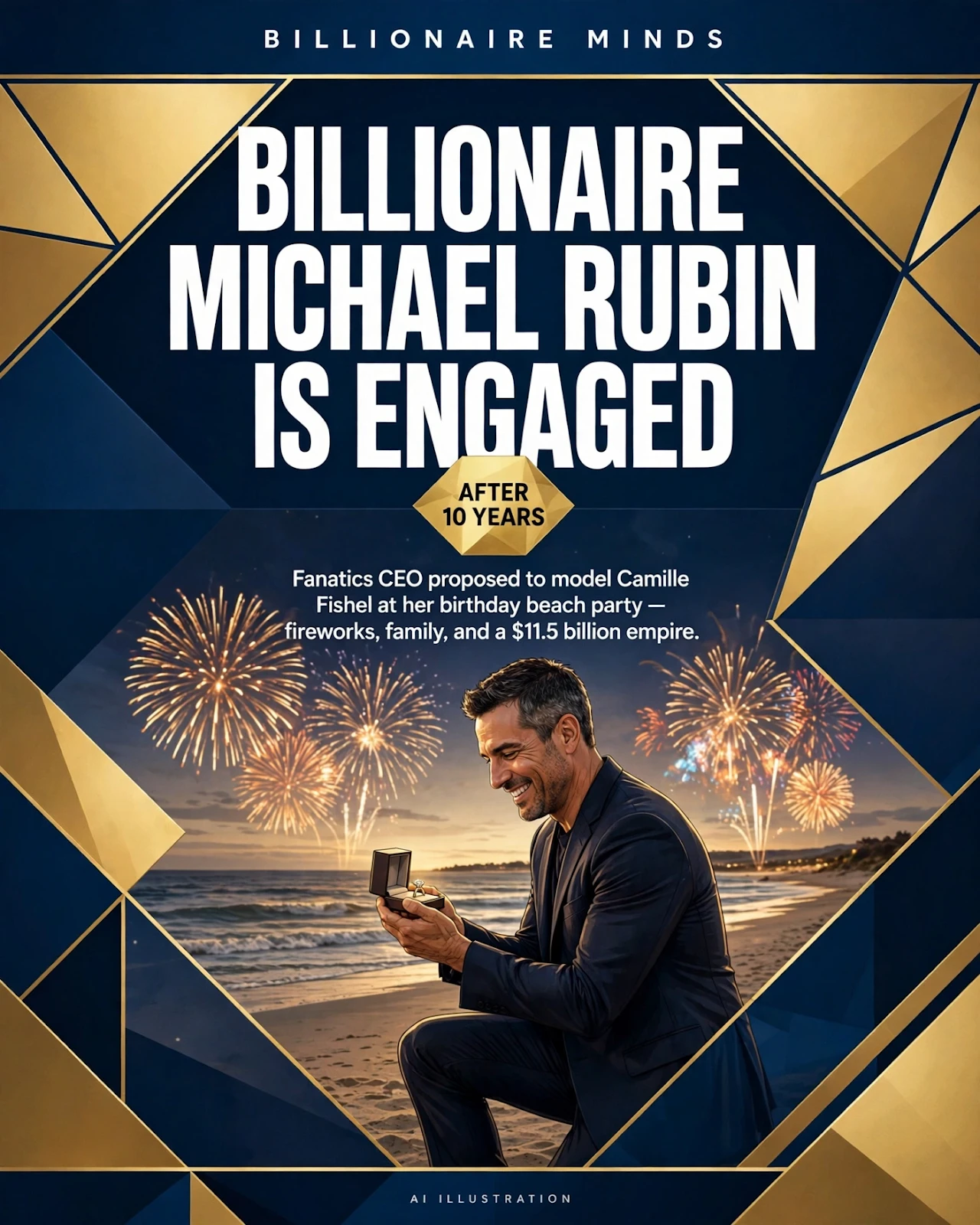
Billionaire Michael Rubin Is Engaged — Fanatics CEO Pops the Question After 10 Years With Model Camille Fishel

Billionaire Michael Rubin is engaged — Fanatics CEO proposed to model Camille Fishel after 10 years together

Billionaire Michael Rubin is engaged. The Fanatics founder and CEO, 54, popped the question to longtime girlfriend Camille Fishel, 36, during her birthday celebrations on Thursday evening — in front of a beachside fireworks display, with their two young daughters, Romi, 6, and Gema, 4, looking on.

Rubin shared three photos from the moment on Instagram, captioning them: "Happy bday and a little more @camillefishel ❤️😉💍." The couple have been together since 2016.

A decade in the making

Rubin and Fishel began dating in 2016, a decade ago, and have built a family together while keeping much of their relationship out of the spotlight. Fishel, a model and artist, has in recent years shown her oil paintings at The Armory Show in New York. The proposal came on her 36th birthday — fireworks over the beach, family beside them, and a ring to finish the night.

The $11.5 billion sports empire

Rubin built GSI Commerce, founded in 1995, and sold it to eBay for $2.4 billion in 2011. He then grew Fanatics — licensed sports merchandise, trading cards, collectibles and sports betting — into an empire valued at more than $31 billion. Forbes values Rubin himself at about $11.5 billion, ranking him among the 100 richest Americans. He is also a minority owner of the Philadelphia 76ers and New Jersey Devils, a guest shark on ABC's Shark Tank, and the host of the star-studded Fourth of July White Party in the Hamptons.

A second chapter

The engagement marks a new chapter more than a decade after Rubin's first marriage, to Meegan Spector, ended in 2012. He has an older daughter, Kylie, 20, from that marriage. Now, ten years after he and Fishel first got together, the billionaire sports mogul is set to walk down the aisle again.

Source: Page Six (Nov 13, 2026); corroborated by Pulptastic and DNYUZ. This is a fan/commentary summary of reported news; all figures are the sources' estimates. The portrait on this post is a stylised AI illustration, not a photograph of Michael Rubin.

Billionaire Leo KoGuan Freezes Nvidia Cash — "No Further Investment Without Jensen"

Leo KoGuan, the $13.2 billion investor, freezes new investment in Nvidia after Jensen Huang's ouster — his $1.3 billion stake stays, but no more cash without Jensen.

One of Nvidia's biggest individual shareholders just drew a line in the sand. Singapore-based billionaire Leo KoGuan — worth $13.2 billion, according to the Bloomberg Billionaires Index — says he will not put another dollar into the chipmaker while Jensen Huang is out of the CEO's chair.

"No further investment without Jensen"

KoGuan, who has around $1.3 billion invested in Nvidia, took to X on November 12 to defend the ousted founder and attack the board's decision. "Jensen is a good guy, he is the main driver of si chips and si industries," he wrote. "As one of the largest individual SH of NVDA, I demand the NVDA board and the world to retain him as CEO of Nvidia."

He claims Elon Musk, investor Gavin Baker and President Donald Trump all advised Huang to stay on as CEO of the company he founded. Huang resigned on November 12 after 33 years at the helm, following reports of three affairs — including one with a woman suspected of spying for China. Nvidia has lost more than $500 billion in market value since the scandal broke, and CFO Colette Kress has taken over as interim CEO.

Loyalty to the founder, not the company

On November 13, KoGuan escalated. While insisting Nvidia's business trajectory is unchanged over the next three years, he confirmed he will scale back his planned investment in the chipmaker and redirect the money toward rival super-intelligence companies instead.

"I will reduce my plan investment in NVDA. Instead, I will invest more in other si companies. I hope and plan to invest in Jensen Huang if he creates or buys si company," he posted. "I hope he will offer me the opportunity to invest in his future company."

KoGuan began buying Nvidia shares in March, a major diversification for an investor whose fortune was long tied largely to Tesla. He has also disclosed stakes in SpaceX and Google parent Alphabet. His message to the board is blunt: the money follows the creator — not the company that pushed him out.

Source: BusinessToday (November 13, 2026), reporting Leo KoGuan's posts on X. The spying allegation against Alice Huang is reported as suspicion by US intelligence and has not been proven in court.

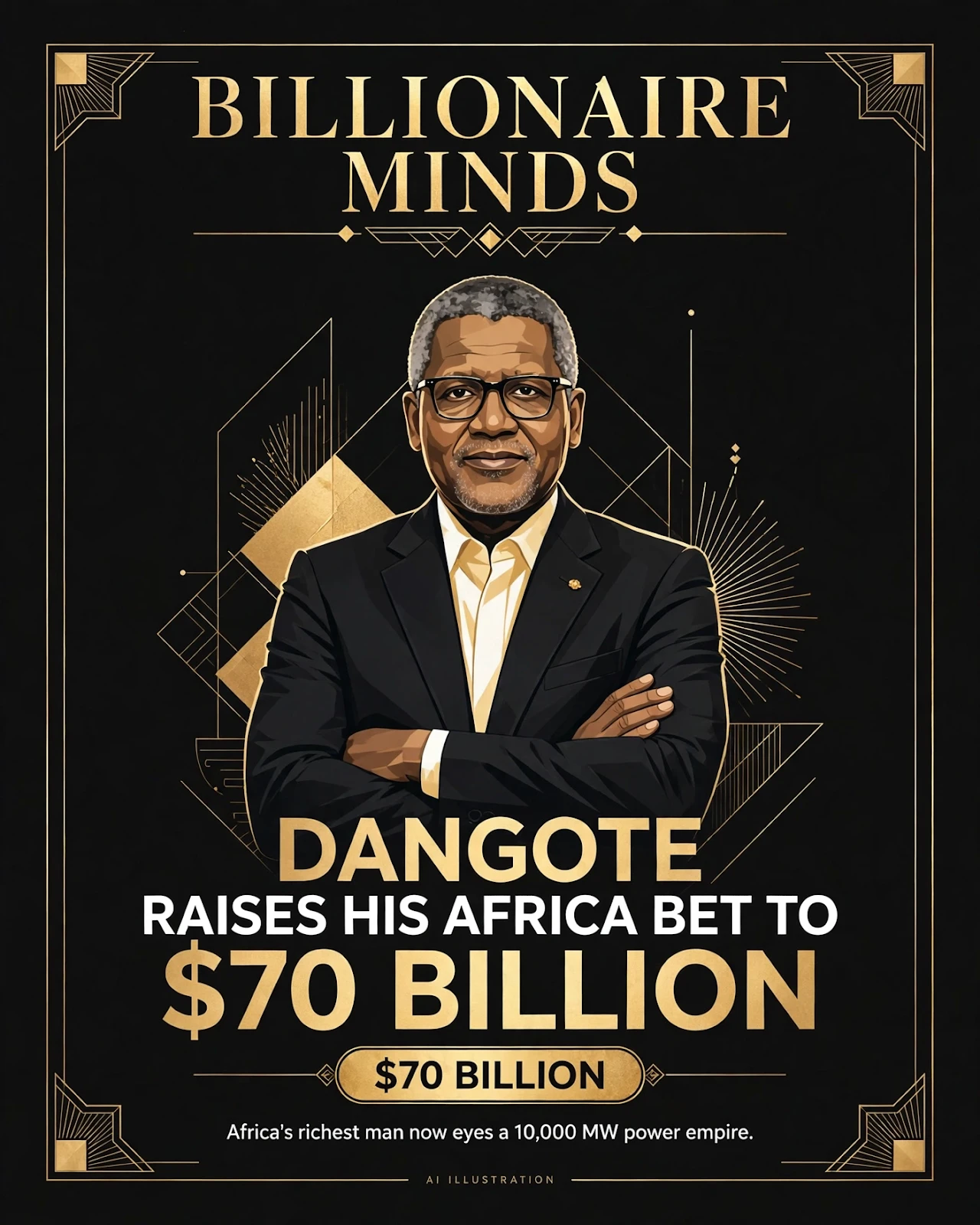
Dangote Raises His Africa Bet to $70 Billion — With a 10,000 MW Power Plan

Aliko Dangote — Africa's richest man — raises his Africa investment target to $70 billion and eyes a 10,000 MW power empire

Africa's richest man is thinking even bigger. Aliko Dangote has raised his group's planned investment across Africa to $70 billion — $10 billion more than the figure he gave just last week — and says he is now considering a 10,000-megawatt power programme spanning the continent.

From $50 billion to $70 billion in a week

The target has climbed fast. Dangote's group had planned about $50 billion of African investment by the end of the decade before he raised it to $60 billion at the launch of a fuel storage and pipeline project in Namibia on November 4. Now it is $70 billion. The Namibian project is part of a $2.5 billion plan with a 1,700-kilometre pipeline and storage for about 4 million barrels of fuel, due within 18 months. Announced projects across Africa already add up to more than $35 billion, including a planned 700,000-barrel-a-day refinery in Kenya.

A return to power

Electricity is the new frontier. In May, Dangote told the International Finance Corporation in Washington: "We are now going into power, 20,000 megawatts." In June his group outlined a port and a 2,000-megawatt power plant in Tanzania, and in September he set a target of more than $10 billion of investment in power. Nigeria has about 13,000 megawatts of installed capacity, but the national grid often delivers barely a quarter of that — which is why Dangote's own plants generate much of their own electricity. This week he told Nigeria's petroleum explorers in Lagos that reliable electricity, affordable long-term loans and local supply chains are the building blocks of industrial growth.

Cash from the record refinery sale

The spending power is real. The initial public offering of his 650,000-barrel-a-day refinery near Lagos drew about ₦5.85 trillion ($4.3 billion) in applications from nearly 3.8 million investors — close to three times what the company sought, in the largest share sale in Africa's history. Dangote, 69, built his fortune in cement, sugar, salt and flour before moving into fertilizer and oil refining, and both Forbes and Bloomberg rank him as Africa's richest person.

Source: Billionaires.Africa, November 13, 2026. This is a fan/commentary summary of reported news. All figures are the sources' estimates. The portrait on this post is a stylised AI illustration, not a photograph of Aliko Dangote.