Posts

Showing posts with the label Investments

Jay-Z's Duetti Just Raised $665 Million to Buy Up Independent Music — Roc Nation's Catalog Bet Hits $1.3 Billion

Stylized illustration of hip-hop mogul Jay-Z in a tailored suit before a wall of vinyl records — Jay-Z's Roc Nation-backed Duetti raised $665 million

Duetti Inc., the music investment company backed by Jay-Z's Roc Nation, has secured $665 million in fresh financing to buy up more independent music catalogs — the latest sign that song royalties have become one of Wall Street's favourite alternative assets.

The deal, announced on Tuesday, takes Duetti's total funding past $1.3 billion since the company was founded in 2022, and it is the biggest music-rights financing of its kind this year.

A $450 million securitization anchored by Carlyle

The centrepiece of the package is a $450 million asset-backed securitization anchored by global investment firm Carlyle. Viola Credit added $165 million of credit capacity, and a $50 million side facility came from Flexpoint Ford and Truist Bank. Barclays arranged the deal alongside Truist.

It is Duetti's third asset-backed securitization in two years — and more than five times the size of its first deal in 2024, a sign of how fast institutional money is moving into music royalties.

From $1.3 billion raised to 50,000 songs

Duetti has now made more than 1,600 catalog investments and owns over 50,000 masters and compositions representing the works of more than 3,000 recording artists. The company says it has partnered with artists, songwriters and other rights owners from over 50 countries.

Unlike the big catalog buyers chasing superstar estates, Duetti focuses on independent artists, buying portions of catalogs rather than full ownership, then managing and marketing the rights and earning from streaming and licensing.

Why billionaires and Wall Street want song rights

Music royalties pay out every time a song is streamed, licensed or played — steady, recurring income that does not move with the stock market. Carlyle's head of asset-backed finance, Akhil Bansal, said independent music royalties can generate "recurring, diversified cash flows" that suit asset-backed financing.

Jay-Z, hip-hop's first billionaire with a Forbes-estimated $2.8 billion fortune, founded Roc Nation in 2008 and has built a business portfolio spanning music, sports, entertainment and investments. Duetti, backed by Roc Nation and investment firm The Raine Group, is his latest bet on music as an asset class.

What happens next

Duetti says the new capital will "significantly accelerate the pace and breadth" of its investments across genres, geographies and types of music rights — as competition for valuable song catalogs intensifies, with private equity groups including Carlyle, Blackstone and Apollo all increasing their exposure to music royalties.

Source: Music Business Worldwide / PRNewswire, November 17, 2026. Image: AI illustration.

Billionaire Tony Elumelu Just Bought $70 Million More of Seplat Energy — His Stake Is Now Worth $1.6 Billion

Tony Elumelu — the Nigerian billionaire just bought $70 million more of Seplat Energy, lifting his stake to 22.05%, now worth $1.6 billion

Nigerian billionaire Tony Elumelu is doubling down on the company at the heart of his oil empire. His investment vehicle, Heirs Energies, has bought another 5,888,341 shares in Seplat Energy Plc for about N98 billion — roughly $70 million — taking the Heirs Holdings Group's total holding to 22.05% of Nigeria's biggest listed oil producer.

A $1.6 Billion Bet on Nigerian Oil

The purchase lifts Elumelu's total Seplat holding to a value of about $1.6 billion. It is the second major top-up in two months: Heirs Energies bought a similar tranche of around $70 million on September 30. Seplat's shares have been on a tear — closing at N16,241.90 on Monday, nearly triple the N5,809 they traded at the end of 2025.

From Largest Shareholder to Chairman

Elumelu's Seplat journey began on December 31, 2025, when Heirs Energies agreed to buy the entire 20.07% stake held by French oil group Maurel & Prom for about $500 million, making Heirs the company's largest single shareholder. He joined Seplat's board as a non-executive director in January 2026, and in June the company announced he will become Chairman on January 1, 2027.

Why It Matters

With the stake now above 22% and the chairmanship weeks away, Elumelu is moving from investor to operator-in-chief of one of Africa's most valuable energy companies — a bet that Nigeria's oil story still has a long way to run.

Sources: Billionaires.Africa and Nairametrics (November 17, 2026). Image: AI illustration.

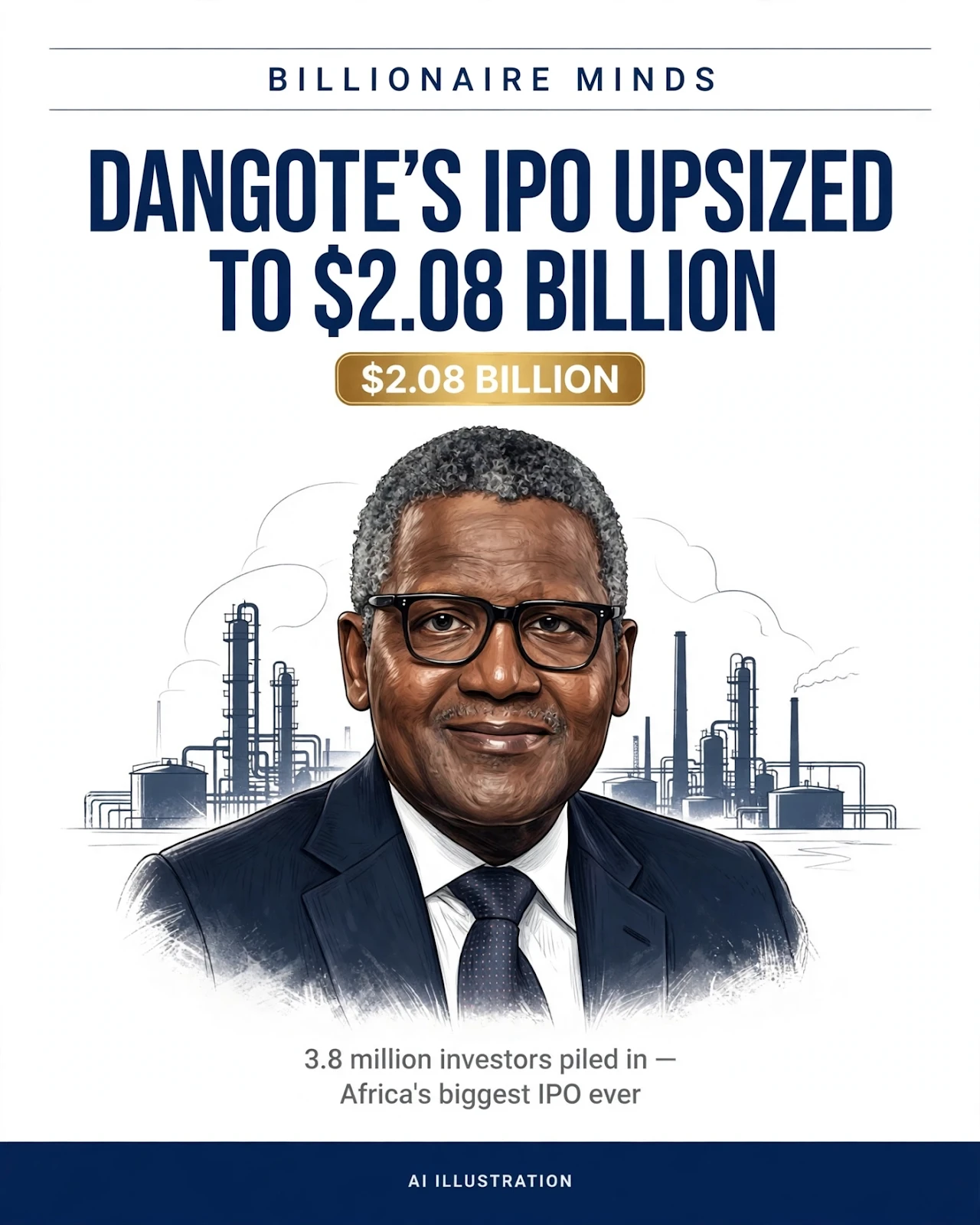
Dangote's $2.08 Billion Refinery IPO Just Got Even Bigger — 3.8 Million Investors Piled In

Aliko Dangote — his refinery IPO was upsized to $2.08 billion after 3.8 million investors piled in

Africa's richest man just made his record-breaking share sale even bigger. Aliko Dangote's oil refinery is increasing its initial public offering to $2.08 billion — up from $1.6 billion — after investors bid for nearly three times the shares on offer.

A $2.08 billion sale — 30% bigger than planned

The refinery offered about 4.1 billion shares at 525 naira each, aiming to raise roughly $1.6 billion. Now it is using the full 30% extra allowance granted by Nigeria's Securities and Exchange Commission, lifting the sale to about 5.3 billion shares worth roughly $2.08 billion. The offer closed on October 27 after drawing around $4.3 billion in applications from nearly 3.8 million investors — close to three times what was on offer. Even at the bigger size, most of the money will have to be returned to applicants. The deal values the refinery at close to $50 billion.

Pension giants want $1 billion of it

The biggest names in African money are fighting for a slice. South Africa's Public Investment Corporation — Africa's largest money manager — asked for about $500 million of shares, while Nigerian pension fund managers applied for another $400–500 million. Together, the pension giants want about $1 billion of the sale. Dangote himself may sell part of his own stake to meet the demand, though he will keep control of the refinery after the listing.

What happens next

The basis of allotment — who gets how many shares — still needs the regulator's sign-off, with a decision expected around November 17 and trading possibly starting in early December, though the company has not confirmed dates. The refinery in the Lekki Free Zone near Lagos can process 650,000 barrels of crude a day, making it the world's largest single-train refinery, and the money raised goes toward doubling its capacity to 1.4 million barrels a day by 2029. For Dangote, worth more than $55 billion per Forbes, it is another reminder that when Africa's richest man opens the door, millions walk through it.

Source: Billionaires.Africa, November 13, 2026, reporting IFR and Bloomberg. This is a fan/commentary summary of reported news; all figures are the sources' estimates. The portrait on this post is a stylised AI illustration, not a photograph of Aliko Dangote.

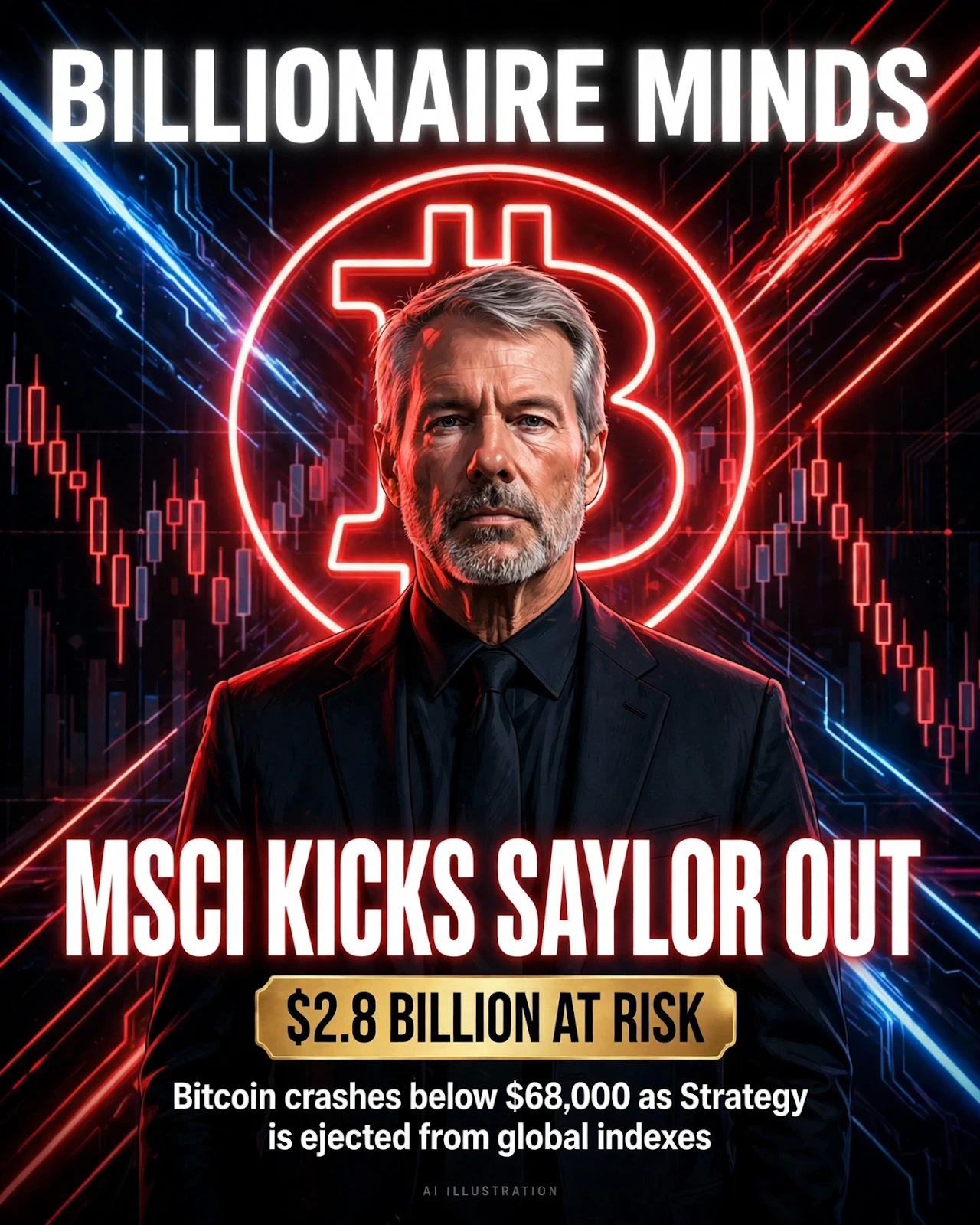
MSCI Just Kicked Michael Saylor's Strategy Out of Its Indexes — and Bitcoin Crashed Below $68,000

Michael Saylor — MSCI ejected his company Strategy from global indexes as Bitcoin crashed below $68,000

Image: AI illustration.

Michael Saylor built the boldest bet in corporate history — turning his software company into a giant Bitcoin vault holding roughly 4% of all the Bitcoin that will ever exist. This week, Wall Street's most powerful index provider decided that bet no longer belongs in its indexes. And the crypto market answered with a crash.

MSCI Says Strategy Is No Longer an Operating Company

Index giant MSCI confirmed on November 11 that it will remove Strategy — the company Saylor founded as MicroStrategy — from its global indexes, including the MSCI USA and MSCI World indexes, effective December 1. MSCI ruled that Strategy and other digital-asset treasury companies more closely resemble investment funds than operating businesses, after a review of what it calls "non-operating companies."

Strategy itself had warned that exclusion would force about $2.8 billion of its stock to be liquidated by index-tracking funds. JPMorgan has estimated the damage could reach $8.8 billion if other index providers follow MSCI's lead. Strategy shares fell 2.5% in extended trading on the news and are down around 20% so far this year — a world away from the $543 record they hit in November 2024.

Bitcoin Falls Below $68,000 as Fear Takes Over

The index blow landed as Bitcoin slid below the $70,000 level on November 13, dropping to about $67,500 — its lowest since August — after falling nearly 7% in a single day. Ether slipped below $1,900. Around $1.29 billion in leveraged crypto positions were liquidated in 24 hours, and the Crypto Fear & Greed Index sank to 20 — "Extreme Fear" — for the first time in about four months.

Strategy now holds 850,364 Bitcoin, bought for roughly $64 billion at an average of about $75,446 per coin, according to its November 9 SEC filing. Saylor, whose fortune Forbes put at about $4.6 billion in October, personally holds 17,732 Bitcoin he disclosed in 2020 — and says he has never sold a single one. The irony is rich: in 2013, Saylor famously declared Bitcoin dead. Then he bought 4% of it.

Japan's Metaplanet, another Bitcoin treasury copycat, was ejected from the indexes too — sitting on roughly a $1 billion unrealized loss. Saylor's machine once ran on a simple loop: issue stock and debt, buy Bitcoin, watch the stock rise. MSCI just broke the loop.

Source: Reuters (November 11, 2026); CoinJuice; CoinDesk (November 13, 2026).

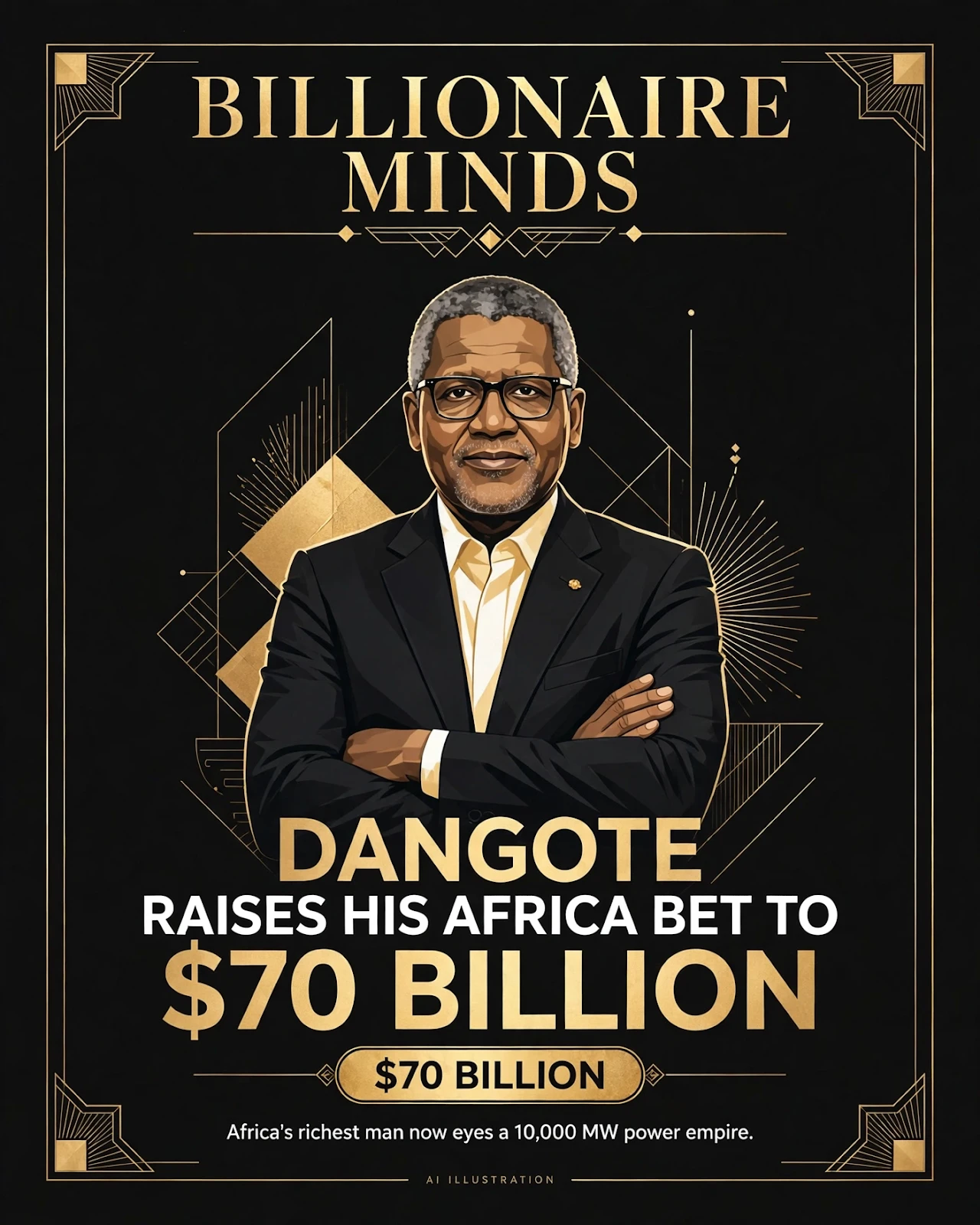
Dangote Raises His Africa Bet to $70 Billion — With a 10,000 MW Power Plan

Aliko Dangote — Africa's richest man — raises his Africa investment target to $70 billion and eyes a 10,000 MW power empire

Africa's richest man is thinking even bigger. Aliko Dangote has raised his group's planned investment across Africa to $70 billion — $10 billion more than the figure he gave just last week — and says he is now considering a 10,000-megawatt power programme spanning the continent.

From $50 billion to $70 billion in a week

The target has climbed fast. Dangote's group had planned about $50 billion of African investment by the end of the decade before he raised it to $60 billion at the launch of a fuel storage and pipeline project in Namibia on November 4. Now it is $70 billion. The Namibian project is part of a $2.5 billion plan with a 1,700-kilometre pipeline and storage for about 4 million barrels of fuel, due within 18 months. Announced projects across Africa already add up to more than $35 billion, including a planned 700,000-barrel-a-day refinery in Kenya.

A return to power

Electricity is the new frontier. In May, Dangote told the International Finance Corporation in Washington: "We are now going into power, 20,000 megawatts." In June his group outlined a port and a 2,000-megawatt power plant in Tanzania, and in September he set a target of more than $10 billion of investment in power. Nigeria has about 13,000 megawatts of installed capacity, but the national grid often delivers barely a quarter of that — which is why Dangote's own plants generate much of their own electricity. This week he told Nigeria's petroleum explorers in Lagos that reliable electricity, affordable long-term loans and local supply chains are the building blocks of industrial growth.

Cash from the record refinery sale

The spending power is real. The initial public offering of his 650,000-barrel-a-day refinery near Lagos drew about ₦5.85 trillion ($4.3 billion) in applications from nearly 3.8 million investors — close to three times what the company sought, in the largest share sale in Africa's history. Dangote, 69, built his fortune in cement, sugar, salt and flour before moving into fertilizer and oil refining, and both Forbes and Bloomberg rank him as Africa's richest person.

Source: Billionaires.Africa, November 13, 2026. This is a fan/commentary summary of reported news. All figures are the sources' estimates. The portrait on this post is a stylised AI illustration, not a photograph of Aliko Dangote.

Adani Unveils a $120 Billion Spending Spree — India's Biggest Private Bet Ever

Gautam Adani just raised the stakes on India's infrastructure race. His Adani Group plans to invest more than $120 billion in capital expenditure over the next five years — about $20 billion a year — in what would be one of the largest private-sector spending programmes ever announced in India.

The plan was outlined by senior group executives in an interview with Fortune India published on November 10. It is bigger than the $100 billion five-year investment the group had previously outlined, and it puts energy firmly at the centre of the build-out.

Where the $120 billion goes

About 70% of the money — roughly $84 billion — will go to energy: renewables, thermal power, data centres, transmission and distribution. Around 20% is earmarked for transport and logistics — ports, airports and roads — while the remaining 10% goes to adjacent businesses such as cement, copper and aluminium.

"Over the next five years, we plan to invest about $120 billion — over $20 billion a year — across all our businesses," Pranav Adani, a director at flagship firm Adani Enterprises and the chairman's nephew, told Fortune India. The group describes it as a rolling five-year plan, with the first year firm and the remaining four years flexible.

Doubling the empire

The group expects the spending to double its asset base to ₹18 trillion (about $189 billion) and generate core earnings of ₹2.6 trillion to ₹3 trillion ($27.3 billion to $31.5 billion) over the five-year period. Annual capex is set to jump to about ₹3.5 lakh crore in FY27, roughly 75% higher than the current plan.

The announcement comes days after Adani Ports agreed on November 5 to buy Netherlands-based Evos, Europe's second-largest independent liquid storage operator, for $2.87 billion — and after an Adani Enterprises joint venture completed the purchase of the Vizag Mega Data Center Park on November 8.

Adani, 64, who dropped out of college and started as a diamond sorter in Mumbai before founding his commodities trading business in 1988, built his empire around the Mundra port in Gujarat — now India's largest commercial port. Forbes ranks him among Asia's richest people, with a fortune built largely on his stakes in the group's listed companies.

Source: Billionaires.Africa (Nov 11, 2026), reporting Reuters / Fortune India (Nov 10, 2026). This is a fan/commentary summary of reported news; all figures are the sources' estimates.

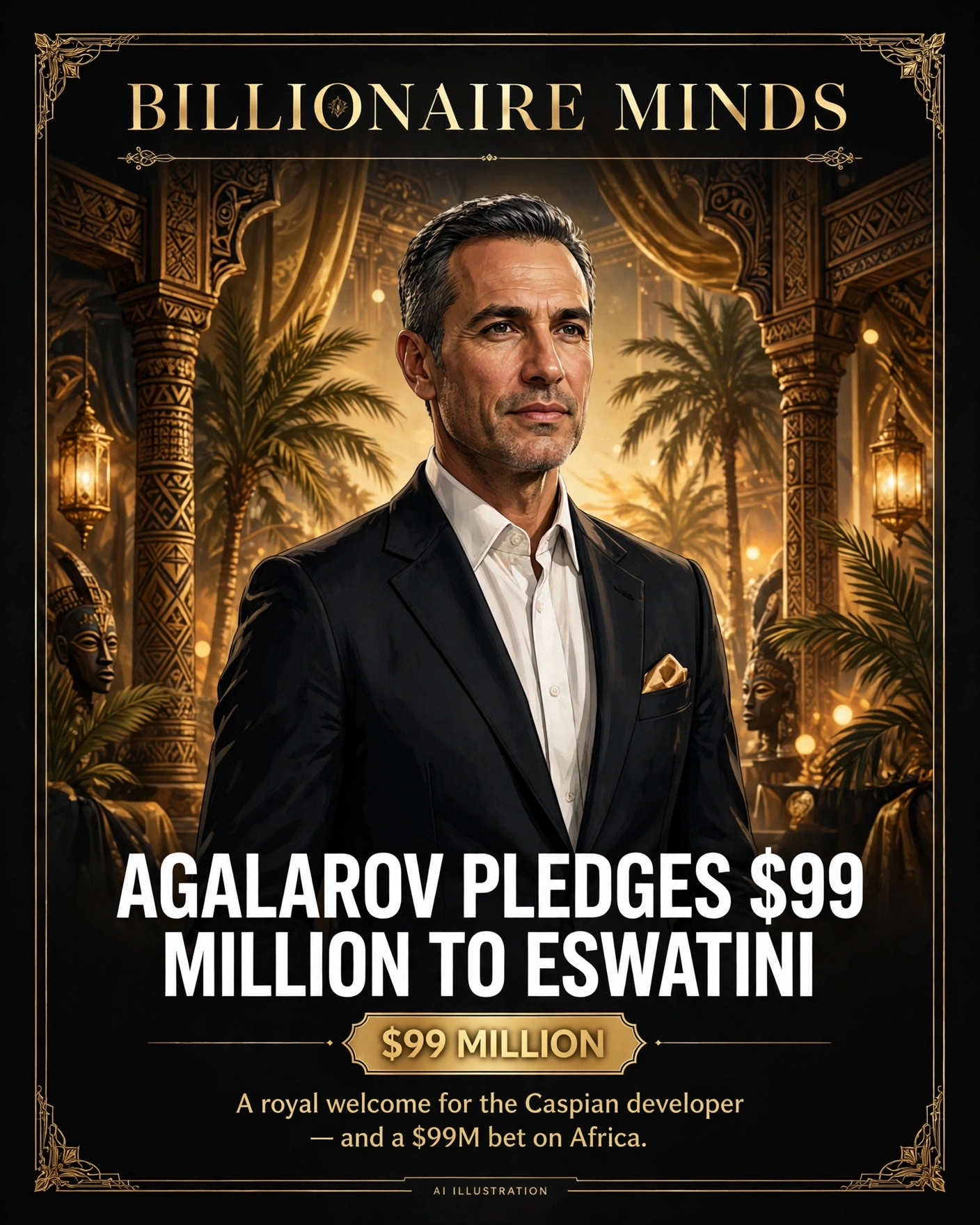
Billionaire Heir Emin Agalarov Pledges $99 Million to Eswatini — a Royal Welcome for the Caspian Developer

Emin Agalarov, billionaire heir and property developer, pledges $99 million to Eswatini after a royal welcome from King Mswati III.

Emin Agalarov — Azerbaijani pop star, property developer and heir to Russian billionaire Aras Agalarov — has pledged E1.65 billion ($99 million) to Eswatini, a commitment welcomed by King Mswati III.

A royal welcome in Ezulwini

Agalarov made the pledge in Ezulwini, the tourism valley between Mbabane and Manzini, where he was the king's special guest at a Royal Theatre Night at the Ezulwini Palazzo International Convention Centre. The commitment adds to a push by the small southern African kingdom to draw foreign capital through its investment conference and the king's state visits abroad.

The Caspian connection

The pledge follows King Mswati's visit to Azerbaijan in May. During the trip, Agalarov guided the king and members of his delegation, including Cabinet ministers, around Sea Breeze, the resort city he is building on about 750 hectares of the Caspian Sea coast north of Baku — a project combining villas, apartments, hotels, beaches, schools, a hospital and an aqua park. After returning home, Mswati said Azerbaijani companies planned feasibility studies in several sectors, including energy and petroleum, and the two countries signed a memorandum of understanding on cooperation in mining.

The Agalarov business

Emin Agalarov is first vice president of Crocus Group, the Moscow real estate company founded by his father in 1989. The group built the Crocus City complex outside Moscow, including the Crocus Expo exhibition centre, shopping malls and the Crocus City Hall concert venue. The younger Agalarov is also a pop singer with a large following across Russia and the former Soviet states, and he has expanded the family's development business in Azerbaijan, where Sea Breeze is his flagship project. His father Aras, born in Baku, built Crocus Group into one of Russia's biggest developers — and is a billionaire, according to Forbes.

For Eswatini, a kingdom of just over a million people, a $99 million pledge from a billionaire heir is a major vote of confidence — and a sign that the king's courtship of foreign capital is paying off.

Source: Billionaires.Africa, November 8, 2026. This is a fan/commentary summary of reported news; all figures are the source's estimates. Portrait: AI illustration.

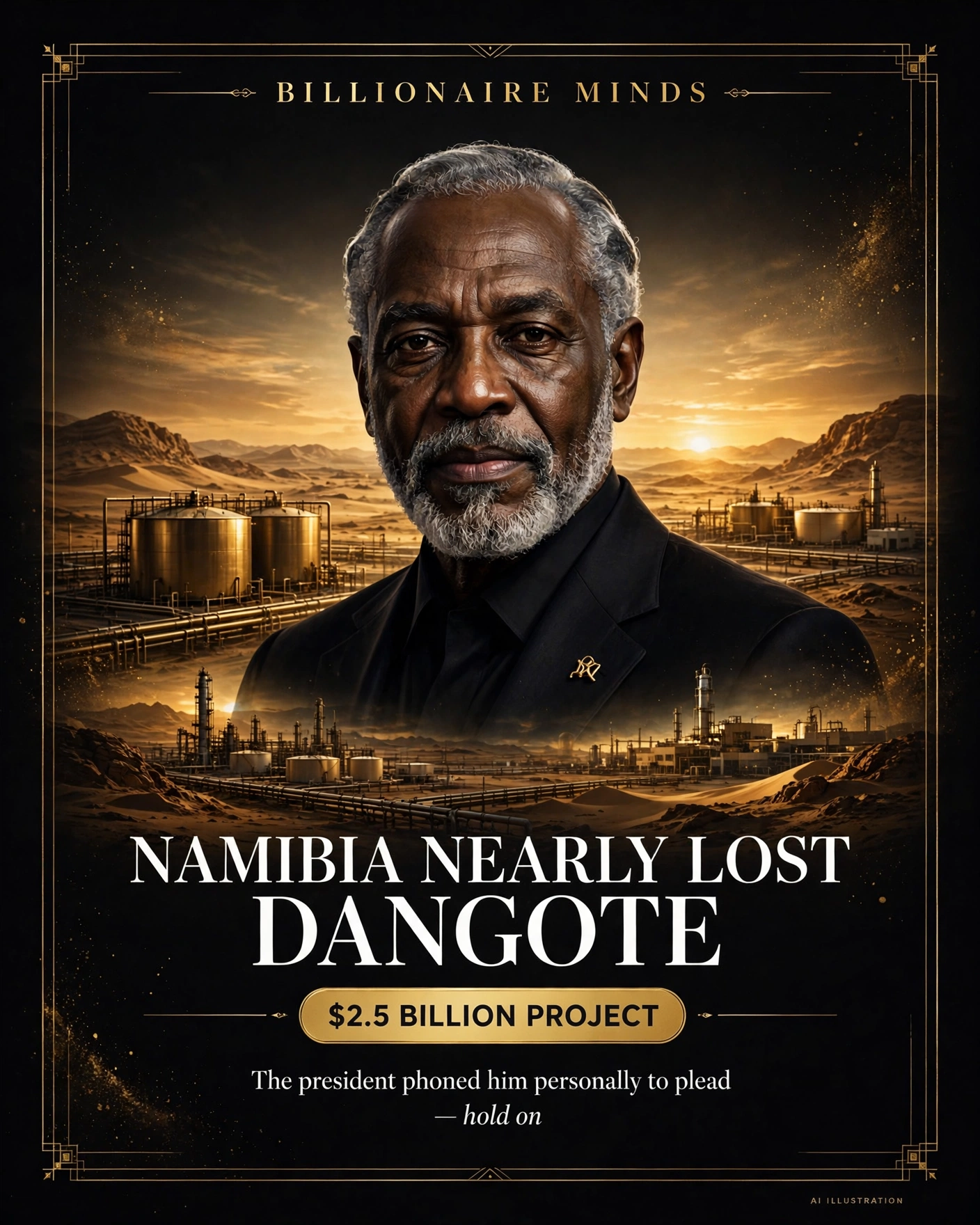
Namibia Nearly Lost Dangote's $2.5 Billion Project — the President Had to Phone Him Personally

Aliko Dangote — Namibia nearly lost his $2.5 billion fuel project until the president phoned him personally to plead with him to stay

Namibia nearly lost one of the biggest investments in its history — and only a personal phone call from the president saved it. President Netumbo Nandi-Ndaitwah has revealed she had to call Nigerian billionaire Aliko Dangote herself and plead with him to keep his $2.5 billion fuel storage and pipeline project in the country after government delays pushed his team to the brink of walking away.

"I had to call Mr Dangote and plead with him"

"We could have lost this project had there not been direct communication between you and me," Nandi-Ndaitwah told Dangote at the launch of the Dangote Namibia Tank Farm and Regional Pipeline Project outside Walvis Bay on Wednesday. "I had to call Mr Dangote and plead with him to hold on and make it work."

She apologized for the delays and admitted Dangote's team had grown frustrated with the pace of government approvals. She first met him about the project on June 19, 2025, and had expected construction to start much sooner. The project, worth about N$41.5 billion ($2.5 billion), has now been moved under the Office of the President — after Namibia already lost another large investment, a shipyard planned for the Erongo region, whose backers gave up after four years of delays. "Let us not place investors in a position where they have to beg government officials to facilitate their investments," she said, giving Dangote what she called "a blank cheque for development purposes."

What is being built

The depot will hold about 600 million litres of fuel — eight times the capacity of Namibia's national oil storage facility — with room for a pipeline of about 1,700 kilometres to carry fuel to Botswana, Zambia, Zimbabwe and the Democratic Republic of Congo, countries that now depend mostly on road tankers. Dangote said construction would take 18 to 20 months. At the launch, he raised the amount his group plans to invest across Africa by 2030 to $60 billion, up from $50 billion, and African Export-Import Bank president George Elombi said the lender would have no difficulty putting $10 billion behind him.

Africa's richest man keeps expanding

Dangote, 69, is Africa's richest person, with a net worth of $55.4 billion according to Forbes. He built the Dangote Group from a Lagos trading business into the continent's largest industrial group, spanning cement, sugar, fertilizer and oil refining. The fuel for the Namibian depot will come from his refinery near Lagos, the world's largest single-train plant, which raised about $1.58 billion in an initial public offering that closed in October.

Source: Billionaires.Africa, November 7, 2026. This is a fan/commentary summary of reported news; all figures are the source's estimates. Portrait: AI illustration.

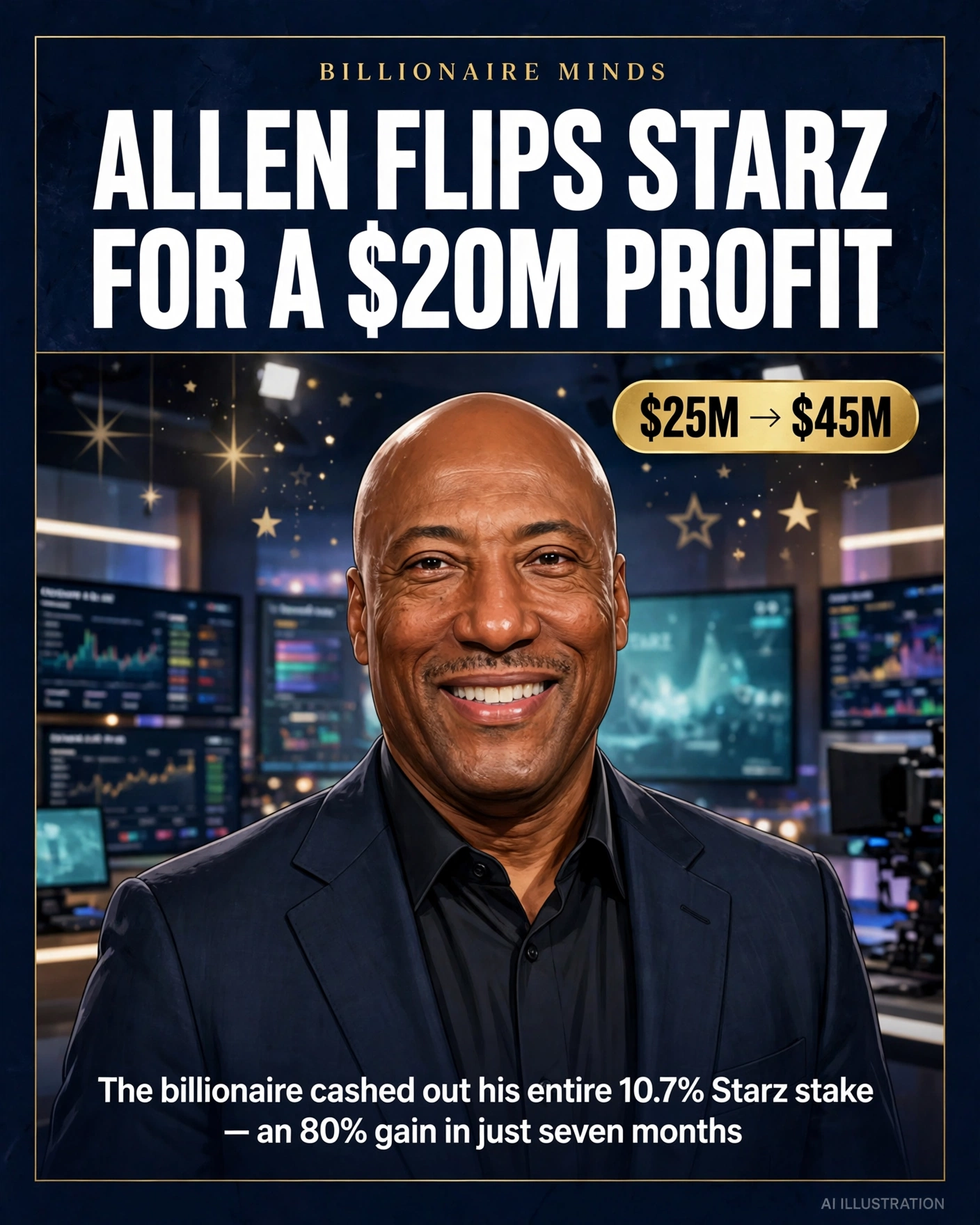
Byron Allen Turns a $25 Million Starz Bet Into $45 Million — an 80% Gain in Seven Months

Byron Allen smiling in a television studio — the billionaire media mogul flipped his Starz stake from $25 million to nearly $45 million

Image: AI illustration.

Byron Allen just pulled off one of the cleanest flips in Hollywood this year. The billionaire media mogul sold his entire stake in Starz Entertainment for about $44.9 million — nearly double the $25 million he paid for the same shares just seven months earlier.

A $25 million bet that paid off fast

Allen's family office, Allen Family Capital, bought roughly 1.8 million Starz shares in March — a 10.7% stake — from Liberty 77 Capital, the investment firm tied to former Treasury Secretary Steven Mnuchin. The price was about $13.86 a share. Then, according to a securities filing disclosed on October 29, Allen sold every last share between August 7 and September 29 at roughly $21 to $27 a share. The sales brought in about $44.9 million, an estimated gain of $19.9 million — close to 80% — before taxes and transaction costs.

He wanted the whole company — then took the profit instead

Allen did not buy in quietly. After the March purchase he said publicly that he wanted to acquire Starz outright, telling The Wrap that when he was ready to buy the company, he would buy the entire company. Starz responded by adopting a poison pill designed to dilute any investor who tried to seize control. Once the board made a takeover fight the only route to control, Allen took the profit instead — and walked away with no reported ownership stake left in the company.

What Starz looks like now

Starz has operated as a standalone company since its separation from Lionsgate in 2025. In the same week the sale was disclosed, the network reported third-quarter revenue of $322.4 million, up 0.5% from a year earlier, alongside an operating loss of $21.2 million and total debt of $687.5 million. For Allen — the comedian-turned-media mogul who built Allen Media Group into a billion-dollar empire — the trade is a reminder of how he made his fortune: buy when others hesitate, and never fall in love with the asset.

Source: Black Enterprise, November 3, 2026; Variety and The Desk, October 2026; SEC filing disclosed October 29, 2026. This is a fan/commentary summary of reported news; all figures are the sources' estimates.