Posts

Showing posts with the label China

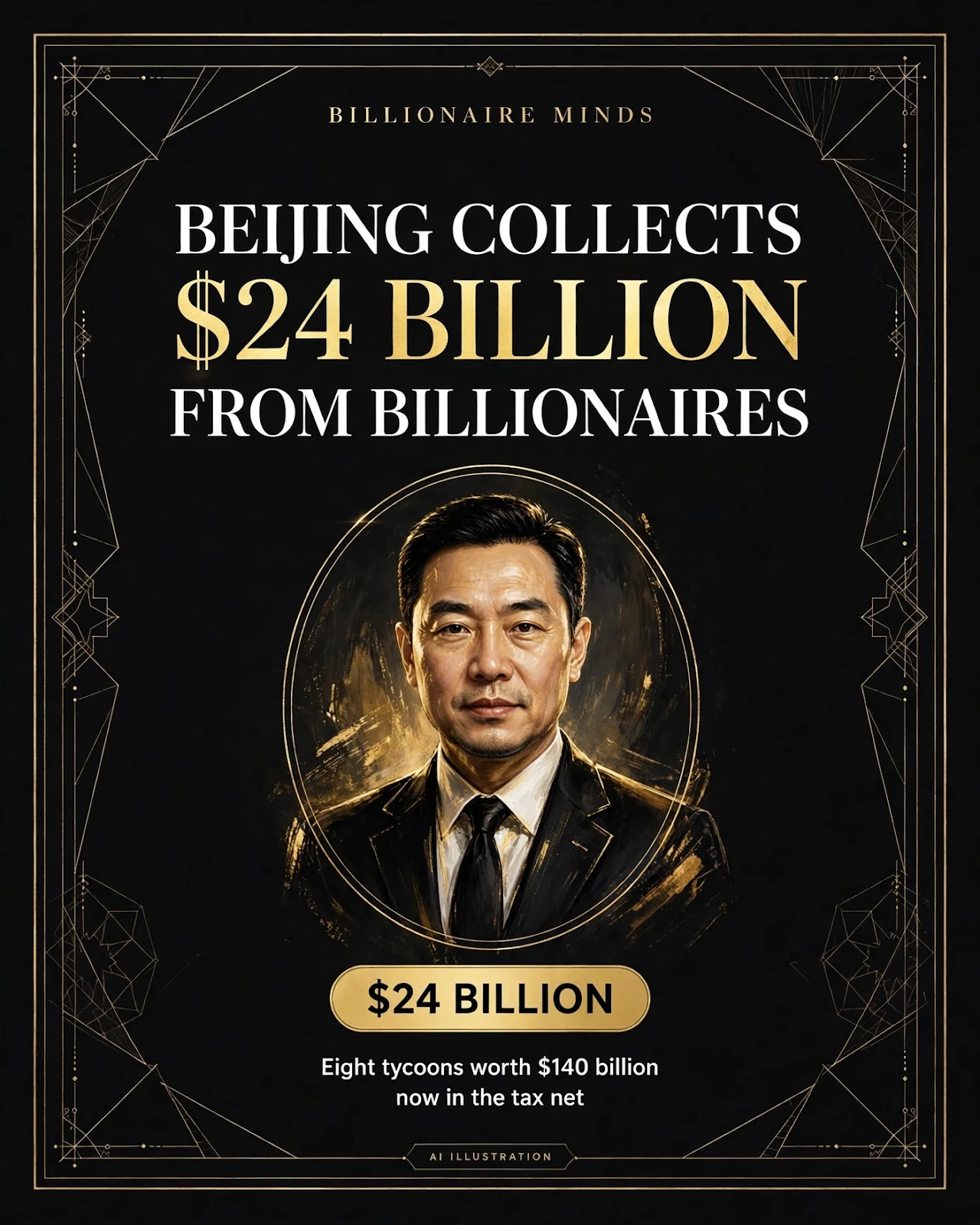
China's Offshore Trust Crackdown Just Netted $24 Billion — Eight Billionaires Worth $140 Billion Are in the Tax Net

China's offshore trust crackdown nets $24 billion — eight billionaires worth $140 billion, including NetEase founder William Ding and PDD founder Colin Huang, are now in the tax net

For decades, China's richest founders parked their fortunes in offshore trusts in the British Virgin Islands and the Cayman Islands — and kept them out of Beijing's reach. That era just ended with a $24 billion bill.

A $24 Billion Haul — and October Tax Receipts Up 90%

China's State Taxation Administration said on November 11 that declared income linked to offshore trusts has topped 160 billion yuan — roughly $24 billion — since Beijing introduced new rules in late July tightening tax compliance, with October alone accounting for 75% of the total. The surge lifted nationwide personal income tax receipts in October by almost 90% year on year. Caixin reported that personal income tax revenue for the first ten months of 2026 reached 1.64 trillion yuan — already more than the 1.62 trillion yuan collected in all of 2025.

The Eight Billionaires in the Frame

Bloomberg identified eight Chinese billionaires among the world's 500 richest who hold listed shares through offshore trusts, with combined assets of about $140.2 billion. The group includes NetEase founder William Ding, with about $37 billion held offshore, and PDD Holdings founder Colin Huang, with about $29 billion. Xiaomi chairman Lei Jun ($20.7 billion), Hansoh Pharmaceutical founder Zhong Huijuan ($15.8 billion) and China Hongqiao chairman Zhang Bo ($15.4 billion) are also named, along with Pop Mart's Wang Ning, SITC International's Yang Shaopeng and Anta Sports' Ding Shizhong. Being named does not mean any individual has paid or owes a specific amount — none of the eight has said publicly whether they are affected — and China Hongqiao pushed back, calling the link between its founder and the tax change "unfounded and misleading."

Why Beijing Moved Now

Under Announcement No. 21, issued jointly by the Ministry of Finance and the tax administration on July 24, Chinese tax residents must declare and pay a flat 20% tax on income from offshore trusts — covering assets transferred into a trust, annual gains and payouts when a trust closes, with a look-back to January 2023. A 90-day grace period without late fees ended on October 22, and the scramble to pay forced some tycoons to sell: a vehicle tied to Haidilao co-founder Shu Ping sold about 259 million shares for roughly $351 million in September, and Boss Zhipin's Zhao Peng sold about $110 million of shares — Bloomberg reported the money was to pay the new tax. The drive is part of President Xi Jinping's "common prosperity" campaign, and with public finances under pressure, the ultra-wealthy are squarely in Beijing's crosshairs.

Source: South China Morning Post (November 11–12, 2026); Bloomberg via The Edge Malaysia (October 20, 2026); The Standard (October 20, 2026); Xinhua / State Taxation Administration via stockbiz (November 12, 2026). This is a fan/commentary summary of reported news; all figures are the sources' estimates. Image: AI illustration.

Jensen Huang Admits Affair With Alleged Chinese Spy — Nvidia's Board Opens a Probe

Stylized blueprint illustration of Nvidia CEO Jensen Huang in a black leather jacket

Nvidia chief Jensen Huang has admitted he had an affair with a Chinese businesswoman US intelligence officials say was working for Beijing — and on Sunday, Nvidia's board opened an independent investigation into whether the 63-year-old billionaire was targeted by a foreign intelligence operation. The admission turns a weeks-old spy scandal into a full-blown corporate crisis for the world's most valuable chipmaker.

"I was unfaithful to my wife"

In a message to Nvidia employees released on Sunday, Huang apologized to his family and staff. "I was unfaithful to my wife," he wrote. "My actions hurt her and our children. There is no excuse for what I did. I am deeply sorry." He said he takes full responsibility, accepts the criticism, and will cooperate fully with the board's investigation. He remains CEO while the review runs, and the board said it retains confidence in him and his leadership team.

What the board is investigating

Nvidia's board said a committee of independent directors, assisted by outside independent counsel, will examine reports that Huang "has been the target of a foreign intelligence effort." The board said it has "no reason to believe that either national security or Nvidia secrets were compromised," but added its inquiry "will examine all available information." President Donald Trump backed Huang on Sunday, describing him as a fine person and saying he believed the executive should remain in charge. Nvidia, worth nearly $4.5 trillion, is the world's second-largest publicly traded company.

The spy allegations so far

The controversy follows a series of reports by The New York Times. US intelligence officials concluded that Alice Huang — also known as Huang Le, and no relation to Jensen Huang — a former executive at Megaspeed, a Singapore-based data-centre company that buys Nvidia chips, had been recruited by China's Ministry of State Security to collect intelligence on the Nvidia chief and push for looser limits on advanced AI chip sales to China. The Justice Department has taken over a federal investigation into Megaspeed. China's government has dismissed the claims as groundless speculation, and Nvidia previously said Huang's interactions with Alice Huang were "not unusual." The Republican leaders of three House committees have asked Huang to appear for a closed-door briefing on November 18, with a reply due by November 11. Nvidia reports earnings on November 17 — and its AI Day event in Seoul opened on Monday amid the scandal, after Huang's daughter Madison cancelled her trip there. For now, the allegations of espionage remain unproven — but the apology is on the record.

Sources: The Economic Times, The Hindu BusinessLine, The Straits Times, NPR Illinois, The New York Times. Image: AI illustration.

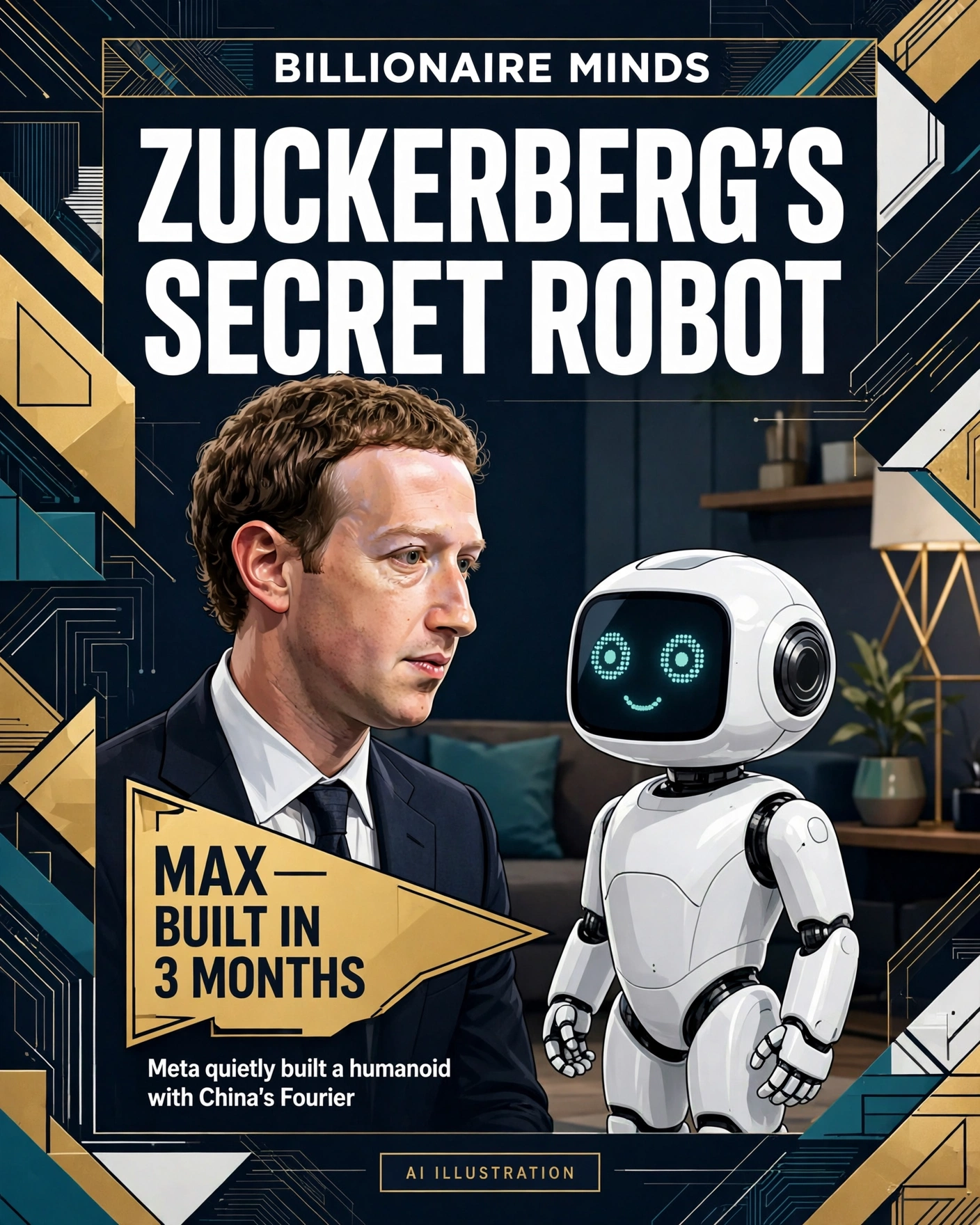
Zuckerberg's Secret Robot Max: Meta Quietly Built a Humanoid for Your Home — With China's Help

Mark Zuckerberg beside Meta's humanoid robot Max — AI illustration

Mark Zuckerberg wants artificial intelligence walking around your home — literally. Meta has quietly built a humanoid robot called Max, a five-foot-tall machine designed to see, hear and move through a living room, according to a report by The Information, picked up by Reuters and featured on the BBC's AI Decoded programme on November 8.

Built in three months — with China's help

Max was assembled in about three months in partnership with Fourier, a Chinese robotics company based in Shanghai. The prototype stands about 1.5 metres tall, weighs roughly 48 kilograms, and runs on Nvidia's Jetson Thor chip. Its five-fingered hands can grip small, light objects like bottles and toys, and it is designed to hear a voice from five metres away, spot a wave from three, and hold eye contact — the very human skills a home robot needs.

Research only — for now

Meta has confirmed the collaboration but says the project is research only, with no plans to sell the robots. Max was shown to employees at an internal event in late August, and a second-generation model, Max 2, is already in development — with more dexterous hands, a projector, and extra sensors to handle stairs, the obstacle that stops most legged robots in a real home. Meta is also hiring in Shanghai and Shenzhen, including for large-scale manufacturing.

The timing is no accident. Silicon Valley is now racing to give AI a body, and Zuckerberg — worth more than $200 billion as Meta's chief executive — is betting that the next frontier for artificial intelligence is not on a screen, but standing in your living room.

Source: The Information, October 31, 2026, via Reuters and Interesting Engineering, November 7, 2026; BBC News AI Decoded, November 8, 2026. This is a fan/commentary summary of reported news; all figures are the sources' estimates. Portrait: AI illustration.

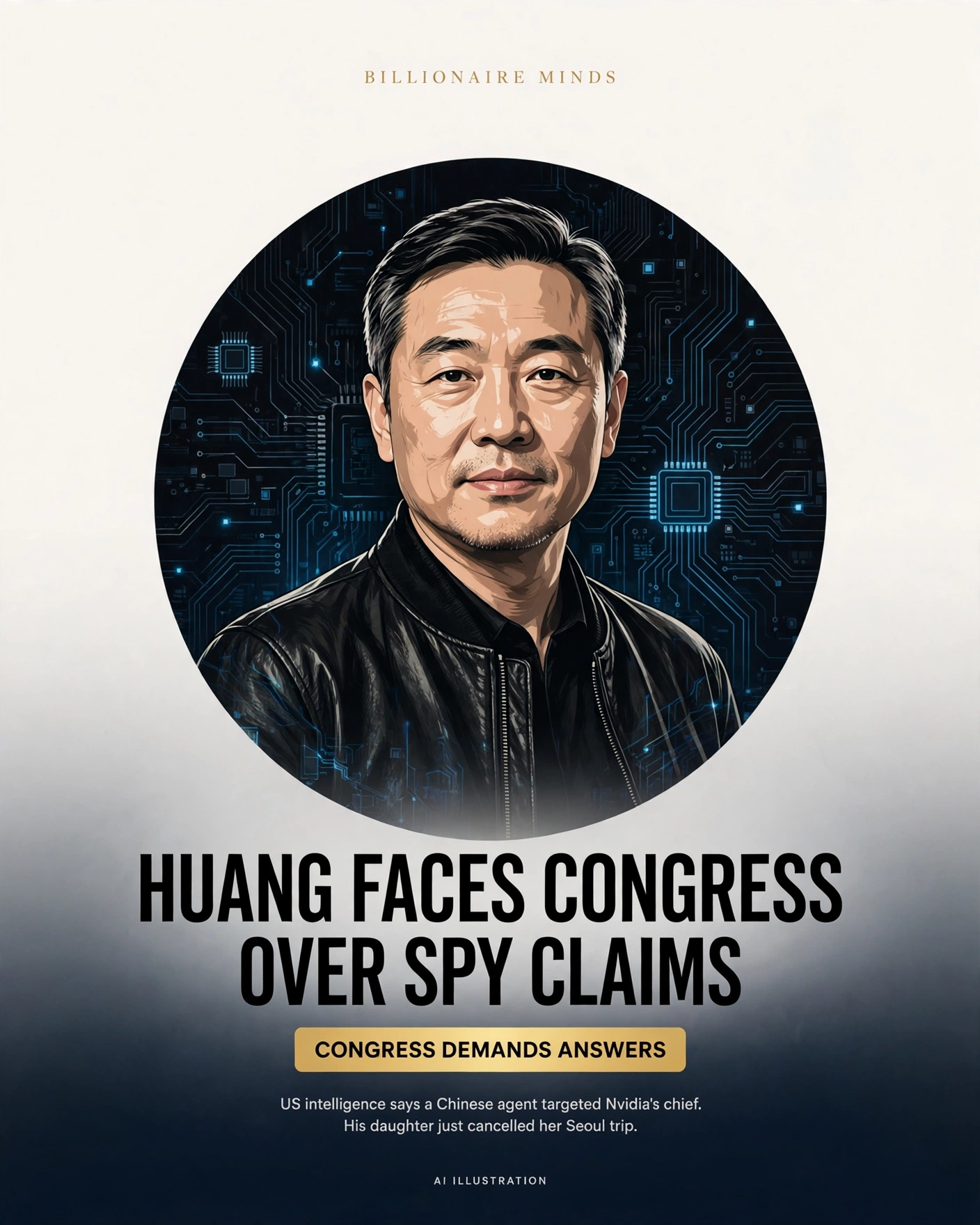
Jensen Huang Summoned by Congress Over 'Chinese Spy' Claims — US Intelligence Memo Says Agent Targeted Nvidia's Chief

Stylized illustration of Nvidia CEO Jensen Huang in a black leather jacket against a glowing AI chip circuit background

Nvidia chief Jensen Huang has been summoned to Capitol Hill after US intelligence concluded that a Chinese businesswoman who cultivated a close relationship with him was recruited by Beijing's top spy agency — a scandal that is now pulling in Congress, the White House, and even Huang's own family.

What US intelligence says

According to The Business Times, a memo that circulated among top policymakers in the Trump administration last spring cited intelligence that Alice Huang — an executive at Megaspeed, a Singapore-based Nvidia customer — was a spy for China's Ministry of State Security. The memo said she was recruited to collect intelligence on Jensen Huang and potentially influence Nvidia to push for its most advanced AI chips to be made available to China. The existence of the memo had not previously been reported.

The New York Times reported on October 29 that Huang was the target of a Chinese intelligence operation and that US agencies had electronically surveilled Alice Huang for at least a year. The Financial Times reported on November 6 that she was recruited specifically to establish a relationship with the Nvidia chief. The two Huangs are not related.

Congress wants answers by November 11

On November 5, the Republican leaders of three powerful House committees — Foreign Affairs, Intelligence, and the Select Committee on the Chinese Communist Party — asked Huang to appear for a closed-door briefing on November 18, giving him until November 11 to reply. They said they want to establish "the extent to which U.S. national security has been placed at risk." Senator Chris Coons, a Democrat, has also called for an investigation, writing on X: "Congress will investigate and get answers."

The fallout reaches Seoul

The scandal is already rippling through Nvidia. Huang's daughter Madison Huang, a senior director at the company, abruptly cancelled a planned trip to Seoul on November 8, days before Nvidia's AI Day event there on November 9–10. Officials cited only "family reasons" and gave no further details.

Nvidia has repeatedly denied any wrongdoing. A company spokesperson said Huang's interactions with Alice Huang were "not unusual" and consistent with meetings he has with any customer, and insisted no sensitive information was shared. China's embassy called the reporting "unsubstantiated" and "nothing but smears against China." For now, the world's most important chipmaker — and its billionaire chief — are under a spotlight neither can switch off.

Sources: The Business Times, Times Now, The New York Times, Financial Times. Image: AI illustration.
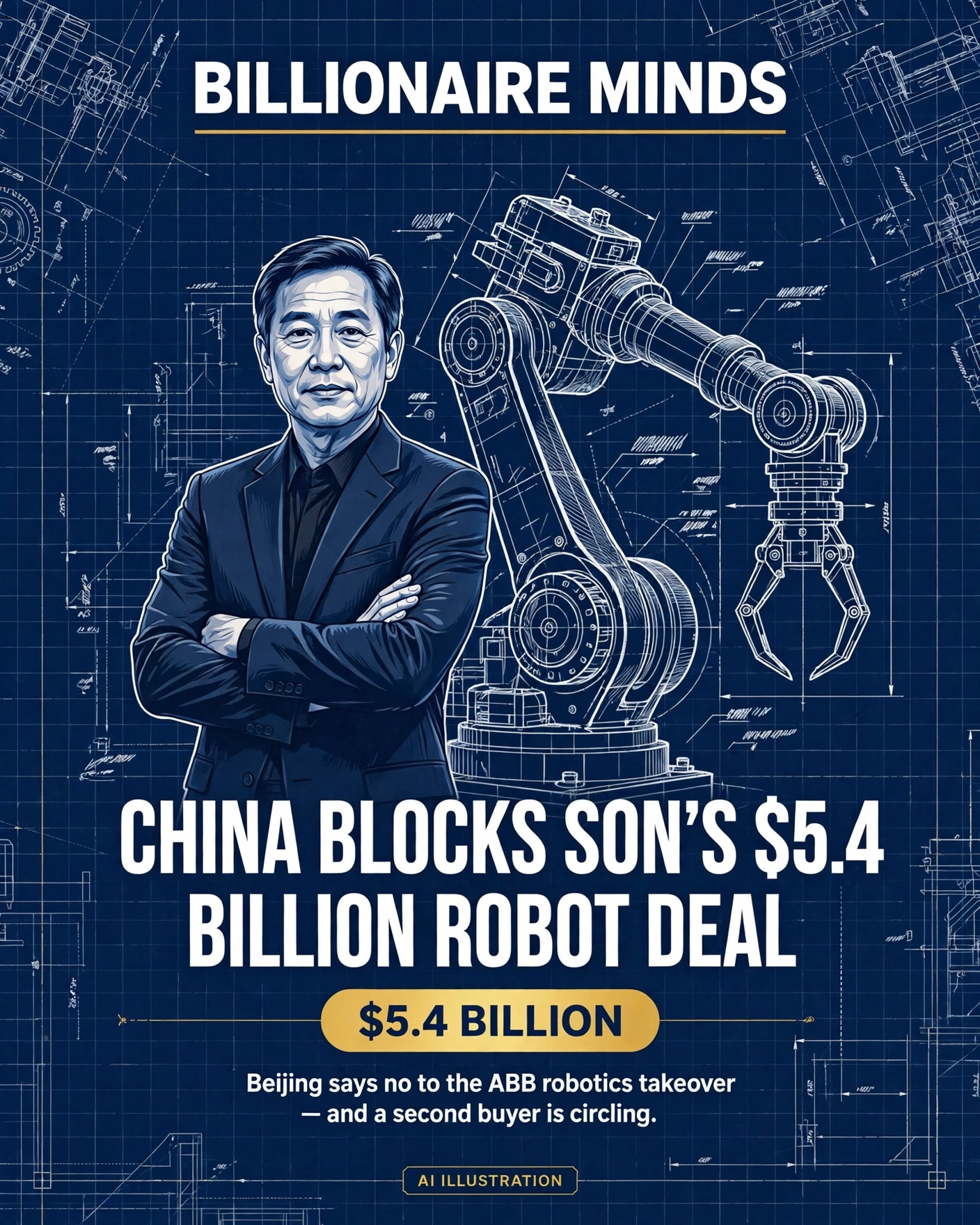
China Just Killed Masayoshi Son's $5.4 Billion Robot Deal — and a Second Buyer Is Already Circling

Masayoshi Son beside an industrial robot arm — China blocked SoftBank's $5.4 billion ABB robotics takeover

China has just slammed the door on one of the biggest robotics deals in history — and it is a direct blow to Masayoshi Son, Japan's richest man and the founder of SoftBank. Beijing's powerful state planner has blocked SoftBank's $5.4 billion purchase of ABB's robotics division, a deal Son had called a cornerstone of his push into what he calls "physical AI" — artificial intelligence that lives in machines, not just in software.

The Financial Times first reported the block on Thursday, November 5, and ABB confirmed it the same day: China's foreign-investment security review office had "prohibited the acquisition of the ABB Robotics business in China." SoftBank had agreed to buy the Swiss engineering giant's robotics division in October 2025 for $5.375 billion, with completion planned for mid-to-late 2026. The European Commission cleared the deal unconditionally in March. Beijing said no anyway.

Why Beijing Said No

The fear, according to people familiar with the review, is data. ABB's robots work on factory floors across China, collecting reams of production data — and Chinese regulators worried that data could be shipped overseas and used to train advanced AI models, including those built by OpenAI, in which SoftBank is a major investor. During the review, Beijing reportedly demanded that some of the robotics unit's manufacturing capacity and intellectual property stay in China. The decision surprised SoftBank: the deal had already cleared China's competition review in February, and people close to the company expected the separate security review to pass too — until last week.

What Happens Next

Neither company has called the deal off. ABB says the two sides "are in close dialogue and are working constructively on the transaction," while SoftBank is weighing whether it can reapply. But the clock is ticking: Reuters reported on November 8 that carving the Chinese operations out of the deal is now under consideration, and Bloomberg added that ABB is simultaneously exploring a sale to another interested party — with valuations of just $2–3 billion, barely half of what Son agreed to pay. ABB's robotics unit generated $2.3 billion in revenue in 2024 and employs roughly 7,000 people. SoftBank reports its half-year results on November 10 — the first moment Son will have to tell investors whether he will fight for the deal, restructure it, or walk away.

Source: PYMNTS, reporting Reuters; Nikkei Asia; SWI swissinfo.ch. Image is an AI illustration.

Two Brothers Just Became Billionaires Building the Joints of Humanoid Robots

Two brothers in suits beside a white humanoid robot on a navy blueprint background — Zuo Yuyu and Zuo Jing, each worth $1 billion from robot joints

Image: AI illustration.

Two brothers from China just joined the billionaire club — not by building robots, but by building the tiny joints that let robots move. Zuo Yuyu, 56, and his older brother Zuo Jing, 61, are each worth $1 billion after shares of their company, Leader Harmonious Drive Systems, jumped 40% in the past year, according to Forbes.

The joint that powers the humanoid boom

Leaderdrive, based in Suzhou, is China's largest maker of harmonic reducers — the precision joints that act as a robot's elbows and shoulders. J.P. Morgan estimates the company holds 30% to 40% of China's harmonic reducer market, and its customers include humanoid heavyweights UBTech Robotics and Agibot. It has even fulfilled small-batch research orders from Tesla and Nvidia-backed Figure AI.

From side project to a $1 billion fortune each

Yuyu, a physics graduate from Nanjing University, started working on harmonic reducers on the side in 2003. The core technology was locked up by Japanese firms, and he has said there was "no blueprint but only a process of constant trial and error." The first product launched in 2011, when he founded Leaderdrive. His brother Jing, who had been working in the government's tax bureau, joined in 2014. The company went public on Shanghai's Star market in 2020, raising around 1.1 billion yuan.

The numbers explain the surge. In 2025, Leaderdrive's net profit more than doubled to 124.4 million yuan ($18.2 million) on a 47% jump in revenue to 570.7 million yuan — and components for industrial robots and humanoids made up 74% of its sales. Based on Thursday's closing price of 203.8 yuan, each brother's 17% stake is worth $1 billion.

Tesla, Figure AI — and a move into the U.S.

Leaderdrive still earns 90% of its revenue in China, but it is pushing overseas. In February it formed a joint venture with Taiwanese billionaire Chin Jong Hwa's auto-parts supplier Minth Group to develop joint modules for humanoids in the United States — a venture J.P. Morgan says is "well positioned to serve major customers such as Tesla, Figure AI, and Boston Dynamics."

The Zuo brothers are the latest Chinese billionaires minted by the robotics supply chain, joining Wang Xinyang of image-sensor maker Gpixel and Howard Huang of 3D-vision company Orbbec. As humanoid robots move from demo videos to factory floors, the people selling the parts are getting rich first.

Source: Forbes, November 7, 2026. This is a fan/commentary summary of reported news; all figures are Forbes' estimates.

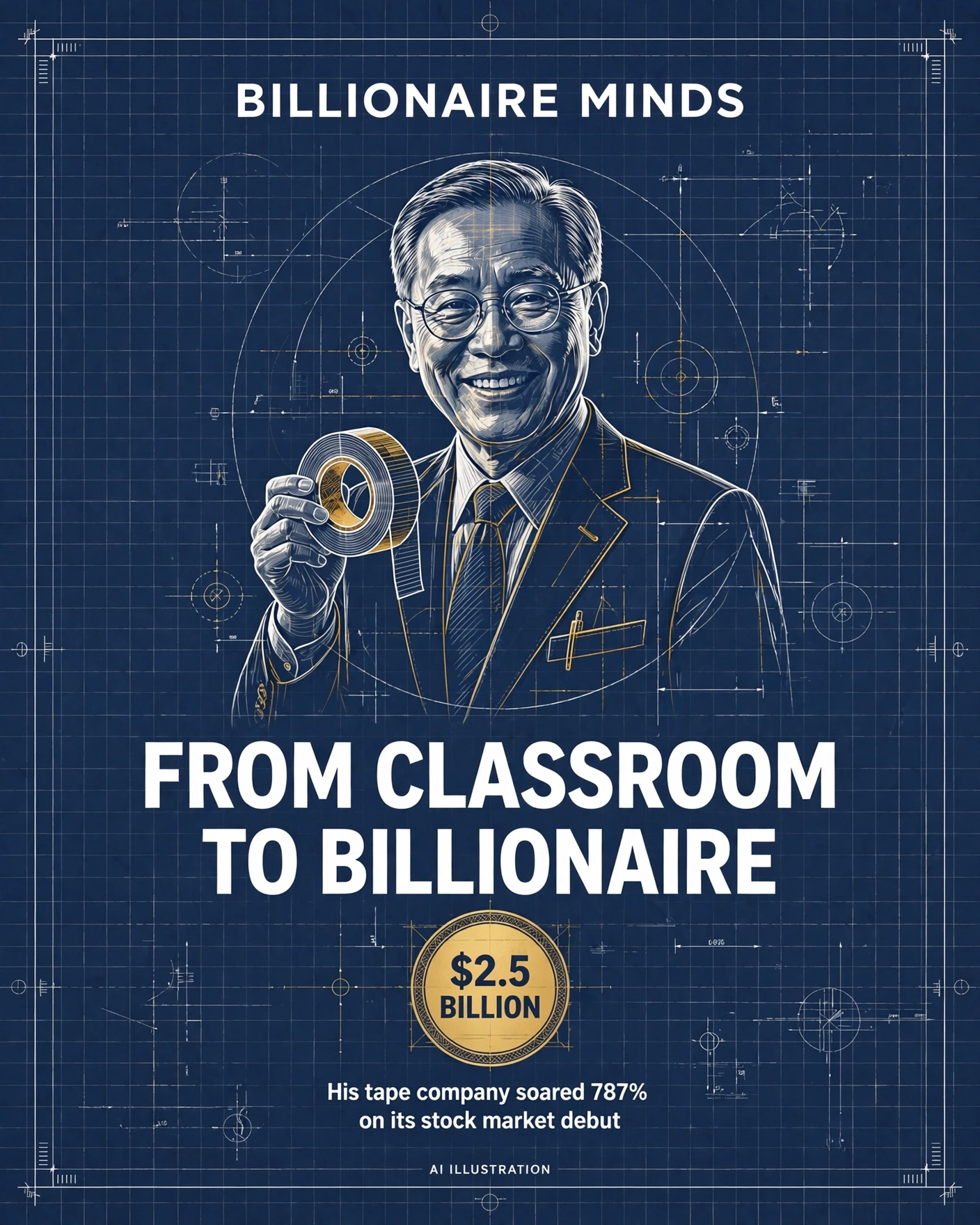
From Classroom to Billionaire: Ex-Teacher's Tape Company Soars 787% on Stock Market Debut

Mai Michael — the former schoolteacher whose tape company Crown New Materials soared 787% on its stock market debut, making him a $2.5 billion billionaire

A former elementary school teacher in China has just joined the billionaire club — thanks to adhesive tape. Mai Michael, 62, watched his fortune soar to an estimated $2.5 billion after Crown New Materials Technology, the company he co-founded with his sister, surged as much as 787% on its stock market debut in Shenzhen on November 3, 2026.

The debut was one of the most spectacular listings of the year. Crown priced its shares at 16.98 yuan apiece, raising 956 million yuan (about $144 million). Investor demand then sent the stock rocketing to an intraday high of 150.58 yuan — triggering two trading halts in a single morning — before closing nearly 398% above the IPO price.

From the Classroom to the Boardroom

Mai's journey to the billionaire list took four decades. He taught at an elementary school in Zhongshan, in China's southern Guangdong province, from 1981 to 1984 before quitting in December 1984 to enter the adhesive materials business. In 2000, he and his sister Mai Huixia, 64, founded Crown New Materials, where he now serves as chairman and CEO and she as vice-chairperson.

Forbes estimates Mai's fortune at around $2.5 billion and Huixia's at $2 billion, based on their stakes in the company. The siblings jointly controlled 87.17% of Crown before the offering — though the figures are paper wealth, moving up and down with the share price. The stock gave back some gains the next day, falling 20.86% on November 4.

The Tape Behind Your Phone

Crown makes adhesive tapes and protective films used across consumer electronics, automobiles and semiconductors — and its customer list reads like a who's who of global manufacturing, including Apple, Tesla and BYD, according to company disclosures cited by Forbes. The company plans to use the IPO proceeds to expand production capacity and establish a research centre.

For a man who once taught children in a small manufacturing city, the debut is a reminder that some of the world's biggest fortunes are built on the most ordinary products.

Source: CNN (Nov 4, 2026), reporting Forbes estimates. Portrait: AI illustration.

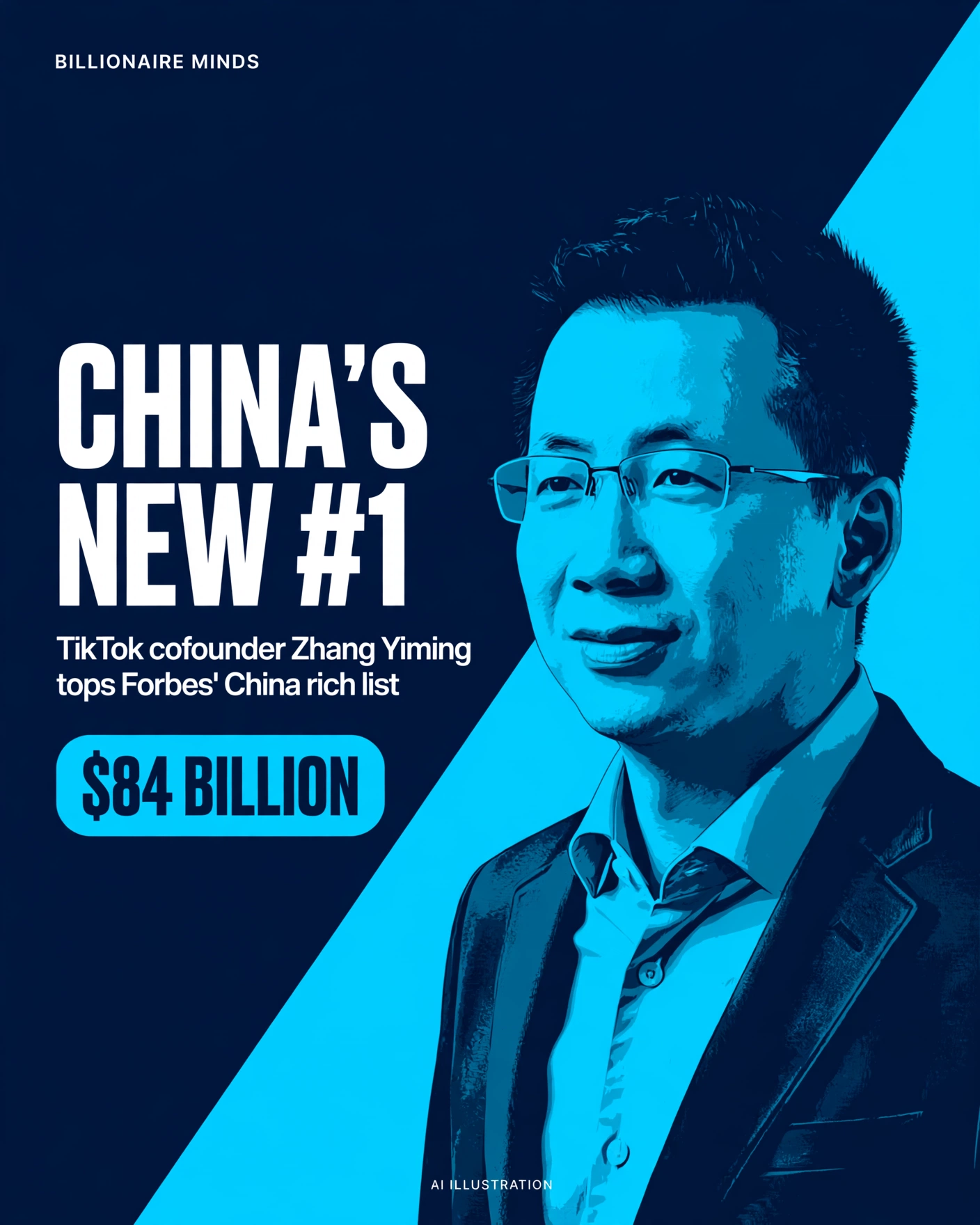
TikTok Cofounder Zhang Yiming Tops China's Rich List for the First Time With an $84 Billion Fortune

Zhang Yiming — TikTok cofounder and China's richest person for the first time at $84 billion on Forbes' 2026 list

The man behind TikTok is now officially China's richest person. Zhang Yiming, the 43-year-old cofounder of ByteDance, has topped Forbes' 2026 China rich list for the first time, with a fortune of $84 billion — up more than 21% from $69.3 billion a year ago.

A five-year reign comes to an end

Zhang replaces bottled-water tycoon Zhong Shanshan, who had dominated the ranking for five consecutive years. Zhong's fortune plunged $16.9 billion to $60.2 billion, pushing him into second place, after shares in his Nongfu Spring beverage company fell by nearly a quarter over the past year.

AI is minting the new fortunes

Zhang's rise is powered by ByteDance's accelerating push into artificial intelligence, with plans to invest up to $70 billion this year. The company behind TikTok and China's Douyin is developing AI products including the Doubao chatbot and the Seedance video-generation tool — and Zhang has personally overseen work on an AI model designed to generate virtual worlds. The AI wave runs through the whole list: DeepSeek founder Liang Wenfeng climbed 31 places to third with $46 billion, the largest gain on the ranking, and all seven newcomers made their fortunes in AI, robotics or related industries.

The empire behind the fortune

Zhang cofounded ByteDance in 2012 and stepped back from day-to-day leadership in 2021, but his stake in the privately held company keeps growing as it expands beyond short video into AI. Forbes based its 2026 valuations on stock prices and exchange rates as of October 16 — and even as the combined wealth of China's 100 richest fell to $1.3 trillion, the TikTok cofounder's fortune moved the other way.

Source: VnExpress International, November 6, 2026, reporting Forbes' 2026 China rich list; Bloomberg, September 2026. Image: AI-generated stylized illustration.