Posts

Showing posts with the label Jensen Huang

Sergey Brin Compares California to Soviet Russia — and He's Spent $57 Million Fighting the Billionaire Tax

Sergey Brin — the Google co-founder compares California's proposed billionaire tax to Soviet Russia

Google co-founder Sergey Brin has broken his silence on California's proposed billionaire tax — and his comparison is striking. The man who fled the Soviet Union as a six-year-old says the Golden State is heading down the same road, and he has already spent $57 million trying to stop it.

In a rare statement to the New York Times, Brin said: "I fled socialism with my family in 1979 and know the devastating, oppressive society it created in the Soviet Union. I don't want California to end up in the same place."

The 5% Tax That Sparked a Billionaire Exodus

The proposal is a one-time, 5% tax on the wealth of California residents with assets worth at least $1.1 billion. The union behind it says it has collected nearly 1.6 million signatures — almost twice the 875,000 needed — and has submitted them to election officials to get the measure on the November ballot.

Supporters say the money is needed to compensate for federal healthcare funding cuts, with about 90% earmarked for public health services. But opponents — including Democratic Governor Gavin Newsom — warn that driving billionaires out of the state will do more harm than good for California's economy and budget.

$1 Trillion Has Already Left

The exodus is already underway. Billionaires worth a combined $1 trillion have fled California as the wealth tax inches closer to the ballot. Google co-founder Larry Page, worth $281.9 billion, has moved or axed more than 45 California companies and bought a mansion in Miami. Brin himself, worth $260.1 billion, has terminated or moved 15 California companies and snapped up property in Florida and Nevada. Meta CEO Mark Zuckerberg, worth $231.4 billion, is also leaving.

PayPal co-founder Peter Thiel was among the first to go — and has donated $3 million to the fight against the tax. Oracle founder Larry Ellison, worth $217.9 billion, sold his Pacific Heights mansion on Billionaire's Row for $45 million. Car loan magnate Don Hankey called the tax "ridiculous" before leaving, former Uber CEO Travis Kalanick confirmed his move, and DoorDash co-founder Andy Fang called the proposal "stupid."

Not Every Billionaire Agrees

Some of California's richest residents are openly critical but staying put. Mercor co-founder Brendan Foody called parts of the proposal "insane" but says he must stay because his employees and customers are in San Francisco. LinkedIn co-founder Reid Hoffman called it "badly designed" and "horrendous" for innovation, while Anthropic co-founder Dario Amodei described it as "poorly designed" and Vinod Khosla called it "very dumb" — but none of them has announced plans to leave.

And one prominent voice breaks ranks entirely: Nvidia CEO Jensen Huang, the seventh-richest person in the world at $180 billion, has said he is "perfectly fine" with the proposed tax.

For Brin, though, the fight is personal. He arrived in America as a refugee from Soviet socialism — and he is spending a fortune to make sure California never becomes the place his family escaped.

Source: Forbes (Nov 18, 2026), reporting the New York Times. Portrait image is an AI illustration.

Nvidia's Board Just Said No to Jensen Huang — Even Trump Couldn't Bring Him Back

Jensen Huang — Nvidia's board rejected the billionaire founder's offer to return as CEO

Jensen Huang offered to come back. Nvidia's board said no — unanimously, in public, and on the company's biggest earnings call of the year.

Hours after Huang posted on X that he would be "honoured" to return as CEO if the board decided it served shareholders, employees, the company and America, board chairman Harvey Jones opened Nvidia's third-quarter earnings call on Tuesday with a blunt verdict: "The Nvidia board unanimously accepted his resignation and does not intend to reinstate Jensen as CEO."

It was a stunning rebuke — not just of Huang, but of the campaign to bring him back. President Donald Trump had backed his return. Elon Musk, Epic Games founder Tim Sweeney and Y Combinator's Garry Tan had signed an open letter urging reinstatement. A petition demanding his comeback had gathered 180,000 signatures. None of it moved the board.

The $136 Billion Founder Who Offered to Return

Huang, 63, resigned on November 12 after admitting to extramarital affairs, including one with a Chinese businesswoman reported to be a suspected intelligence asset. The board launched an independent investigation, and the fallout erased roughly $751 billion in Nvidia's market value in days. Huang's own fortune fell $26.4 billion in a week to about $136 billion, dropping him to 14th on Forbes' real-time rich list.

In his first public comment since resigning, Huang acknowledged "serious mistakes" in his personal life and pledged to cooperate with the board's investigation. He has also agreed to testify before congressional committees on December 1, with Nvidia general counsel Tim Teter scheduled to appear the next day.

"We've Got This" — Nvidia Moves On Without Its Founder

Interim CEO Colette Kress, Nvidia's chief financial officer of 13 years, used the same earnings call to insist the company is not standing still. "Our roadmap is on track, and our ambition has never been greater," she told investors, closing with a rallying call: "We've got this."

The numbers backed her up. Nvidia reported third-quarter revenue of $115.8 billion — up 103% from a year earlier — and Kress raised the growth outlook for the 2028 financial year to around 75%, up from about 70%. The board has hired executive search firm Heidrick & Struggles to find a permanent successor, and set up a new national security and export control oversight committee.

Jones said the board wants to install a permanent CEO "as quickly as possible, but we won't expedite the CEO before finding exactly the right person." For now, the message from Nvidia's boardroom is clear: the company that Huang built over 33 years will go forward without him — and it is in no hurry to look back.

Source: CNN (Nov 17, 2026); The Business Times; South China Morning Post. Portrait image is an AI illustration.

Billionaire Leo KoGuan's $1.3 Billion Ultimatum — No Huang, No More Nvidia Money

Stylized illustration of billionaire Leo KoGuan before a glowing microchip and city skyline — his $1.3 billion ultimatum to Nvidia's board over Jensen Huang's return

One of Nvidia's biggest individual shareholders just drew a line in the sand. Singapore-based billionaire Leo KoGuan — who has about $1.3 billion invested in the chipmaker — says he will not buy another share of Nvidia while Jensen Huang is out as CEO. "No further investment without Jensen," the 71-year-old told Bloomberg in a text message.

The Letter Demanding Huang's Return

KoGuan has been defending Huang publicly on X, calling him "the supreme creator" and arguing that his contributions to artificial intelligence should carry more weight than his personal mistakes. He has now joined Tesla CEO Elon Musk and Epic Games founder Tim Sweeney in signing an open letter urging Nvidia's board to reinstate Huang. Huang stepped down on November 12 following revelations about extramarital relationships, including one involving a suspected Chinese spy. The board, however, has said it does not intend to bring him back — even as Nvidia just posted a $115.8 billion quarter without him.

Who Is Leo KoGuan?

KoGuan is the founder and chairman of SHI International, one of the world's largest privately held IT solutions providers, with around 7,000 employees, more than 17,000 customers and $16 billion in gross sales. He and his then-wife Thai Lee bought a struggling New Jersey software reseller for less than $1 million in 1989 and built it into SHI; Lee is now president and CEO, with an estimated $8 billion fortune of her own. KoGuan first appeared on Forbes' Singapore rich list in 2022 and ranked ninth in September 2026 with an estimated net worth of $8.2 billion. Beyond SHI, he became one of Tesla's largest individual shareholders, holding 6.3 million shares plus options on another 1.8 million by September 2021 — a stake worth more than $7 billion at the time. In March 2026 he disclosed buying 2 million Nvidia shares in two transactions. His wealth has also funded major Singapore real estate, including a S$62 million penthouse bought from British billionaire James Dyson in 2020 and a roughly S$100 million boutique hotel acquired in 2025.

A Shareholder Standoff

KoGuan's ultimatum sets up a direct clash between Nvidia's board and one of its most prominent backers. The board has closed the door on Huang's return, yet a billionaire who has poured $1.3 billion into the company is now publicly refusing to invest another dollar until the man he calls "the supreme creator" is back in charge. With Musk and Sweeney also pressing for reinstatement, the pressure on the board is only growing — and the next move belongs to the shareholders.

Source: VnExpress International, November 18, 2026, reporting Bloomberg. Image: AI illustration.

Nvidia Doubles Sales Without Huang — $115.8 Billion Quarter and a $130 Billion Guide as the Board Closes the Door on His Return

Nvidia doubles sales without Jensen Huang — $115.8 billion revenue in its first quarter under interim CEO Colette Kress

Nvidia just delivered its first earnings report without Jensen Huang — and the numbers barely noticed he was gone. Revenue for the quarter ended October 25 more than doubled to $115.8 billion, up 103% from a year ago and roughly $6.7 billion above what Wall Street expected. Adjusted earnings hit $2.68 a share against a $2.47 forecast, and net income more than doubled to $65.3 billion.

The data-center business did the heavy lifting: $107.6 billion, up 110%, with sales to AI clouds and enterprise customers up 195%. New Vera Rubin systems began shipping in the quarter and added nearly $20 billion of revenue on their own. Shares rose about 2.4% in after-hours trading after the release.

A $130 Billion Guide — and No Way Back for Huang

The outlook was even louder than the quarter. Nvidia guided fourth-quarter revenue to $130 billion, comfortably above the roughly $125 billion analysts expected, in a quarter that includes an extra week. Interim CEO Colette Kress — who is also chief financial officer — told investors "the momentum is real" and raised the fiscal 2028 growth outlook to about 75%.

Then came the line that closed the book on the saga of the past week. Board chair Harvey Jones told the earnings call the board does not intend to reinstate Huang, ending the campaign to bring the founder back after his November 12 resignation. The message from Nvidia's first post-Huang quarter is blunt: the machine prints money with or without him.

Source: Motley Fool / MLQ.ai / Zacks / BeInCrypto

Image: AI illustration. This is a commentary post based on public reporting.
After Huang's Shock Exit, Investors Ask the $1 Trillion Question: Who Replaces Musk and Zuckerberg?

Stylized illustration of two tech founders back to back under a neon question mark — who replaces Elon Musk and Mark Zuckerberg after Jensen Huang's Nvidia exit

Jensen Huang's shock departure from Nvidia has done more than wipe billions off the chipmaker's value. It has forced investors to ask a question Silicon Valley's most powerful companies have spent years avoiding: what happens if Elon Musk or Mark Zuckerberg suddenly aren't there?

Huang built Nvidia into the world's most valuable company and then walked away after an investigation into his relationships with employees and a suspected Chinese intelligence asset. His exit has put a spotlight on a problem facing every founder-led giant — succession planning.

The question nobody at Tesla or Meta wants to answer

Tesla, SpaceX and Meta remain heavily dependent on their founders, and their own financial disclosures admit it. SpaceX warned investors in its filing ahead of its public listing that losing Musk — through death, disability or another circumstance — could disrupt its management structure and affect its ability to execute its business strategy. The company cautioned that finding a replacement with Musk's combination of skills and experience could be a lengthy and uncertain process, with no assurance it could find a suitable successor in time, or at all.

Ross Gerber, an investor in SpaceX who has previously raised concerns about Tesla's succession planning, believes the Nvidia episode could be particularly unsettling for Musk. "This Jensen thing is probably the biggest fear that Elon has," Gerber told The Washington Post.

Musk's $1 trillion pay deal has a succession clause

There is another twist. Tesla's massive compensation package for Musk — potentially worth $1 trillion and designed to keep him involved through the middle of the next decade — requires him to develop a succession planning framework to qualify for its final two award tranches. But a requirement to plan is not the same as having a ready replacement, and Tesla has not publicly demonstrated a clear succession framework.

Zuckerberg holds the votes — and no public plan

Meta faces the same problem. Its filings warn that Zuckerberg becoming unavailable could have a materially adverse impact on operations, and he holds a majority of the company's voting power — giving him decisive influence over shareholder decisions, including the appointment of directors. Yet Meta's filings do not disclose a succession plan for the chief executive position.

The other side: Apple proved founders can be replaced

A founder's departure does not automatically mean collapse. Apple continued to expand after Steve Jobs died in 2011, with Tim Cook leading it through a period of substantial growth, and Microsoft, Amazon and Alphabet have all moved beyond their founders as chief executives. As Dipal Dutta, CEO at RedoQ, told NDTV: "Technology companies are often driven by the vision of their founders. For long-term success, this inspiration must be sustainable."

The stakes are enormous. Tesla, Meta and Nvidia collectively employ at least 200,000 people and account for almost 10 per cent of the S&P 500's market value, while SpaceX is valued at nearly $1.9 trillion. For investors, the question is no longer hypothetical — it is the $1 trillion question.

Source: NDTV, reporting The Washington Post. Image: AI illustration.

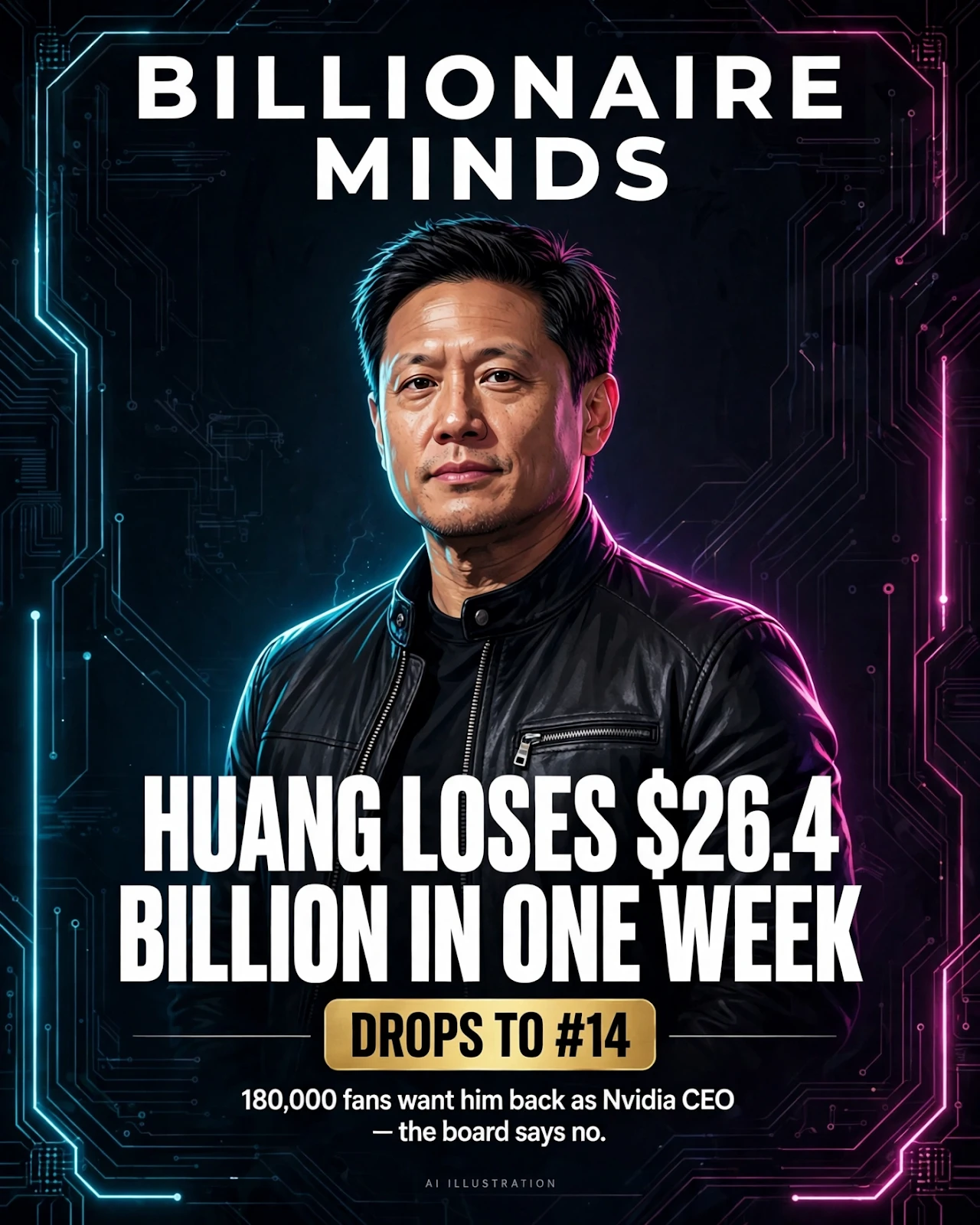
Jensen Huang Just Lost $26.4 Billion in a Week — Now 180,000 People Want Him Back as Nvidia CEO

Jensen Huang — the former Nvidia chief lost $26.4 billion in a week, dropping to No. 14 on Forbes' list, while 180,000 fans petition for his return as CEO.

Jensen Huang's fortune took another hit on Monday. The former Nvidia chief lost $6.1 billion in a single day as the chipmaker's shares slid about 4%, taking his net worth to $135.8 billion — down $26.4 billion in a week. Huang stepped down as CEO last Thursday after an investigation into his relationships with employees and a suspected Chinese intelligence asset.

A Brutal Week on the Forbes List

The slide has been relentless: minus $7.4 billion last Monday, minus $8.4 billion on Tuesday, a $5.9 billion recovery on Wednesday, then minus $8.2 billion on Thursday and minus $3.1 billion on Friday. His fortune is down 16.3% from $162.2 billion on November 9, and he has slipped six places on Forbes' ranking, landing at No. 14, behind Walmart heiress Alice Walton.

180,000 People Want Him Back

Yet while the market keeps punishing him, a campaign is demanding his return. The "Stand With Jensen" petition had attracted more than 180,200 signatures by Monday, with Elon Musk, Replit CEO Amjad Masad and Epic Games CEO Tim Sweeney listed among its supporters. It also claims more than 8,800 signatories as Nvidia employees and over 94,000 as shareholders — though those affiliations are self-reported and unverified.

The Board Says No — for Now

The campaign has not changed the board's position. Three people familiar with the matter told Reuters that Nvidia is not considering bringing Huang back. Nvidia reports its third-quarter earnings today — its first under new CEO Colette Kress, after guiding to revenue of about $108 billion.

Sources: The Economic Times, The Sunday Guardian Live. The portrait image above is a stylized AI illustration, not a photograph of Jensen Huang.

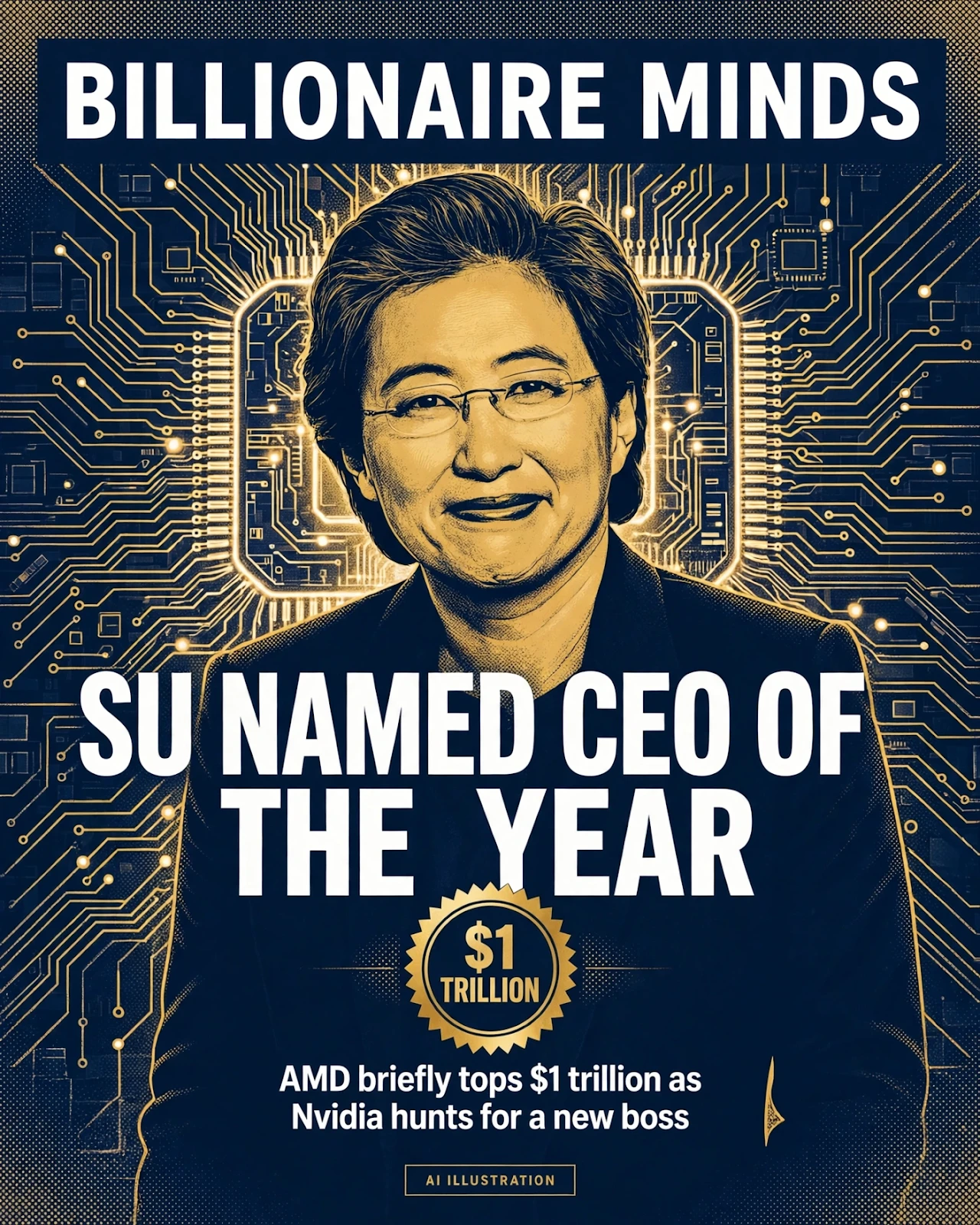
Lisa Su Named CEO of the Year as AMD Briefly Tops $1 Trillion — While Nvidia Hunts for a New Boss

AMD CEO Lisa Su — named 2026 CEO of the Year as AMD shares surged 158% and briefly pushed the chipmaker past a $1 trillion market value

AMD chief executive Lisa Su has been named Yahoo Finance's 2026 CEO of the Year, capping a year in which AMD shares surged 158% and the chipmaker's market value briefly crossed $1 trillion.

A $1 Trillion Milestone — and a $3 Billion Fortune

Yahoo Finance announced the honour on November 12, pointing to the 158% surge in AMD shares and an $8.2 billion deal to acquire Fei-Fei Li's World Labs. Forbes' live tracker put Su's own fortune at $3 billion as of November 13 — up $302 million in a single day — ranking her 1,408th among the world's billionaires. AMD also reported record third-quarter 2026 revenue of $13.4 billion, including $8.5 billion from data centres, the engine of its AI push.

The Rival Without a Boss

Nvidia, AMD's biggest rival in AI accelerators, is hunting for a new chief executive after co-founder Jensen Huang resigned on November 12, with chief financial officer Colette Kress named interim CEO. Media speculation has listed Su — a distant relative of Huang, both born in Taiwan — among possible successors, but there is no indication she has been approached or plans to leave AMD. Nvidia reports quarterly results on November 17, its first earnings under Kress.

The Comeback CEO

Su, 57, took over AMD in 2014, when the company was struggling, and rebuilt it into a major AI infrastructure supplier — expanding its Meta partnership in October, agreeing the $8.2 billion World Labs acquisition in September, and unveiling sixth-generation EPYC processors on November 10. She also received the 2026 National Medal of Science in October, the United States' highest recognition for scientists and engineers. For now, she leads Nvidia's most important challenger at the exact moment its biggest competitor must manage an unexpected leadership transition.

Source: Gulf News (updated November 16, 2026), reporting Yahoo Finance and Forbes. This is a fan/commentary summary of reported news; all figures are the sources' estimates. Image: AI illustration.
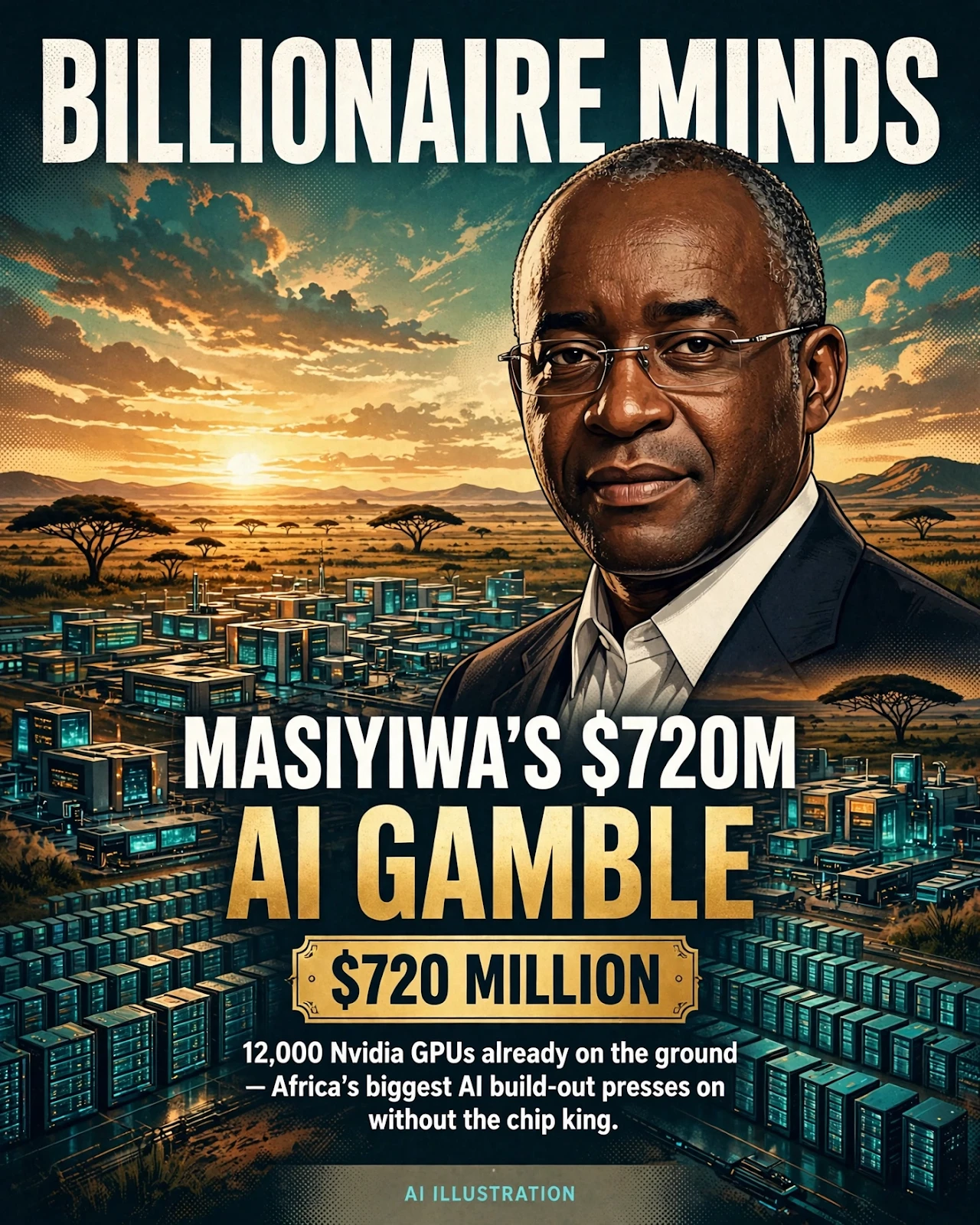
Zimbabwean Billionaire Strive Masiyiwa's $720 Million Nvidia AI Plan Presses On After Jensen Huang's Exit

Strive Masiyiwa — Zimbabwe's richest man presses on with a $720 million Nvidia AI data-center plan across Africa after Jensen Huang's exit

Zimbabwean billionaire Strive Masiyiwa is not blinking. His company, Cassava Technologies — Nvidia's most prominent partner in Africa — is pressing ahead with a $720 million plan to build artificial intelligence data centers across the continent, even after Jensen Huang, the chipmaker's co-founder and the executive who championed the tie-up, resigned on November 12.

A $720 Million Bet on Africa's AI Future

Cassava unveiled the plan in March 2025, with a target of putting 12,000 Nvidia GPUs to work across Africa. Masiyiwa said in November 2025 that the company had already bought all 12,000 chips and flown them in. Its first AI factory, near Cape Town, already runs 3,000 of the processors, with further sites planned in Nigeria, Kenya, Egypt and Morocco. Nvidia is both a supplier and an investor in Cassava — it provides the graphics processors that power the AI factories and owns a stake in the company, the first Nvidia Cloud Partner headquartered in Africa. Google is also a shareholder.

The Man Who Championed the Deal Just Left

Huang stepped down as Nvidia's president, chief executive and board member with immediate effect, ending a 33-year run at the company. Chief Financial Officer Colette Kress is serving as interim chief executive while the board searches for a permanent successor. The leadership change comes at a delicate time: Nvidia lost about $600 billion in market value during the two weeks of turmoil that preceded Huang's resignation, after the board opened an inquiry into his conduct following reports of extramarital relationships and separate reports that he had been targeted by an alleged foreign intelligence operation. Kress will lead her first earnings call as interim chief executive when Nvidia reports third-quarter results on November 17.

12,000 GPUs and a Continent to Wire

Huang and Masiyiwa promoted the project together. When Masiyiwa launched Cassava's GPU-as-a-service offering in Johannesburg in November 2025, he noted that Africa had once been told there were only 80 Nvidia GPUs on the entire continent — and it still holds less than 0.1% of the world's GPUs. Masiyiwa built his fortune with Econet Wireless, the mobile operator he founded in Zimbabwe in the 1990s after a five-year legal fight for a license. Forbes ranks him as Zimbabwe's richest person. In Egypt, Cassava is working with Vodacom Group and Elsewedy Electric on an AI data center, and Vodacom is now seeking partners to build similar facilities in South Africa and Kenya. The chips are bought, the first factory is live — and the man who sold Masiyiwa on the dream is gone. The bet now stands on its own.

Source: Billionaires.Africa (November 14, 2026). Image: AI illustration.

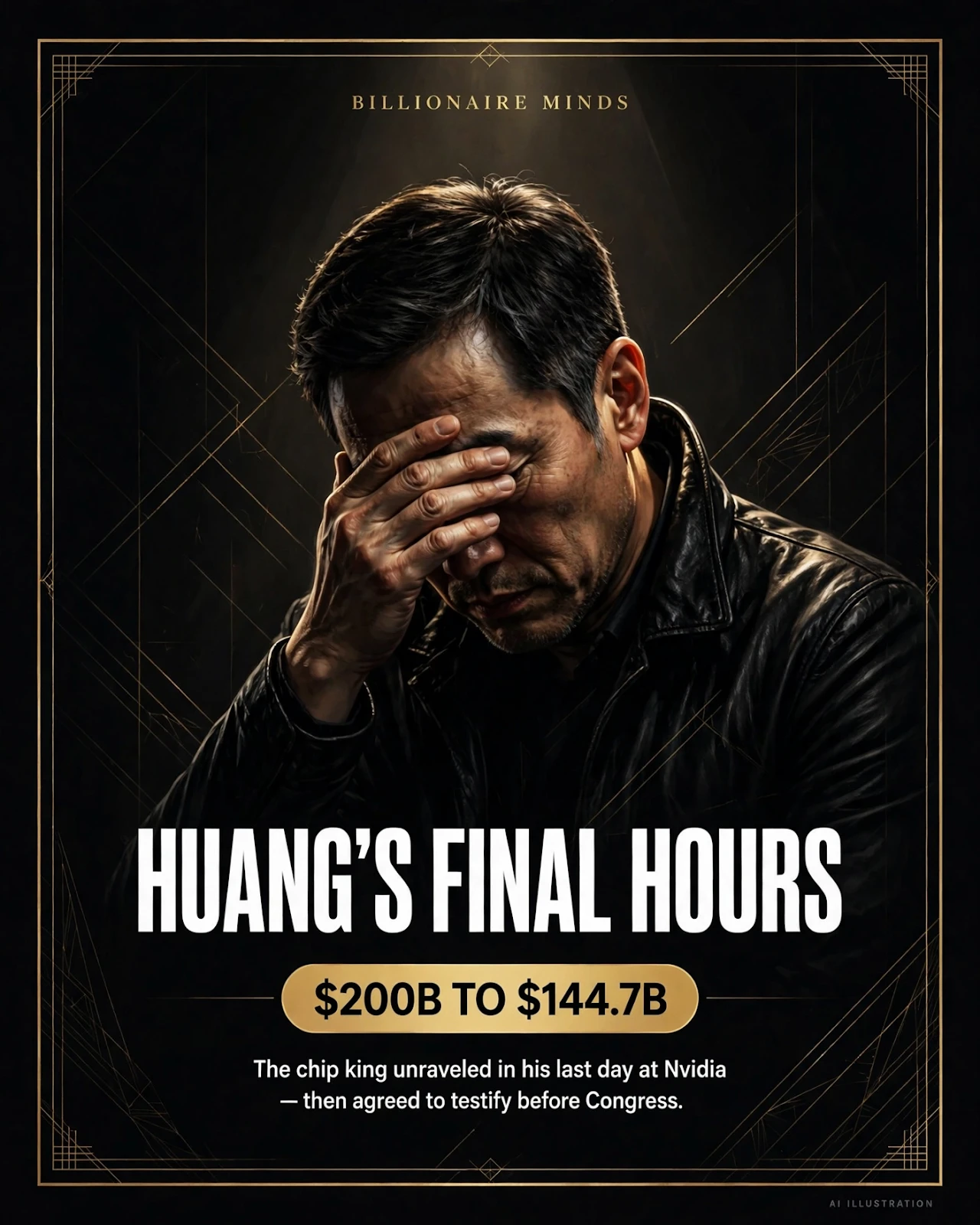
Jensen Huang Unraveled in His Final Hours at Nvidia — Now He's Headed to Testify Before Congress

Jensen Huang — the Nvidia founder's final hours before resigning, his fortune down from $200 billion to $144.7 billion

Jensen Huang built Nvidia from a graphics-chip startup into a $4 trillion giant over 33 years. His fall took less than a week — and new reporting from Bloomberg reveals just how fast the unraveling happened in his final hours in charge.

The Final Hours: "Whatever. I Don't Care."

On Wednesday, with his job on the line, Huang's famous bravado had evaporated, Bloomberg reported, citing unnamed sources. He had started saying "whatever" and "I don't care" — and calling himself a "piece of s—t." His email replies, once instant at all hours, had slowed to a crawl.

The Confession and the Forced Resignation

After outlets reported that his relationship with Alice Huang — a Singapore-based executive U.S. officials reportedly suspect of ties to Chinese intelligence — was romantic, Nvidia general counsel Tim Teter rushed to Huang's house to confront him. Huang confessed, according to Bloomberg and The Information. Hours later, The New York Times reported a second affair, with Nvidia vice president Kimberly Powell. The board met in an emergency late-night session — and Huang was forced to resign on Thursday. Reuters then reported a third affair with another Nvidia employee. Huang has since hired the law firm Paul Weiss.

What Comes Next: Congress and a $450 Billion Hole

Huang's fortune, which topped $200 billion in October, is now about $144.7 billion — 13th richest in the world, per Forbes. Nvidia has shed more than $450 billion in market value. And the story isn't over: Huang has agreed to testify before Congress in a joint closed-door meeting with the chairs of the House committees on China, foreign affairs and intelligence, before the Thanksgiving break. President Trump said Thursday that Huang is "going through hell" and "feels most badly [about] his wife and family."

Source: New York Post, reporting Bloomberg, The Information, The New York Times and Reuters. Allegations about Alice Huang's suspected intelligence ties have not been independently established.

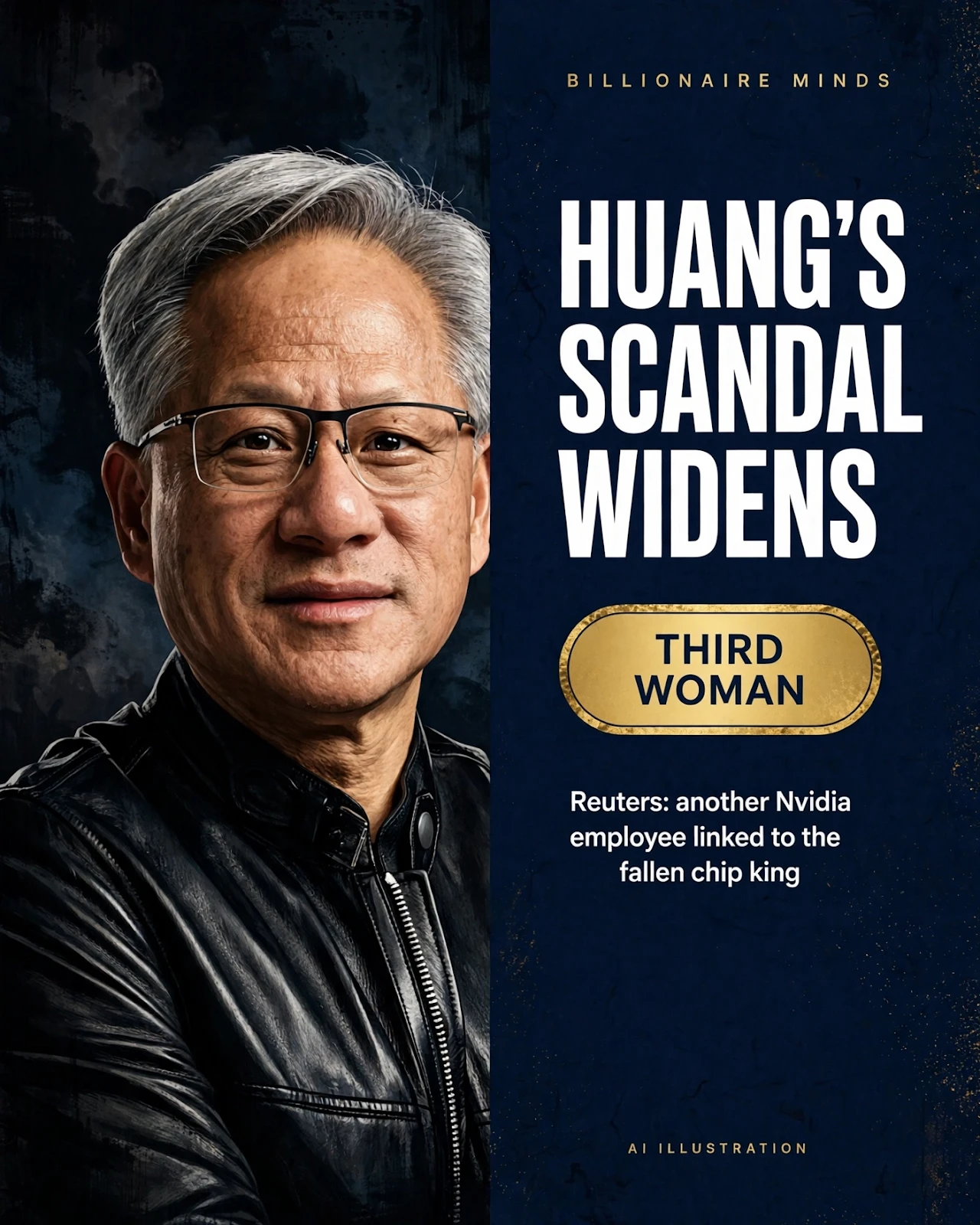
Jensen Huang's Nvidia Scandal Widens: Reuters Reports a Third Alleged Affair With Another Employee

Jensen Huang — Reuters reports the former Nvidia CEO allegedly had a third affair with another Nvidia employee as his fortune slides to $143 billion

The scandal that ended Jensen Huang's 33-year reign at Nvidia just got bigger. Reuters reports that the billionaire allegedly had an intimate relationship with a third woman — another employee of the artificial intelligence chipmaker he co-founded.

According to the Reuters exclusive, two people familiar with the matter confirmed the relationship. The news agency deliberately withheld the woman's name and did not disclose her position inside Nvidia, how long the alleged relationship lasted, or whether she reported directly to Huang.

A Third Name, Less Than a Day After the Second

The revelation landed on Thursday, November 12 — less than 24 hours after reports surfaced about Huang's alleged relationship with Kimberly Powell, Nvidia's vice president of healthcare. The New York Times reported that Powell and Huang were seen showing affection at a San Jose hotel during an Nvidia conference in March.

Before that, the other woman publicly linked to Huang was Alice Huang, a Chinese businesswoman who is unrelated to him and is reportedly under investigation over suspected connections to Beijing's intelligence network. Those allegations have not been independently established — and Reuters notes there is no publicly established evidence that the newly reported relationship involved any national security concerns.

The Apology, the Exit, and the $143 Billion Fortune

Huang admitted infidelity in a November 8 statement to his family and Nvidia colleagues, writing: "I was unfaithful to my wife. My actions hurt her and our children. There is no excuse for what I did." He has been married to his wife Lori since 1985.

Four days later he stepped down as Nvidia's president, chief executive and director, effective immediately, with chief financial officer Colette Kress named interim CEO. Nvidia declined to comment on the latest report, and Huang, Powell and a board representative did not respond to requests for comment.

The fallout has been brutal for his fortune. Forbes estimates Huang's wealth at roughly $143 billion, down about $19.2 billion in four days, dropping him from 8th to 13th on the global rich list. Nvidia shares closed at $166.19 on Thursday, down 4.3%, and the company's market value has shed nearly $500 billion in a week. All eyes are now on Nvidia's third-quarter results on November 17 — its first under Kress.

Source: Men's Journal, reporting Reuters (Nov 13, 2026); Financial Express; Free Press Journal. The portrait on this post is an AI-generated illustration.

Telegram Billionaire Pavel Durov's 'Spy Girl' Joke About the Nvidia Scandal Sparks a Backlash

Telegram founder Pavel Durov — stylized AI illustration of the billionaire holding a phone, with the headline 'Durov wants a spy girl'

Telegram founder Pavel Durov has turned the biggest scandal in tech into a joke — and the internet is split. The 42-year-old billionaire took to X this week with a tongue-in-cheek complaint: spy agencies, he said, had never sent a single "spy girl" his way.

The joke that started it

On November 11, Durov posted: "Unfair that CEOs who aren't into Asian girls get fewer dating options from spy agencies. Where are the French/Russian/Iranian honeypots? Not one spy girl sent my way. Are they even trying?" He added: "France is excused — their decision-makers aren't into girls. Everyone else: try harder!" The post passed one million views and spread across news outlets worldwide.

Then he doubled down

A day later, Durov posted a "correction": "CORRECTION: Spy agencies are trying after all. I checked my IG DMs: hundreds of very interested 'models'... But Instagram? In 2026? Send me NFTs and Grams on Telegram like professionals! DMs are cheap. Grams hold their value." He even attached a screenshot of crypto prices, with his Grams token in the green.

The backlash

Not everyone laughed. Critics accused Durov of trivialising serious espionage allegations and stereotyping women, while others called the joke racially charged. Supporters called it classic Durov — the same provocateur who was arrested in France in August 2024 and who claimed in 2024 to have fathered more than 100 children through sperm donations.

What it was really about

Durov never named Jensen Huang, but the timing was unmistakable. The former Nvidia chief resigned on November 12 after reports of affairs — including one with Alice Huang, a former executive at Singapore data-centre firm Megaspeed International, whom US intelligence officials examined over alleged links to China's Ministry of State Security. Those allegations have not been independently established, and Durov offered no evidence that any agency had contacted him.

For now, the joke has done what Durov's posts usually do: dominate the timeline. Whether the laughter lasts is another question.

Sources: BusinessToday, NDTV, Times Now.

Billionaire Leo KoGuan Freezes Nvidia Cash — "No Further Investment Without Jensen"

Leo KoGuan, the $13.2 billion investor, freezes new investment in Nvidia after Jensen Huang's ouster — his $1.3 billion stake stays, but no more cash without Jensen.

One of Nvidia's biggest individual shareholders just drew a line in the sand. Singapore-based billionaire Leo KoGuan — worth $13.2 billion, according to the Bloomberg Billionaires Index — says he will not put another dollar into the chipmaker while Jensen Huang is out of the CEO's chair.

"No further investment without Jensen"

KoGuan, who has around $1.3 billion invested in Nvidia, took to X on November 12 to defend the ousted founder and attack the board's decision. "Jensen is a good guy, he is the main driver of si chips and si industries," he wrote. "As one of the largest individual SH of NVDA, I demand the NVDA board and the world to retain him as CEO of Nvidia."

He claims Elon Musk, investor Gavin Baker and President Donald Trump all advised Huang to stay on as CEO of the company he founded. Huang resigned on November 12 after 33 years at the helm, following reports of three affairs — including one with a woman suspected of spying for China. Nvidia has lost more than $500 billion in market value since the scandal broke, and CFO Colette Kress has taken over as interim CEO.

Loyalty to the founder, not the company

On November 13, KoGuan escalated. While insisting Nvidia's business trajectory is unchanged over the next three years, he confirmed he will scale back his planned investment in the chipmaker and redirect the money toward rival super-intelligence companies instead.

"I will reduce my plan investment in NVDA. Instead, I will invest more in other si companies. I hope and plan to invest in Jensen Huang if he creates or buys si company," he posted. "I hope he will offer me the opportunity to invest in his future company."

KoGuan began buying Nvidia shares in March, a major diversification for an investor whose fortune was long tied largely to Tesla. He has also disclosed stakes in SpaceX and Google parent Alphabet. His message to the board is blunt: the money follows the creator — not the company that pushed him out.

Source: BusinessToday (November 13, 2026), reporting Leo KoGuan's posts on X. The spying allegation against Alice Huang is reported as suspicion by US intelligence and has not been proven in court.

Nvidia's New Boss Is a Billionaire CFO — Colette Kress Takes Over the $4 Trillion AI Giant After Huang's Exit

Colette Kress, Nvidia's billionaire chief financial officer, now interim CEO of the $4 trillion AI chip giant after Jensen Huang's resignation

For 33 years, Nvidia had exactly one chief executive: Jensen Huang. That era ended on Thursday, November 12, 2026 — and the person now running the world's most valuable chipmaker is a 59-year-old billionaire most people have never heard of: Colette Kress.

Kress, Nvidia's chief financial officer and executive vice president since September 2013, was named interim CEO hours after Huang resigned. She keeps her CFO role while the board searches for a permanent successor, and longtime board member Harvey C. Jones has become the company's first chairman.

The CFO who became a billionaire

Kress is one of the very few chief financial officers in history to become a billionaire. She crossed the $1 billion mark in July 2025, according to the Bloomberg Billionaires Index, and Forbes ranked her 32nd on its 2026 list of America's Richest Self-Made Women with an estimated fortune of $1.2 billion as of June. Her wealth comes almost entirely from Nvidia stock accumulated over 13 years of executive pay — she beneficially owned about 4.4 million shares as of March 2026, and her total compensation last year was $14.34 million.

From $4 billion to $216 billion in revenue

Kress joined Nvidia in 2013, when the company's annual revenue was about $4.1 billion. In fiscal 2026 it hit $215.9 billion — a more than 5,000% jump driven by the AI chip boom. Before Nvidia, she spent nearly 25 years in senior finance roles at Cisco and Microsoft. She studied finance at the University of Arizona and holds an MBA from Southern Methodist University.

What she inherits — and what's next

Kress takes over a company under extraordinary pressure. Huang resigned after admitting an extramarital affair and apologising to employees; US intelligence reportedly suspects the woman involved of ties to Beijing, an allegation that has not been proven, and Nvidia's board has launched an independent investigation. Nvidia shares have fallen sharply in recent days, and the company reports third-quarter results on November 17 — Kress's first earnings call as chief executive.

Source: NY Post (Nov 12, 2026); Indian Express (Nov 12, 2026); Economic Times (Nov 12, 2026); Celebrity Net Worth (Nov 12, 2026). Net worth figures are estimates and move with Nvidia's share price. The espionage allegation is reported as a suspicion by US intelligence and has not been proven.

Jensen Huang Lost His $36 Million CEO Job — But He'll Still Pocket $811 Million a Year From Nvidia

Jensen Huang — the former Nvidia CEO will still earn $811 million a year in dividends from his Nvidia shares

Jensen Huang just lost the job he held for 33 years. The money, it turns out, is not going anywhere.

Nvidia announced on Thursday, November 12, that Huang had resigned as president, CEO and a member of the board, effective immediately — ending one of the longest and most successful CEO runs in American corporate history. He co-founded the chipmaker in 1993 and built it into a $4 trillion AI giant.

But while the title is gone, the fortune keeps paying out. Huang still owns roughly 3.6% of Nvidia — and those shares throw off an extraordinary stream of dividend income.

The $811 Million Dividend Windfall

According to Huang's September 18, 2026 SEC Form 4 filing, he held 811,521,160 Nvidia shares directly and through family trusts and companies. In May, Nvidia raised its quarterly cash dividend from $0.01 per share to $0.25 per share — and at that rate, his holdings generate $202.9 million every quarter.

That works out to $811.5 million a year. Averaged across the year, it is more than $2.2 million a day — whether he works or not.

And the number could be even bigger. Nvidia's March 2026 proxy statement listed 870.6 million shares under Huang's beneficial ownership, including 58.7 million shares held by the Jen-Hsun and Lori Huang Foundation. At the current dividend rate, that larger stake would pay $870.6 million a year.

More Than 500 Times His Old Salary

For scale, Huang's total pay package as CEO was valued at $36.3 million in fiscal 2026 — a $1.5 million base salary, $6 million in cash incentives, $24.8 million in stock awards and about $4 million in other compensation. His dividend income alone is roughly 22 times that entire package, and more than 500 times his base salary.

His net worth has still taken a hit. At Nvidia's $3.85 trillion market value, Huang is worth around $138 billion — down from roughly $210 billion in May, when the company's market cap briefly touched $6 trillion. But at $2.2 million a day in dividends, the former CEO hardly needs the paycheck.

As a teenager, Huang worked at Denny's for $2.65 an hour. Three decades later, the company he built over coffee at that same chain pays him more in a single day than most people earn in a lifetime.

Source: Celebrity Net Worth, reporting Nvidia's announcement, SEC filings and the company's March 2026 proxy statement. The portrait on this post is a stylised AI illustration, not a photograph of Jensen Huang.

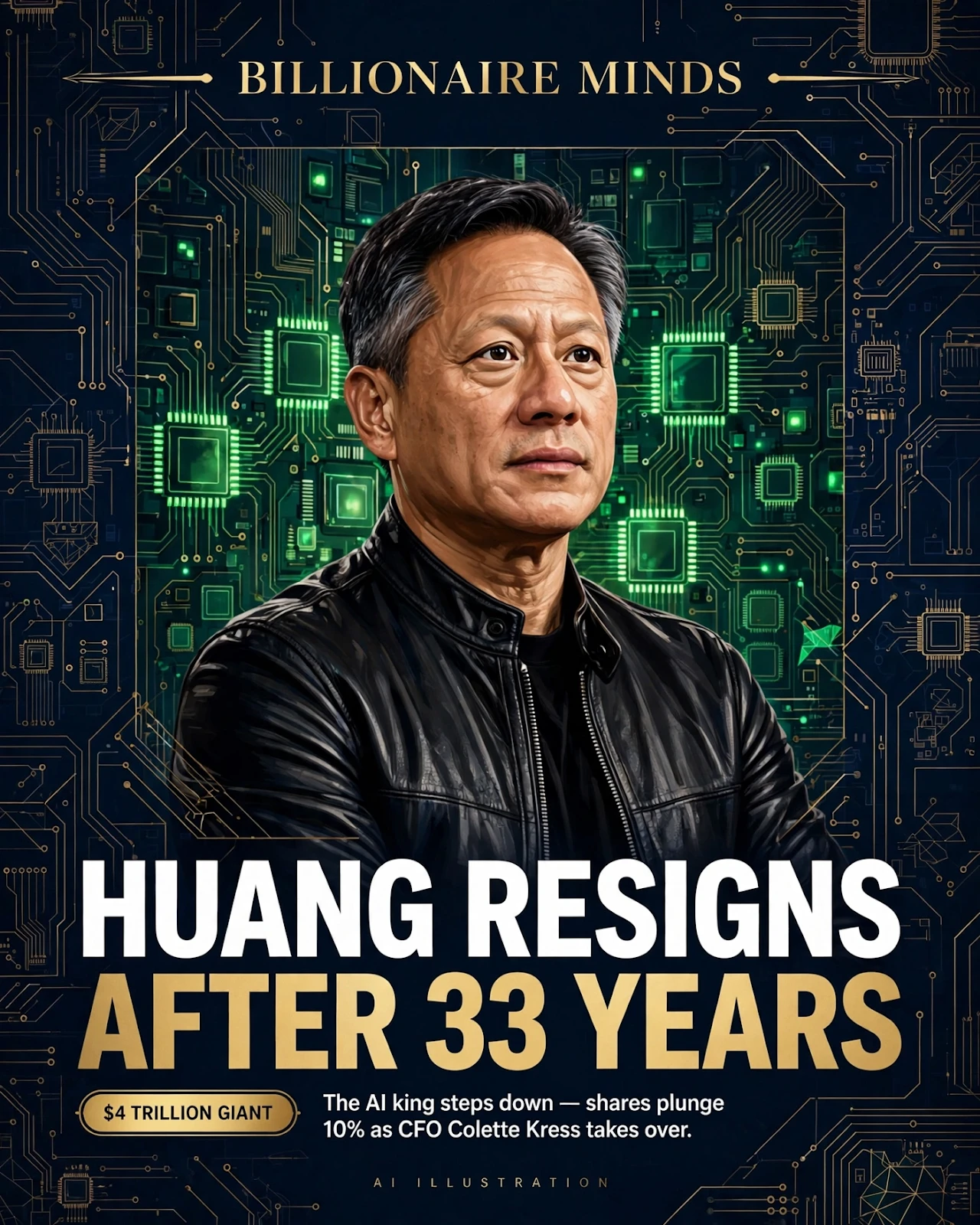
Jensen Huang Resigns as Nvidia CEO — the $4 Trillion AI Giant Loses Its Founder After 33 Years

Stylized AI illustration of Nvidia CEO Jensen Huang in a black leather jacket before a glowing computer-chip wall, under the headline 'Huang Resigns After 33 Years' with a $4 trillion badge

Jensen Huang has resigned as Nvidia's president, chief executive and board member, effective immediately — ending a 33-year run at the company he co-founded in 1993 and built into the world's most valuable AI chipmaker. Nvidia announced the move on Thursday, November 12. Chief Financial Officer Colette Kress will serve as interim CEO while the board searches for a permanent successor, considering both internal and external candidates. The board also named former Synopsys CEO Harvey C. Jones as its first-ever chairman.

Shares plunge 10% in premarket trading

The market reacted fast. Nvidia shares fell more than 10% in premarket trading on Thursday, dragging the broader market down with them. More than $450 billion in market value has already vanished since November 8, according to CBS News. The board met on Wednesday night to decide Huang's future, a person familiar with the matter told Reuters, after the Wall Street Journal reported the board was preparing to oust him — and the New York Times reported a second affair, with Kimberly Powell, Nvidia's vice president of healthcare, who reported directly to him.

How it got here

The crisis broke last weekend. On Sunday, Huang told employees he had been "unfaithful to his wife" and apologised to his family and colleagues, without naming the other person. The board launched an independent investigation on November 8 into whether Huang had been targeted by a foreign intelligence operation. At the centre of the reports is Alice Huang, a former executive at Singapore-based cloud firm Megaspeed, whom US authorities have concluded was a Chinese intelligence asset, according to Reuters. Beijing has denied she is a spy, and the two Huangs are not related. Huang owns about 3.61% of Nvidia, making him its fourth-largest investor, and Forbes valued his fortune at about $147 billion on November 11, ranking him 12th-richest in the world.

What happens next

There is no obvious successor. Huang has said he does not believe in succession planning, and he has about 60 direct reports. President Donald Trump, who has met Huang many times and calls him a close ally, said on Sunday that Huang had "done an amazing job for our country" and that Huang told him he had no idea the woman was a spy — and Trump said he believed him. Nvidia still reports quarterly results on November 17, as previously scheduled. Whoever takes over inherits a $4 trillion company at the centre of the AI boom — and a board, an FBI probe and a shareholder lawsuit all asking how its founder fell so fast.

Sources: Reuters (Nov 12, 2026); CNN; USA Today; Business Standard; The Wall Street Journal; The New York Times. This is a fan/commentary summary of reported news; the espionage allegation is reported as US authorities' conclusion per Reuters, Beijing denies it, and it has not been proven in court. All figures are the sources' estimates. The portrait on this post is a stylised AI illustration, not a photograph of Jensen Huang.

Nvidia's Board May Fire Jensen Huang — $347 Billion Wiped Out in One Night

Stylized AI illustration of Nvidia CEO Jensen Huang in a black leather jacket before a glowing computer-chip wall, under the headline 'Board May Fire Huang' with a $347 billion badge

Nvidia's board is reportedly weighing whether to remove its founder and chief executive, Jensen Huang — the man who built the world's most valuable AI company from scratch in 1993. The Wall Street Journal was first to report that board members were preparing to oust him, and Reuters reported the board met on Wednesday night, November 11, to decide his future. Two sources told CNN the board was still meeting late into the night. As of Wednesday evening, no decision had been announced and the board had released no statement.

An 8% after-hours plunge

The market reacted fast. Nvidia shares fell more than 8% in after-hours trading to $159.51, briefly dropping more than 9% before trimming some losses — even though the stock had ended the regular session in positive territory. About $347 billion in market value was wiped out in a single evening, and CBS News reported more than $450 billion has vanished since November 8. Shares had already dropped 9.5% across Monday and Tuesday and are down about 11% over five days. Bernstein cut its rating on Nvidia to Market Perform and halved its price target to $200. Rivals moved the other way: AMD rose 3.5% and Broadcom gained 2.5%.

How it got here

The crisis began last weekend. On Sunday, Huang apologised to his family and staff for having an affair. He did not name the person. The New York Times reported the affair was with a company executive, citing five people who worked at Nvidia; Nvidia, Huang and the executive have not confirmed the claims. The woman at the centre of the reports is Alice Huang, an executive at Megaspeed, a major Nvidia customer, whom US intelligence reportedly determined was a Chinese spy. That suspicion remains an allegation — it has not been proven. The board announced an independent investigation on November 8, and at first sounded supportive, saying it had no reason to believe national security or Nvidia secrets were compromised and that it had confidence in Huang and his team. Governance experts note the alleged relationship appears to violate Nvidia's code of conduct, which tells staff to avoid personal relationships where actions create a conflict.

What happens next

There is no obvious successor. Huang has said he does not believe in succession planning, and he has about 60 direct reports. Bloomberg reported Nvidia is working with an outside firm to find possible replacements — a detail that suggests the board is planning for a change. CBS News reported the Trump administration is aware of the board's plans. Some analysts warn that removing Huang before a full investigation would expose the board to huge liability, and argue shareholders deserve more information first. Nvidia reports quarterly results on November 17. Whatever the board decides, the fate of the AI boom's most famous founder now rests with 11 directors — including Huang himself.

Sources: The Statesman (Nov 12, 2026); Reuters; The Wall Street Journal; CBS News; DomainFork; BarFlowX. This is a fan/commentary summary of reported news; the espionage allegation is reported as an unproven suspicion by US intelligence, per the New York Times, and has not been proven. All figures are the sources' estimates.


Buffett Climbs to World's 7th-Richest as Huang Crashes Out of the Top 10 — $16 Billion Gone in Two Days

Warren Buffett — now the world's 7th-richest person at $165.7 billion — as Nvidia's Jensen Huang crashes out of the top 10, down $16 billion in two days

Warren Buffett has climbed to seventh place on Forbes' global billionaire list — while Nvidia chief Jensen Huang has crashed out of the top 10 entirely, losing about $16 billion in two days after admitting an extramarital affair.

Buffett, the 96-year-old chairman emeritus of Berkshire Hathaway, added $4.2 billion on Wednesday alone — the third-largest single-day gain in the world — taking his fortune to $165.7 billion. Berkshire's Class A shares have risen 13% in a month as investors rotated out of tech stocks, and Buffett owns about 13.2% of the company.

Huang's $16 billion slide

Huang fell from eighth to 12th on the Forbes list, his fortune down to $147 billion. He lost $7.4 billion on Monday and a further $8.3 billion on Wednesday as Nvidia shares slid 5.47% — making him the world's biggest wealth loser for a second straight day.

The market reaction followed Huang's email to Nvidia staff on Sunday, in which he admitted he had been unfaithful to his wife and accepted "full responsibility" for his actions. Nvidia's board has opened an independent inquiry into the matter.

The New York Times reported that a secret US report had warned months earlier that Huang's alleged mistress, Alice Huang — no relation — was suspected by US intelligence of gathering information for China. That allegation has not been proven. Huang has said he supports Nvidia's investigation.

Buffett's quiet comeback

While tech stocks wobbled, Berkshire kept climbing. Buffett now sits ahead of Oracle's Larry Ellison ($157.8 billion) and Zara founder Amancio Ortega on the Forbes list. Elon Musk remains the world's richest person at $903.4 billion after a $5.9 billion gain on Wednesday, followed by Jeff Bezos at $388.3 billion.

It is a sharp reversal of fortune for Huang, whose wealth peaked above $162 billion just days ago on the back of Nvidia's AI boom — and a reminder that in the billionaire rankings, a single week can rewrite the top 10.

Source: VnExpress International (Nov 11, 2026), reporting Forbes Real-Time Billionaires; corroborated by SE Daily and Business Today. The espionage allegation is reported as a suspicion by US intelligence, per the New York Times, and has not been proven.

Jensen Huang Admits Affair With Alleged Chinese Spy — Nvidia's Board Opens a Probe

Stylized blueprint illustration of Nvidia CEO Jensen Huang in a black leather jacket

Nvidia chief Jensen Huang has admitted he had an affair with a Chinese businesswoman US intelligence officials say was working for Beijing — and on Sunday, Nvidia's board opened an independent investigation into whether the 63-year-old billionaire was targeted by a foreign intelligence operation. The admission turns a weeks-old spy scandal into a full-blown corporate crisis for the world's most valuable chipmaker.

"I was unfaithful to my wife"

In a message to Nvidia employees released on Sunday, Huang apologized to his family and staff. "I was unfaithful to my wife," he wrote. "My actions hurt her and our children. There is no excuse for what I did. I am deeply sorry." He said he takes full responsibility, accepts the criticism, and will cooperate fully with the board's investigation. He remains CEO while the review runs, and the board said it retains confidence in him and his leadership team.

What the board is investigating

Nvidia's board said a committee of independent directors, assisted by outside independent counsel, will examine reports that Huang "has been the target of a foreign intelligence effort." The board said it has "no reason to believe that either national security or Nvidia secrets were compromised," but added its inquiry "will examine all available information." President Donald Trump backed Huang on Sunday, describing him as a fine person and saying he believed the executive should remain in charge. Nvidia, worth nearly $4.5 trillion, is the world's second-largest publicly traded company.

The spy allegations so far

The controversy follows a series of reports by The New York Times. US intelligence officials concluded that Alice Huang — also known as Huang Le, and no relation to Jensen Huang — a former executive at Megaspeed, a Singapore-based data-centre company that buys Nvidia chips, had been recruited by China's Ministry of State Security to collect intelligence on the Nvidia chief and push for looser limits on advanced AI chip sales to China. The Justice Department has taken over a federal investigation into Megaspeed. China's government has dismissed the claims as groundless speculation, and Nvidia previously said Huang's interactions with Alice Huang were "not unusual." The Republican leaders of three House committees have asked Huang to appear for a closed-door briefing on November 18, with a reply due by November 11. Nvidia reports earnings on November 17 — and its AI Day event in Seoul opened on Monday amid the scandal, after Huang's daughter Madison cancelled her trip there. For now, the allegations of espionage remain unproven — but the apology is on the record.

Sources: The Economic Times, The Hindu BusinessLine, The Straits Times, NPR Illinois, The New York Times. Image: AI illustration.

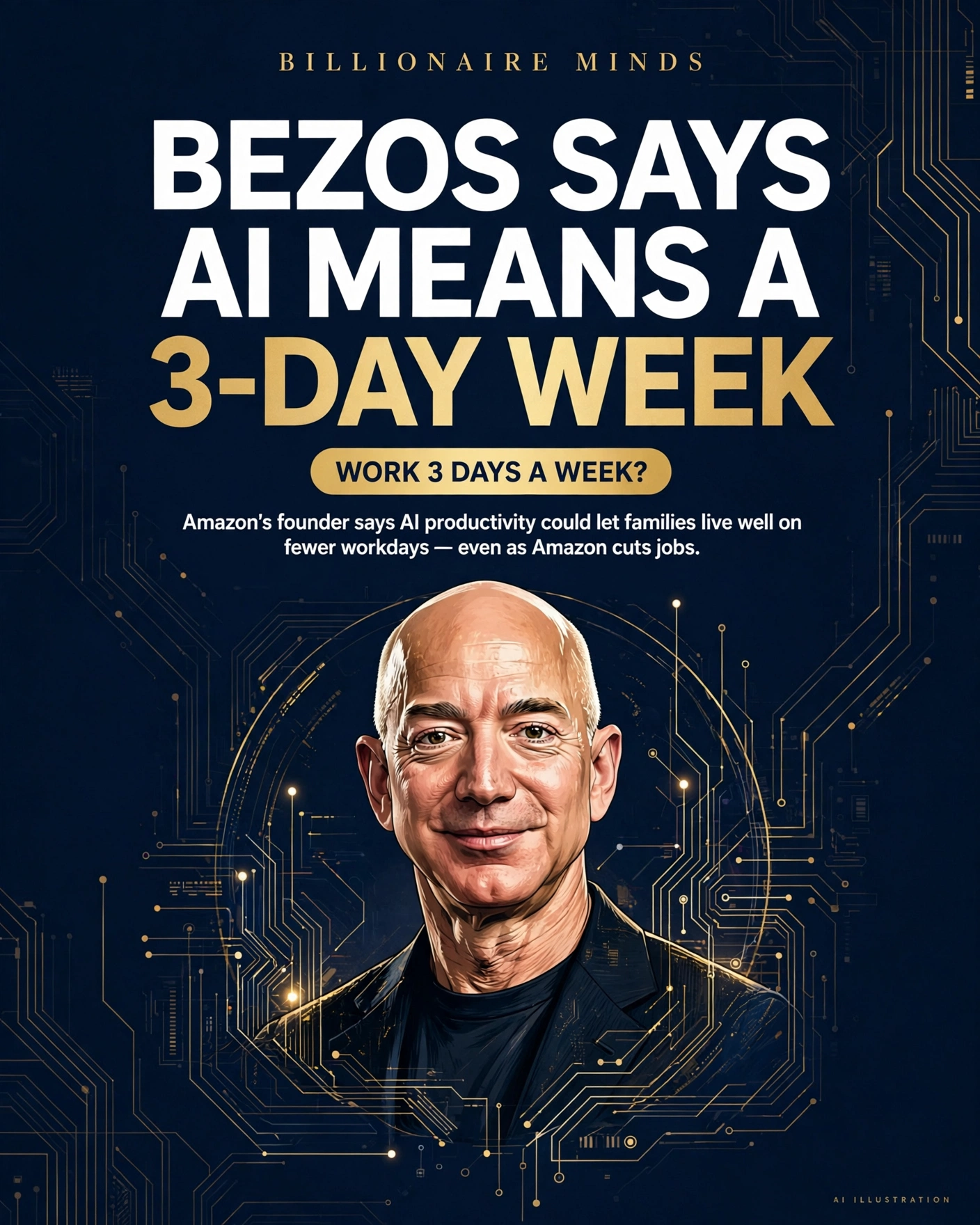
Jeff Bezos Says AI Could Give Us a 3-Day Work Week — While Amazon Keeps Cutting Jobs

Stylized illustration of Amazon founder Jeff Bezos against a navy background with golden circuit lines, headline Bezos says AI means a 3-day week

Jeff Bezos thinks artificial intelligence could soon let you work three days a week and still support your family. The Amazon founder made the prediction in a recent Fox News interview, arguing that rapid AI productivity gains could fundamentally reshape how much people need to work — and how much they earn for it.

"Some people will decide, 'I can support my family working three days a week.' That's what productivity in the economy means," Bezos said.

One earner could be enough

Bezos painted an optimistic picture of an AI-powered economy in which higher productivity generates greater wealth and gives people more choice over how much they work. He suggested that if productivity rises far enough, many families may no longer need two earners to maintain their standard of living. "You're not going to need to have a two-earner household. If you want it, fine. If you don't want to have it, one of the people might drop out," he said — adding that employers could even find it harder to recruit workers if people can meet their financial needs with less work. He even suggested AI advances could create labour shortages rather than mass unemployment.

The awkward timing

There is an irony Bezos did not dwell on. While he talks about working less, Amazon has been cutting thousands of corporate roles over the past year — even as the company spends billions on AI data centres and cloud capacity. Bezos could also benefit from the AI boom through space company Blue Origin, which has outlined plans involving space-based infrastructure, including concepts for data centres operating beyond Earth.

He is not the only billionaire betting on shorter weeks

Bezos joins a growing list of tech leaders who believe AI will shrink the working week. Nvidia CEO Jensen Huang has suggested AI could make a four-day workweek commonplace, JPMorgan chief Jamie Dimon has floated around three-and-a-half days, and Bill Gates has talked about a two-day workweek. Elon Musk goes further still, arguing AI and robotics could eventually create a world of "universal high income" where work becomes optional. Bezos, for his part, also sounded a note of caution for investors: asked whether the AI boom resembles a bubble, he said it was hard to tell. "What I do know is the technology is real. I think this is a good thing for society," he said — while warning that heavy investment periods fund weak businesses as well as strong ones.

Sources: The Times of India, Fox News. Image: AI illustration.

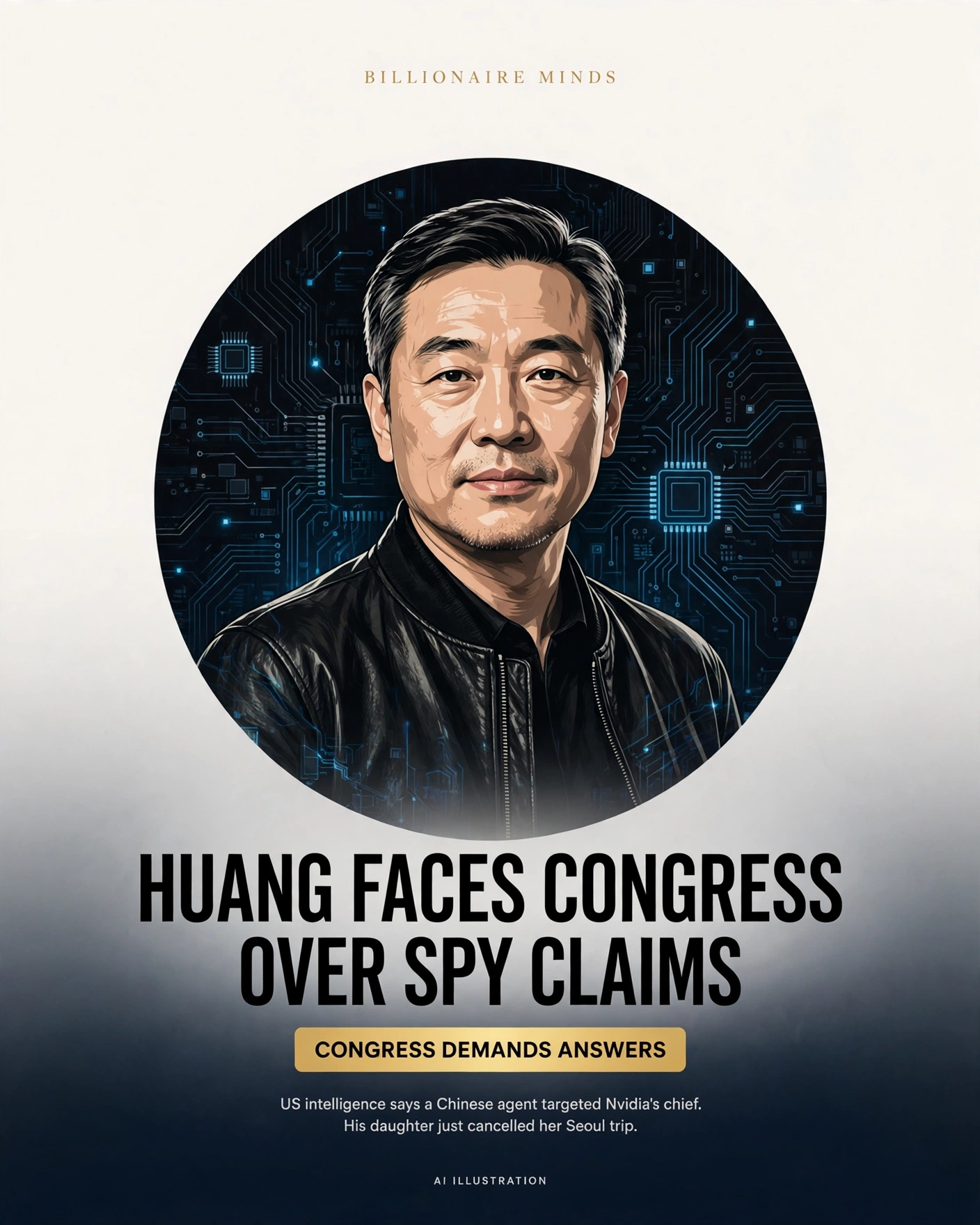
Jensen Huang Summoned by Congress Over 'Chinese Spy' Claims — US Intelligence Memo Says Agent Targeted Nvidia's Chief

Stylized illustration of Nvidia CEO Jensen Huang in a black leather jacket against a glowing AI chip circuit background

Nvidia chief Jensen Huang has been summoned to Capitol Hill after US intelligence concluded that a Chinese businesswoman who cultivated a close relationship with him was recruited by Beijing's top spy agency — a scandal that is now pulling in Congress, the White House, and even Huang's own family.

What US intelligence says

According to The Business Times, a memo that circulated among top policymakers in the Trump administration last spring cited intelligence that Alice Huang — an executive at Megaspeed, a Singapore-based Nvidia customer — was a spy for China's Ministry of State Security. The memo said she was recruited to collect intelligence on Jensen Huang and potentially influence Nvidia to push for its most advanced AI chips to be made available to China. The existence of the memo had not previously been reported.

The New York Times reported on October 29 that Huang was the target of a Chinese intelligence operation and that US agencies had electronically surveilled Alice Huang for at least a year. The Financial Times reported on November 6 that she was recruited specifically to establish a relationship with the Nvidia chief. The two Huangs are not related.

Congress wants answers by November 11

On November 5, the Republican leaders of three powerful House committees — Foreign Affairs, Intelligence, and the Select Committee on the Chinese Communist Party — asked Huang to appear for a closed-door briefing on November 18, giving him until November 11 to reply. They said they want to establish "the extent to which U.S. national security has been placed at risk." Senator Chris Coons, a Democrat, has also called for an investigation, writing on X: "Congress will investigate and get answers."

The fallout reaches Seoul

The scandal is already rippling through Nvidia. Huang's daughter Madison Huang, a senior director at the company, abruptly cancelled a planned trip to Seoul on November 8, days before Nvidia's AI Day event there on November 9–10. Officials cited only "family reasons" and gave no further details.

Nvidia has repeatedly denied any wrongdoing. A company spokesperson said Huang's interactions with Alice Huang were "not unusual" and consistent with meetings he has with any customer, and insisted no sensitive information was shared. China's embassy called the reporting "unsubstantiated" and "nothing but smears against China." For now, the world's most important chipmaker — and its billionaire chief — are under a spotlight neither can switch off.

Sources: The Business Times, Times Now, The New York Times, Financial Times. Image: AI illustration.