Posts

Showing posts with the label Tesla

After Huang's Shock Exit, Investors Ask the $1 Trillion Question: Who Replaces Musk and Zuckerberg?

Stylized illustration of two tech founders back to back under a neon question mark — who replaces Elon Musk and Mark Zuckerberg after Jensen Huang's Nvidia exit

Jensen Huang's shock departure from Nvidia has done more than wipe billions off the chipmaker's value. It has forced investors to ask a question Silicon Valley's most powerful companies have spent years avoiding: what happens if Elon Musk or Mark Zuckerberg suddenly aren't there?

Huang built Nvidia into the world's most valuable company and then walked away after an investigation into his relationships with employees and a suspected Chinese intelligence asset. His exit has put a spotlight on a problem facing every founder-led giant — succession planning.

The question nobody at Tesla or Meta wants to answer

Tesla, SpaceX and Meta remain heavily dependent on their founders, and their own financial disclosures admit it. SpaceX warned investors in its filing ahead of its public listing that losing Musk — through death, disability or another circumstance — could disrupt its management structure and affect its ability to execute its business strategy. The company cautioned that finding a replacement with Musk's combination of skills and experience could be a lengthy and uncertain process, with no assurance it could find a suitable successor in time, or at all.

Ross Gerber, an investor in SpaceX who has previously raised concerns about Tesla's succession planning, believes the Nvidia episode could be particularly unsettling for Musk. "This Jensen thing is probably the biggest fear that Elon has," Gerber told The Washington Post.

Musk's $1 trillion pay deal has a succession clause

There is another twist. Tesla's massive compensation package for Musk — potentially worth $1 trillion and designed to keep him involved through the middle of the next decade — requires him to develop a succession planning framework to qualify for its final two award tranches. But a requirement to plan is not the same as having a ready replacement, and Tesla has not publicly demonstrated a clear succession framework.

Zuckerberg holds the votes — and no public plan

Meta faces the same problem. Its filings warn that Zuckerberg becoming unavailable could have a materially adverse impact on operations, and he holds a majority of the company's voting power — giving him decisive influence over shareholder decisions, including the appointment of directors. Yet Meta's filings do not disclose a succession plan for the chief executive position.

The other side: Apple proved founders can be replaced

A founder's departure does not automatically mean collapse. Apple continued to expand after Steve Jobs died in 2011, with Tim Cook leading it through a period of substantial growth, and Microsoft, Amazon and Alphabet have all moved beyond their founders as chief executives. As Dipal Dutta, CEO at RedoQ, told NDTV: "Technology companies are often driven by the vision of their founders. For long-term success, this inspiration must be sustainable."

The stakes are enormous. Tesla, Meta and Nvidia collectively employ at least 200,000 people and account for almost 10 per cent of the S&P 500's market value, while SpaceX is valued at nearly $1.9 trillion. For investors, the question is no longer hypothetical — it is the $1 trillion question.

Source: NDTV, reporting The Washington Post. Image: AI illustration.
Elon Musk's $119 Billion Texas Megafactory Could Become the World's Largest Building

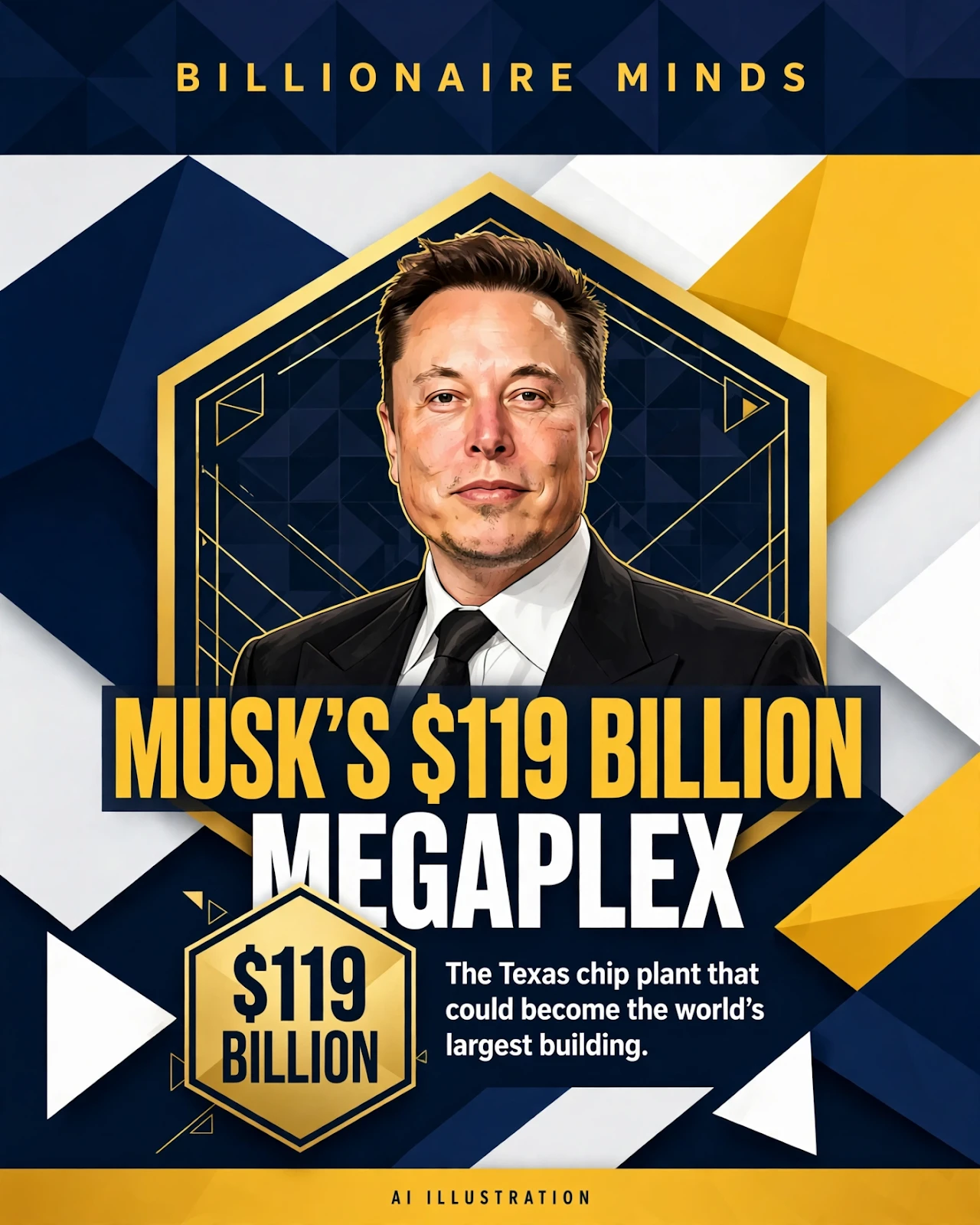
Elon Musk — his $119 billion Terafab chip plant in Texas could become the world's largest building

Elon Musk is building something so big it could dwarf the largest building on Earth. The project is called Terafab — a joint venture between SpaceX and Tesla — and it is rising in a quiet corner of rural Texas, about 70 miles northwest of Houston.

If it is finished as planned, the industrial complex would cover 100 million square feet. Architectural Digest has reported that would make it more than five times larger than China's New Century Global Centre, one of the largest buildings in the world.

A $119 Billion Bet on Chips

The goal is to make the advanced chips that artificial intelligence, self-driving cars, humanoid robots and space technology will need in the years ahead — all under one roof, including logic chips, memory and advanced packaging. The chips would supply Tesla's autonomous vehicles, its Optimus robots and SpaceX's space programmes.

Texas Governor Greg Abbott's office announced on August 6 that the first phase alone would involve more than $16.8 billion of investment and create about 3,000 jobs. The full ambition is far larger: tax incentive filings reported by local broadcaster KBTX put total investment at about $119 billion across four phases, with construction running until 2036 and more than 4,000 direct jobs. Those figures are projections — not money already spent.

Why Texas, Why Now

Reuters reported in October that Musk is aiming for volume production by the third quarter of 2028. Musk himself called that timeline highly ambitious and said it was uncertain whether it could be met.

Land acquisition has moved fast. KBTX reported on November 10 that WIT TECH LLC, a company linked to the project, now holds more than 10,000 acres in the county, up from about 7,700 acres in August. A Musk-linked company has also bought a water pumping station on the Navasota River.

The public incentives behind the project have drawn close scrutiny. The Houston Chronicle reported that two local school districts gave preliminary approval in July to property tax deals worth an estimated $1.66 billion in future tax relief, phased in through 2046. A separate agreement with Grimes County requires SpaceX to invest at least $5 billion by 2030 and create 1,800 permanent jobs by 2035 — though the company can walk away at any time with 30 days' written notice, with a maximum penalty of $60 million.

The Pushback

Hopes for jobs have come with local concerns about water, power, roads, the environment and the rural way of life. County Judge Joe Fauth has said the plant will not draw on groundwater, instead using recycled surface water from the Gibbons Creek Reservoir and generating its own power, separate from the state grid. Some community groups are still pressing for stronger safeguards and greater transparency.

The fight over transparency has reached the courts. In September, SpaceX sued the Texas attorney general and Grimes County to block the release of certain records, and on November 9 it amended its petition to also challenge the release of documents requested by KBTX.

Texas politics adds a new layer of uncertainty. In the November 3 election, Democrat Gina Hinojosa defeated Abbott and will take office in January as the state's first Democratic governor since 1995. She campaigned against corporate incentives, but has since struck a more conciliatory tone, saying she could have a strong working relationship with Musk "on our terms" — while calling for strict rules on water, power and community rights for data centres.

Whether Terafab ends up the world's largest building or not, one thing is clear: the world's richest man is betting $119 billion that the future of AI will be built in rural Texas.

Source: Geo TV. Image: AI illustration.

Elon Musk Bets $3.3 Billion on Germany — Tesla's Cybercab Factory Could Become Europe's Biggest Car Plant

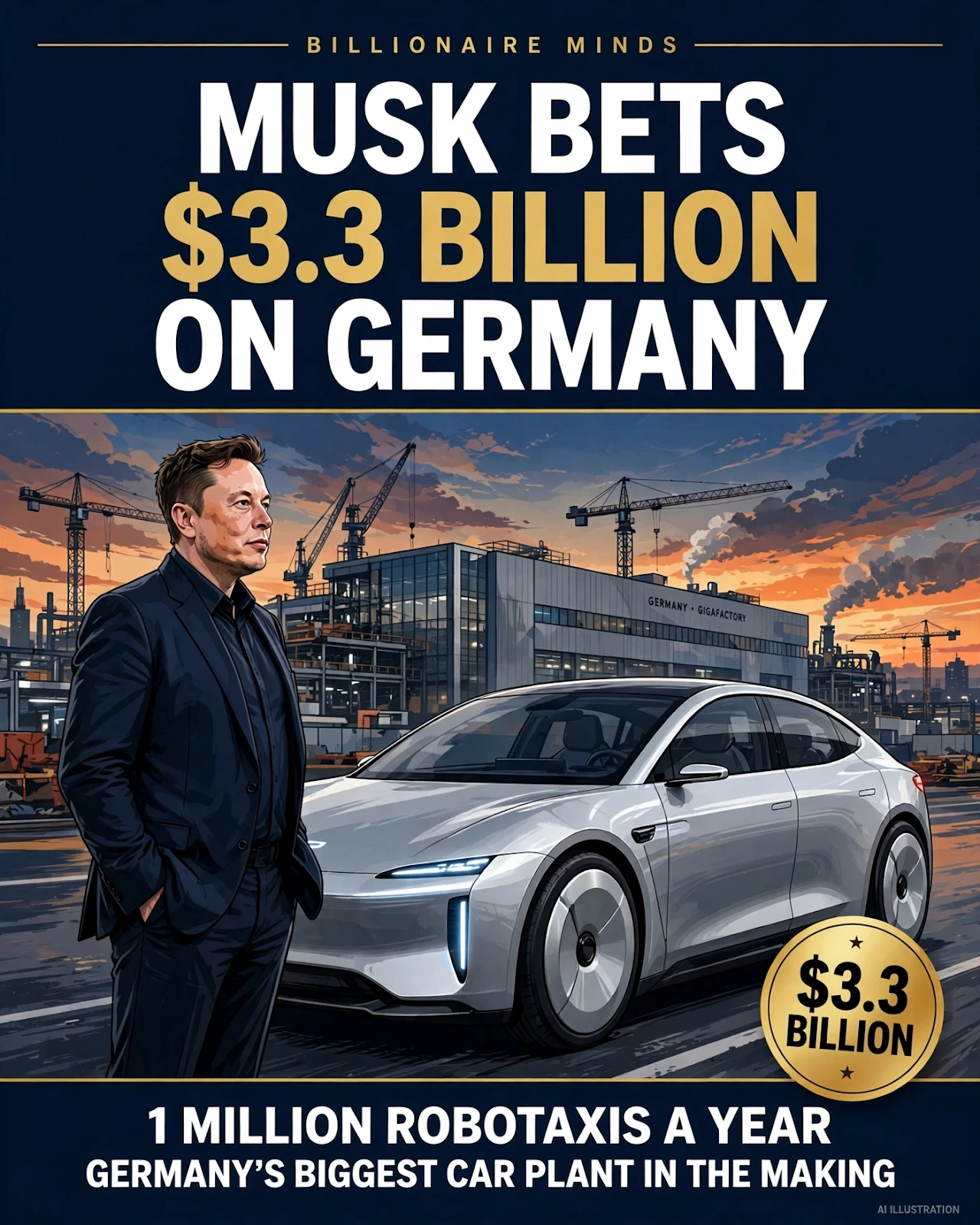
Elon Musk beside a futuristic silver Cybercab robotaxi in front of Tesla's German gigafactory — Tesla is investing $3.3 billion to build up to 1 million robotaxis a year in Germany

Elon Musk is doubling down on the robotaxi — and betting $3.3 billion that Germany is where it gets built. Tesla said on Monday it will invest €3 billion in its German gigafactory at Gruenheide, outside Berlin, pressing ahead with its Cybercab model even as Volkswagen, Mercedes-Benz and BMW cut jobs and weigh plant closures. The new facility could make Tesla's only European site Germany's largest auto plant by capacity, overtaking Volkswagen's Wolfsburg headquarters.

Tesla aims to produce up to 1 million Cybercabs a year at Gruenheide. The company said it will submit a building permit application before the end of the year, start construction in the first half of 2027, and begin production in 2029. Several hundred new workers are being sought for the first step of construction and production planning. The plant has already ramped up Model Y production and hired more than 2,000 new employees in recent months, and Tesla aims to start battery cell production there from the middle of next year.

A Bet on the Robotaxi — Before It Has Sold One at Scale

The scale of the bet is striking because the Cybercab has yet to be sold anywhere at scale commercially. The two-seater has no steering wheel, pedals or mirrors, and US safety regulators have opened an investigation into whether early vehicles were properly certified. Automotive analyst Matthias Schmidt welcomed the investment as much-needed good news for Germany's car industry, but asked the question Berlin will be asking too: how much of it becomes sustainable, long-term employment, and how much is automated, low-labour work? Tesla has also faced environmental protests at Gruenheide and repeated clashes with the powerful IG Metall union.

Cybertruck Makes Way for the Robotaxi

The Germany expansion is the other half of a factory reshuffle Musk has already announced in Texas. Tesla will wind down Cybertruck production at its Austin plant at the end of summer 2027 — extended by a few months to clear the order backlog — so the factory can make way for more Cybercabs. Only about 63,000 Cybertrucks have been sold worldwide since the 2023 launch, far below expectations. Musk has admitted the extension is not the most profitable move, but said there must be room for sentimentality. The message from both announcements is the same: the Cybertruck era is ending, and the robotaxi era is where Musk is putting the money.

Source: Reuters, November 17, 2026. This is a fan/commentary summary of reported news; all figures are the sources' estimates. Image is an AI illustration.

Elon Musk's SpaceX–Tesla Merger: A $3.4 Trillion Deal to Sneak SpaceX Into the S&P 500

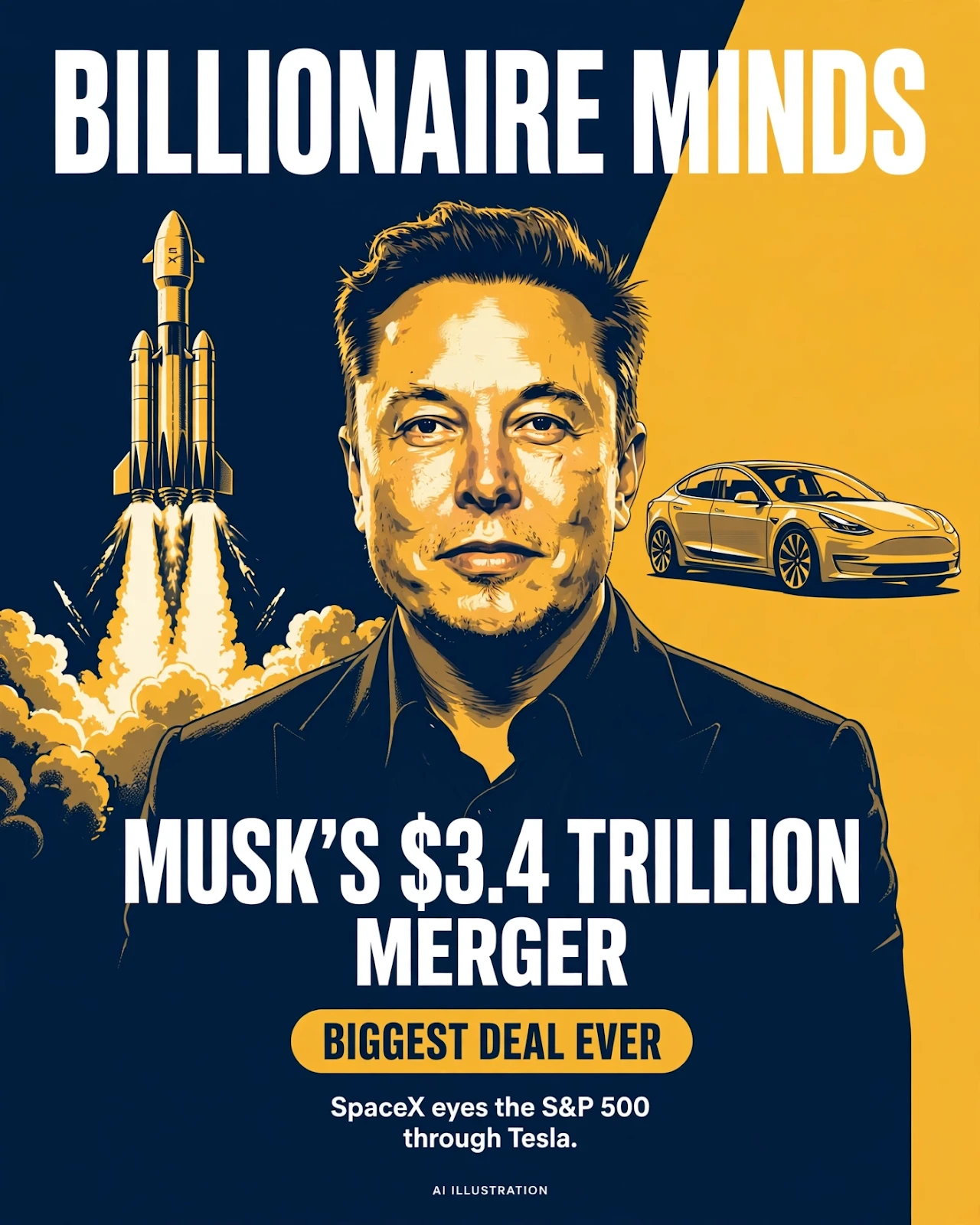
Elon Musk's SpaceX and Tesla merger — a $3.4 trillion deal that could sneak SpaceX into the S&P 500

Elon Musk is chasing the biggest deal in corporate history — and the prize is a backdoor into the S&P 500. The world's richest person is pushing to merge SpaceX with Tesla, a combination worth about $3.4 trillion that would dwarf every merger ever attempted.

The logic, reported by Bloomberg on November 14, is simple. Tesla has been an S&P 500 member since December 2020, while SpaceX — which listed on Nasdaq in June — was refused a fast track into the index. Folding the rocket company into Tesla would hand it the membership it could not win alone, and index membership matters: trillions of dollars in index funds automatically buy member stocks.

A December Announcement?

Talks have moved faster in recent weeks, and an announcement could come as early as December, according to a November 12 report. Musk wants a deal that can close while President Donald Trump is still in office, Bloomberg reported in October. Both boards have set up special committees, and analysts at JPMorgan Chase expect an all-stock deal led by SpaceX. The pair were worth about $3.7 trillion combined in October; a slide in SpaceX shares since the US midterm elections has trimmed that to about $3.4 trillion.

Who Holds the Cards

Musk owns about 42% of SpaceX and controls more than 80% of its votes, so approval there is not in doubt. The harder sell is Tesla, where he holds about 20% and shareholders will have the final say — Musk himself has warned that winning them over could be difficult, and no terms have been agreed. The companies already work closely together, including a $16.8 billion joint chip plant in Texas, and SpaceX absorbed Musk's AI company xAI before its listing. Musk, 55, calls the merger a "good idea" — while comparing the negotiations to "tap dancing through a minefield."

Source: Bloomberg / The New York Times, November 16, 2026. This is a fan/commentary summary of reported news; all figures are the sources' estimates. Image is an AI illustration.

Billionaire Leo KoGuan Freezes Nvidia Cash — "No Further Investment Without Jensen"

Leo KoGuan, the $13.2 billion investor, freezes new investment in Nvidia after Jensen Huang's ouster — his $1.3 billion stake stays, but no more cash without Jensen.

One of Nvidia's biggest individual shareholders just drew a line in the sand. Singapore-based billionaire Leo KoGuan — worth $13.2 billion, according to the Bloomberg Billionaires Index — says he will not put another dollar into the chipmaker while Jensen Huang is out of the CEO's chair.

"No further investment without Jensen"

KoGuan, who has around $1.3 billion invested in Nvidia, took to X on November 12 to defend the ousted founder and attack the board's decision. "Jensen is a good guy, he is the main driver of si chips and si industries," he wrote. "As one of the largest individual SH of NVDA, I demand the NVDA board and the world to retain him as CEO of Nvidia."

He claims Elon Musk, investor Gavin Baker and President Donald Trump all advised Huang to stay on as CEO of the company he founded. Huang resigned on November 12 after 33 years at the helm, following reports of three affairs — including one with a woman suspected of spying for China. Nvidia has lost more than $500 billion in market value since the scandal broke, and CFO Colette Kress has taken over as interim CEO.

Loyalty to the founder, not the company

On November 13, KoGuan escalated. While insisting Nvidia's business trajectory is unchanged over the next three years, he confirmed he will scale back his planned investment in the chipmaker and redirect the money toward rival super-intelligence companies instead.

"I will reduce my plan investment in NVDA. Instead, I will invest more in other si companies. I hope and plan to invest in Jensen Huang if he creates or buys si company," he posted. "I hope he will offer me the opportunity to invest in his future company."

KoGuan began buying Nvidia shares in March, a major diversification for an investor whose fortune was long tied largely to Tesla. He has also disclosed stakes in SpaceX and Google parent Alphabet. His message to the board is blunt: the money follows the creator — not the company that pushed him out.

Source: BusinessToday (November 13, 2026), reporting Leo KoGuan's posts on X. The spying allegation against Alice Huang is reported as suspicion by US intelligence and has not been proven in court.

Musk's $3.47 Trillion Mega-Merger Is Moving Fast — SpaceX and Tesla Could Announce in December

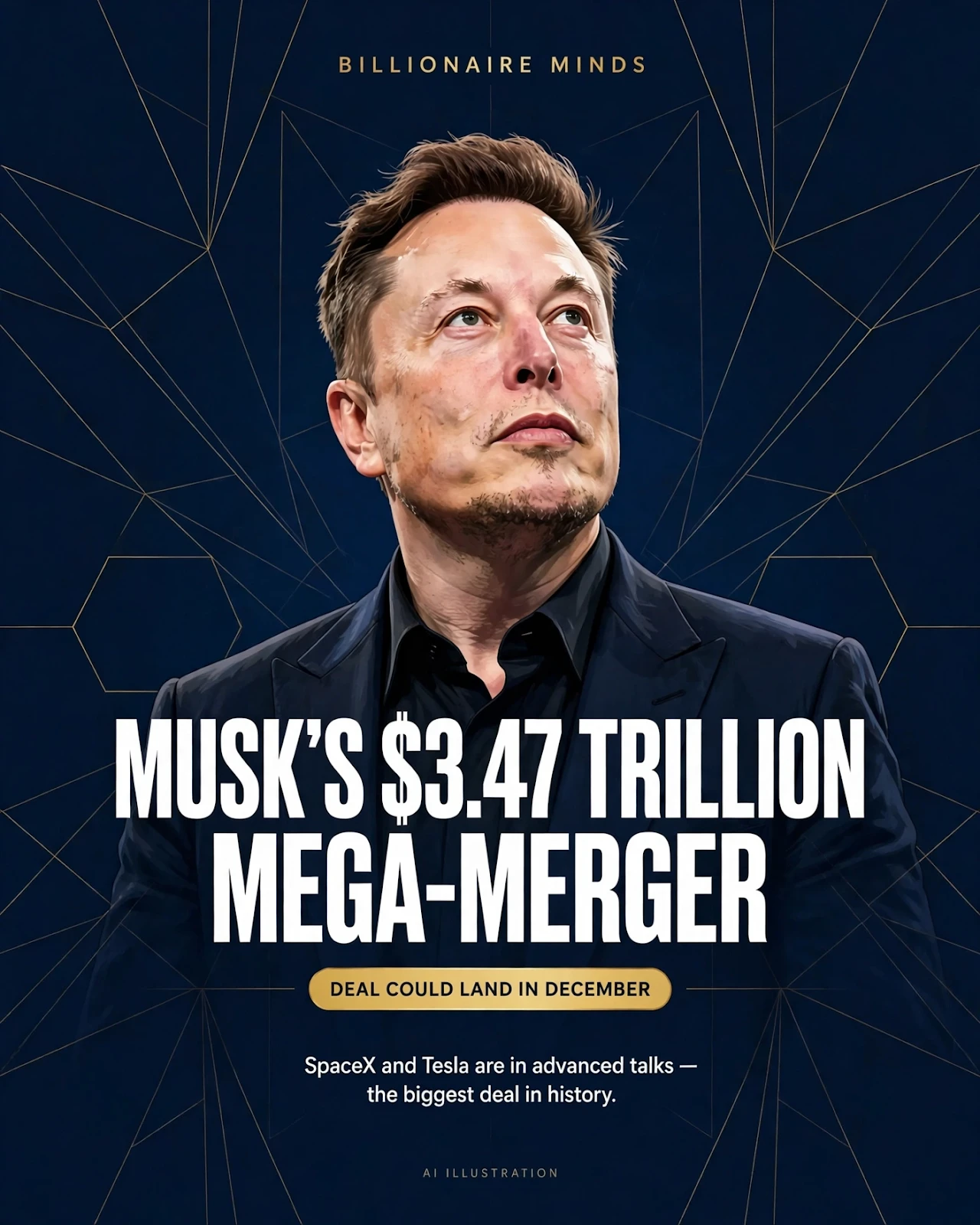
Elon Musk — SpaceX and Tesla are in advanced merger talks on a $3.47 trillion deal that could be announced as early as December

Elon Musk is moving fast on the biggest deal in corporate history. SpaceX and Tesla are progressing in their merger negotiations, Bloomberg reported on Thursday, and the two companies could announce the combination as soon as December.

The deal would unite Musk's two largest companies — SpaceX, worth more than $1.9 trillion after its June IPO, and Tesla, worth about $1.5 trillion — into a single $3.47 trillion giant spanning rockets, satellites, electric cars, batteries, AI and humanoid robots.

The biggest deal in history

The boards and advisers of both companies are now hammering out the terms of the tie-up and the governance structure of the combined entity, according to people familiar with the matter. Musk said in October that both boards had formed special committees of independent directors to consider combining. Tesla shares jumped to a session high, rising as much as 1.9%, on Thursday, while SpaceX stock gained 0.5%.

An announcement could also slip into early 2027, the sources said. Bloomberg had earlier reported that the companies were pushing to announce a deal by the first half of next year, with the aim of closing it before the end of President Donald Trump's term. One factor under discussion is how many SpaceX shares Tesla investors would receive. Tesla is slated to hold its annual shareholder meeting on December 3.

Why Musk wants one company

The rationale, Bloomberg reports, is a shared ambition to leverage artificial intelligence across space, driverless cars and humanoid robots. The companies already cooperate closely, including a joint effort to build a semiconductor plant in Texas called Terafab. SpaceX has transformed from a rocket maker into a crucial supplier of AI infrastructure — including to Anthropic — and a top provider of satellite internet.

The obstacles standing in the way

The deal still faces steep hurdles. The companies must work out how to ring-fence Tesla's operations in China, while national security sensitivities around SpaceX's US government and defence contracts loom large. JPMorgan analyst Rajat Gupta called those "key dynamics that are at odds with each other" when it comes to winning regulatory and shareholder approval.

It will also be a major test of the political mood after the US midterm elections, in which Democrats took control of Congress and pledged to probe Musk's business and political dealings. But if the talks hold, December could deliver the largest merger the world has ever seen.

Source: Bloomberg via The Hindu BusinessLine (Nov 13, 2026); Reuters via bdnews24 (Nov 13, 2026). This is a fan/commentary summary of reported news. All figures are the sources' estimates. The portrait on this post is a stylised AI illustration, not a photograph of Elon Musk.

SpaceX's 12% Slide Just Made Musk's Tesla Buyout a Lot More Expensive — Tesla Investors Would Own the Combined Company

Elon Musk's dream of folding Tesla into SpaceX just hit a very expensive snag — and the stock market did it. SpaceX shares have fallen roughly 12% since the company reported strong third-quarter results on October 21, while Tesla stock has stayed flat over the same stretch. That gap has quietly rewritten the price of the biggest merger in stock market history.

The math just flipped

Most Wall Street analysts expect SpaceX to act as the buyer in an all-stock deal, paying a premium for Tesla. But a lower SpaceX share price means the rocket company must hand over far more stock to buy the carmaker. At a 15% premium at current prices, SpaceX would have to give Tesla investors about 3.2 SpaceX shares for each Tesla share — and based on fully diluted share counts from FactSet, that exchange rate would leave Tesla shareholders owning more than 50% of the combined company.

Compare that with earlier this year, when SpaceX traded at $200 a share. Back then, a 15% premium would have cost just 2.3 SpaceX shares per Tesla share, leaving SpaceX investors with roughly 57% of the merged business. The 12% slide has flipped majority control to the other side of the table.

A $3.5 trillion question with no deal yet

Talk of a tie-up jumped after Musk told investors on October 20 that the boards of both companies had formed special committees to review a deal. Bringing the two together would create an AI giant controlling power generation, chip making, AI models, software agents and humanoid robots. Barclays has even put a $450-a-share value on Tesla in a deal — roughly a 20% premium — and called the merger a key part of the Tesla bull case.

But there is still no agreement, no merger proposal and no shareholder vote scheduled. Any deal would need approval from a majority of all outstanding Tesla shares, and Musk himself cannot take part in the committees' discussions because he leads both companies.

The warning sign is already flashing elsewhere. Traders recently punished chipmaker Marvell and optical firm Lumentum after the pair announced an all-stock merger in early November — Marvell's share price sat well below its 52-week high, so it had to issue far more shares to pay the same price. SpaceX faces the same hurdle. Unless its shares bounce back soon, the sheer cost of issuing so much new stock could stall the buyout talks altogether — and leave Musk's mega-merger on the launch pad.

Source: TipRanks (Nov 12, 2026); The Motley Fool / Barclays (Nov 1, 2026). SpaceX is valued at roughly $2 trillion and Tesla at about $1.5 trillion. No merger agreement has been announced.


Musk Just Un-Cancelled the Cybertruck — Production Extended to Summer 2027 After Fans Revolt

Musk un-cancels the Cybertruck — production extended through the end of summer 2027

Five days after Elon Musk killed the Cybertruck, he has partly un-killed it. Tesla will keep building the stainless-steel pickup through the end of summer 2027 — a few months longer than planned — to work through an order backlog that surged the moment customers learned the truck was being retired.

"In order to work through more of the Cybertruck order backlog, production will be extended through the end of summer 2027," Musk wrote on X on Wednesday, November 11. He also cited "sentimentality" as a reason to keep the line running a little longer.

Three end dates in five days

The Cybertruck has now had three different death dates in less than a week. On November 6, Musk said Tesla would wind down production at Gigafactory Texas "around the middle of next year" to free up space for the steering-wheel-free Cybercab robotaxi. On November 9, he said the line would shut "in about 8 months" and that Tesla would "have to return deposits for a lot of people" it could not deliver to in time. Wednesday's extension stretches the runway to roughly September 2027 — about ten months from now.

The U-turn followed a fan backlash. A petition to keep the truck alive has gathered more than 5,000 signatures, and owners flooded Musk's replies after the original announcement. Tesla had also raised Cybertruck prices by up to 10% and paused orders for the base Dual Motor trim on the same day it announced the wind-down.

A tuner offers to buy the line

The loudest response came from Unplugged Performance, the California Tesla aftermarket specialist. On November 10 it posted an open offer to take over Cybertruck production, funded by a consortium of investors, "at no cost to Tesla's floor space, headcount, or focus" — with the Cybercab getting first call on battery cells. The tuner says it would build the Cybertruck plus a three-row CyberSUV and an unmanned CyberCargo hauler, and pay Tesla a licence fee plus a share of FSD and Robotaxi network revenues on each vehicle built. Tesla has not publicly responded to the offer.

The Cybertruck is still cancelled — just later. It was meant to sell 250,000 units a year; in reality it has sold roughly 30,000 to 50,000 a year, with 20,237 delivered in 2025, down 48% from 38,965 in 2024. The reprieve buys Musk time to clear the backlog. Whether anyone else buys the line is now the open question.

Source: Electrek (Nov 11, 2026); InsideEVs (Nov 11, 2026); The Truth About Cars (Nov 11, 2026); AutoGuide (Nov 11, 2026); CarSauce (Nov 12, 2026); Redfire (Nov 11, 2026). Musk's quotes are verbatim from his posts on X. This is a fan/commentary summary of reported news; all figures are the sources' estimates.

Democrats Just Put Elon Musk on Notice — Congress Will Haul Him In Over DOGE Firings

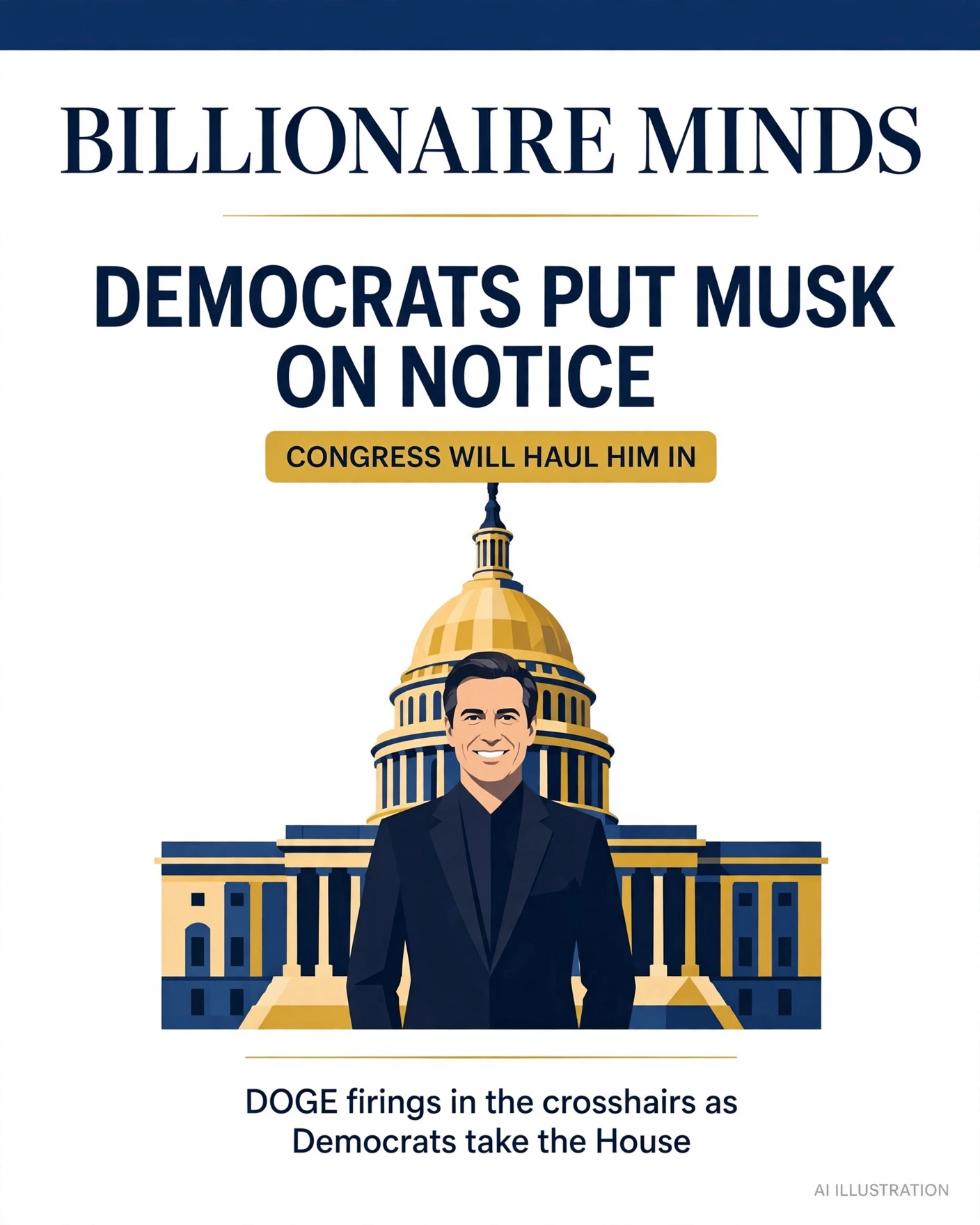
Elon Musk faces a congressional probe — Democrats vow to haul the tech billionaire before Congress over DOGE firings after their midterm sweep.

Elon Musk spent nearly $475 million trying to keep Republicans in power — and it did not work. Now the Democrats who swept the midterms are coming for him: the incoming chairs of Congress's most powerful committees say the world's richest man will be hauled in to answer for his role in the Department of Government Efficiency's mass firing of federal workers.

The DOGE firings are first on the list

Representative Robert Garcia of California, who is in line to chair the powerful House Oversight Committee next year, told CNN's "State of the Union" on Sunday that investigations will focus on Musk's involvement in DOGE's firing of federal workers last year. "I think there's a lot of interest, not just from our committee, but from committees across the Congress to speak to Mr. Musk," Garcia said. Senator Elizabeth Warren, set to lead the Senate Banking Committee, also vowed aggressive oversight, warning that some companies should be ready for congressional investigations.

Miller and Hegseth are in the crosshairs too

Musk is not the only target. Stephen Miller — whom Garcia called the architect of a "horrific, unjust" immigration policy — was promoted to White House chief of staff on Friday, and Garcia said he deserves investigation too: "Stephen Miller is at the center of the major policy decisions that are happening in the administration." The immigration crackdown has grown deeply unpopular — a Reuters/Ipsos poll in October found only 37% approved of Trump's handling of immigration, down from 50% when he took office. Meanwhile, Hakeem Jeffries, who becomes speaker of the House in January, said Democrats would back impeaching Defense Secretary Pete Hegseth. "Pete Hegseth has got to go," Jeffries told ABC's "This Week," calling himself a "hard yes" on the measure.

The White House is ready for a fight

The Trump administration is not backing down. Attorney General Todd Blanche signaled on Sunday that it is prepared to battle the new Democratic Congress. "If that's what this new incoming leadership wants to do, we are ready," Blanche said. "If you work in this administration, you have a lawyer. It's me." With Democrats taking control in January, the subpoena war over Musk, DOGE and the administration's inner circle is about to begin — and the world's richest man is at the top of the list.

Source: Reuters, November 8, 2026. This is a fan/commentary summary of reported news; all figures are the source's estimates. Portrait: AI illustration.

Musk Says SpaceX Will Out-Earn NASA's Entire Budget This Quarter — $24.8 Billion in 3 Months

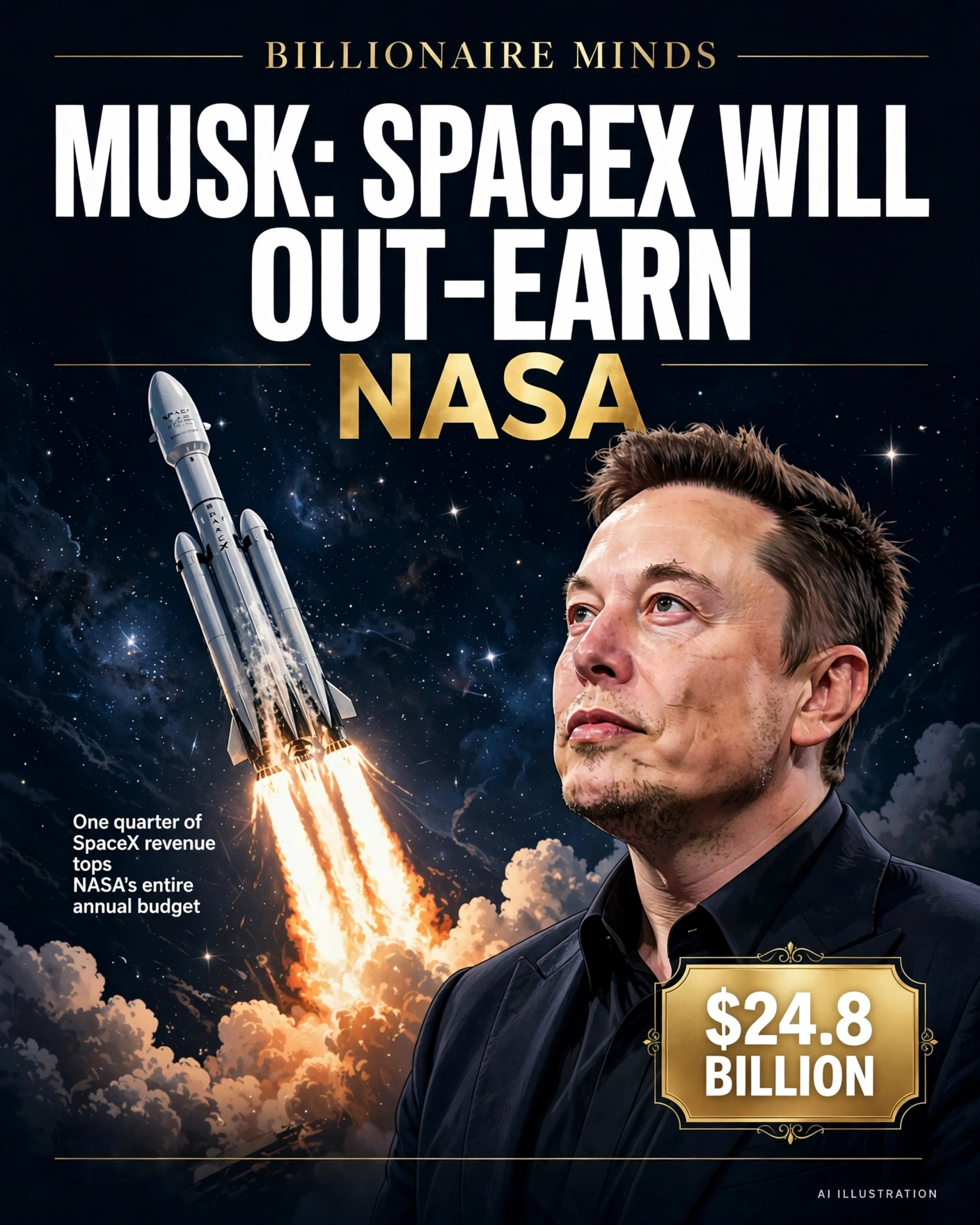
Elon Musk looking up at a SpaceX rocket launching into a starry sky — he says SpaceX will earn $24.8 billion this quarter, more than NASA's entire annual budget

Image: AI illustration.

Elon Musk just put a number on SpaceX's transformation — and it is bigger than NASA's entire year. Speaking virtually at the 33rd Annual Baron Investment Conference in New York on Friday, Musk said SpaceX's fourth-quarter revenue should rise roughly 70 percent from the third quarter, putting sales near $24.8 billion. Then he drove the point home on X: "SpaceX revenue this quarter alone will be substantially higher than NASA's entire annual budget!" NASA received $24.4 billion in regular fiscal 2026 appropriations, according to a Congressional Budget Office assessment — so on that measure, one quarter of SpaceX now tops a full year of NASA.

The AI business is now bigger than the rockets

The forecast builds on a third quarter in which SpaceX reported $14.58 billion in revenue, up 161 percent from a year earlier. The surprise is what is driving it: the company's Super Intelligence unit, which leases AI computing capacity to other developers, generated $7.56 billion — more than half of total revenue and the company's largest segment for the first time. Connectivity, home to Starlink, brought in $5.25 billion, and space operations $1.77 billion. Anthropic has replaced NASA as SpaceX's single largest customer, accounting for about 34.5 percent of third-quarter revenue. Musk also gave a first launch date for StarMind, SpaceX's planned space-based AI computing network: 2027.

Washington is becoming a footnote

Musk used the moment to answer the midterm-election question hanging over his companies. Government contracts made up 16.6 percent of SpaceX revenue last quarter, he said, and will fall below 10 percent this quarter — and under 5 percent within a year. "Happy to cancel any that the government doesn't want. Just say the word!" he posted on X. The pitch landed with investors: SpaceX shares finished Friday up 8.6 percent at $134.27, rebounding from a two-day slide that had wiped more than $420 billion off the combined market value of Tesla and SpaceX after Democrats swept Congress. Musk repeated his goal of reaching a $100 billion annualized revenue rate by December — and said it could exceed $500 billion by December 2027 — while cautioning investors: "This is not a promise. This is what I think will happen. This is my best guess." The rocket company that once survived on NASA contracts is now telling the world it can out-earn the agency in a single quarter.

Source: Benzinga via MarketSpeaker; TipRanks; Gizmodo; The Currency Analytics, November 6–7, 2026. This is a fan/commentary summary of reported news; all figures are the sources' estimates.

Elon Musk Pulls the Plug on the Cybertruck — Tesla Winds Down Production by Mid-2027

Elon Musk — Tesla will wind down Cybertruck production at its Texas factory by mid-2027 to make room for the Cybercab robotaxi

Elon Musk has called time on the Cybertruck. Tesla will wind down production of its angular stainless-steel pickup at Gigafactory Texas around the middle of 2027, Musk announced on X on Friday — ending one of the most talked-about vehicles in the company's history after barely three and a half years on sale.

"Tesla will be winding down production of the Cybertruck at Gigafactory Texas around the middle of next year to make room for increased Cybercab production," Musk wrote. He did not say whether Cybertruck production would move to another factory or stop entirely — Austin is the only Tesla plant equipped to build the truck's specialized components.

A Truck That Never Hit Its Targets

Musk once pitched the Cybertruck as a high-volume rival to America's bestselling pickups, floating annual sales of 250,000. The reality fell far short: Tesla sold 20,237 Cybertrucks in the U.S. in 2025, down 48 percent from 38,965 in 2024, according to Kelley Blue Book data cited by Reuters. The truck has also been hit by 11 recalls since it went on sale in late 2023, and Tesla raised its prices again just a day before the announcement — the base dual-motor trim now lists at $82,490, with the Cyberbeast at $102,490.

From Cybertruck to Cybercab

The factory space is being cleared for the Cybercab, the driverless robotaxi Musk has made central to Tesla's autonomous-vehicle ambitions. Cybertruck lead engineer Wes Morrill summed up the shift on X: "Cybertruck was an incredible technology development platform and lives on through Cybercab."

Musk himself struck a nostalgic note, calling the Cybertruck the "best vehicle Tesla has ever made" and the wind-down the "end of an era" — while assuring owners that "the Cybertruck fleet will be around for a long time." The announcement caps a bruising week for Musk, whose record $446 million in midterm election spending delivered little as Democrats swept Congress.

Source: Reuters (Nov 6, 2026). Portrait: AI illustration.