Posts

Showing posts with the label Energy

Razon Barely Stays a Trillionaire as ICTSI Sheds ₱620 Billion From Its July Peak

Enrique Razon — the Philippines' richest man, barely holding on to trillionaire status as ICTSI sheds ₱620 billion

Enrique "Ricky" Razon Jr. is still a trilyonaryo — but only just. The Philippines' richest man has watched his flagship ports operator lose nearly a third of its value since July, and his fortune is now clinging to the trillion-peso mark.

Forbes estimated Razon's fortune at $16.7 billion as of November 17 — roughly ₱1.07 trillion. Just three months ago, he topped the 2026 Forbes Philippines rich list with a record $21.8 billion. That is a $5.1 billion slide in a single quarter, driven almost entirely by the sell-off in International Container Terminal Services Inc. (ICTSI), the company he chairs.

The ₱620 Billion Slide

ICTSI has shed about ₱620 billion in market value since July 20, when its shares closed at ₱1,027 and gave the company a record capitalisation of ₱2.07 trillion. By November 17, the stock was trading at ₱718 — a 30% decline that left ICTSI worth ₱1.45 trillion.

Razon is not standing by idly. The port operator has kept buying back its own shares through the downturn, repurchasing 400,000 shares for ₱290.72 million on November 16 at prices between ₱710 and ₱745. Cumulative buybacks now total 86.93 million shares worth ₱16.53 billion since the programme began in September 2015.

Still the Philippines' Most Valuable Company

Even after the rout, ICTSI remains the Philippine stock market's most valuable listed company — worth more than twice as much as the Sy family's SM Investments Corp., which had a market capitalisation of ₱662.03 billion.

And the business itself is far healthier than the share price suggests. ICTSI's nine-month profit jumped 20% to $899 million, with revenue up 24% to $2.9 billion, as newly added terminals in South Africa and Indonesia delivered. Razon's fortune is also cushioned by investments in gaming, energy and water infrastructure, helping keep him above the trillion-peso line even as ICTSI's share price falls.

For now, the richest Filipino keeps his trilyonaryo crown — but the margin has never been thinner.

Source: Bilyonaryo (Nov 18, 2026); Forbes; Inquirer. Portrait image is an AI illustration.
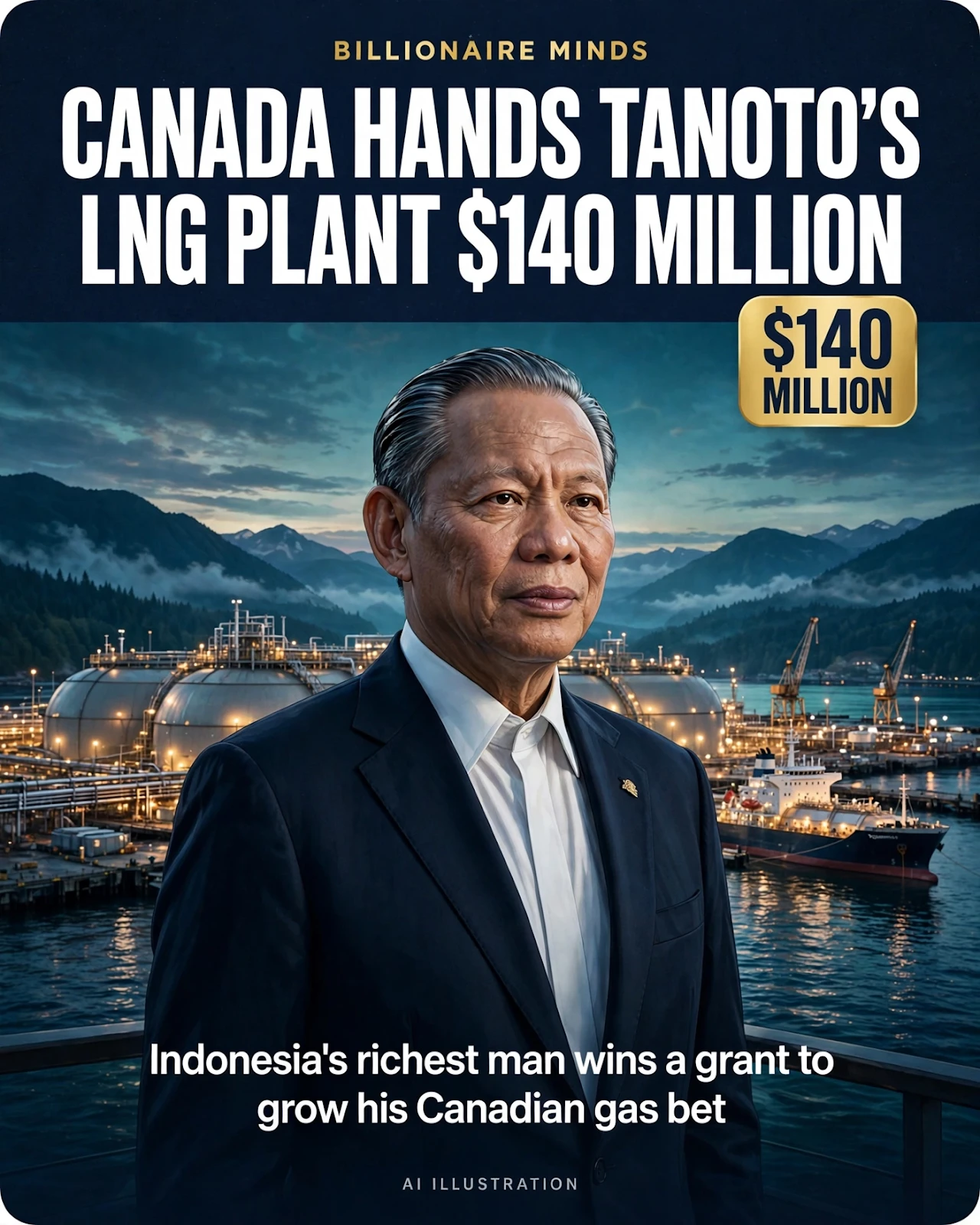
Canada Hands Indonesia's Richest Man $140 Million for His LNG Plant

Canada gives $140 million to Woodfibre LNG, the Canadian gas plant backed by Indonesia's richest man Sukanto Tanoto

Canada just handed a $140 million cheque to a liquefied natural gas plant backed by Indonesia's richest man — and the money comes with strings attached.

Ottawa announced a C$200 million (US$140 million) conditional grant for Woodfibre LNG, a project on British Columbia's west coast backed by billionaire Sukanto Tanoto. The funding, announced Friday by Canadian Energy Minister Tim Hodgson, will only flow if the company hits specific investment targets in Canada.

A bigger plant, a bigger bet on Canadian gas

The Squamish facility was initially designed to produce 2.1 million tonnes of LNG a year. The new funding will let it raise targeted annual capacity to 2.5–2.6 million tonnes — a jump of 19–24%. Woodfibre LNG CEO Luke Schauerte says the plant is about 75% complete, with its first shipments expected in more than a year. Hodgson says the investment will help diversify Canada's energy exports beyond its traditional markets.

From a spare-parts shop to a $21.5 billion empire

Woodfibre LNG is 70% owned by Pacific Energy Corp., part of Royal Golden Eagle (RGE) — the Singapore-headquartered conglomerate founded and chaired by Tanoto. RGE spans forestry, palm oil and more, with over $40 billion in assets and 80,000 employees. Tanoto's empire traces back to 1967, when he opened a small spare-parts shop called Toko Motor. Today the Bloomberg Billionaires Index ranks him as Indonesia's richest individual, worth an estimated $21.5 billion — and Canada's grant just made his Canadian gas bet a little bigger.

Source: VnExpress International / Bloomberg, November 16, 2026. This is a fan/commentary summary of reported news; all figures are the sources' estimates. Image is an AI illustration.

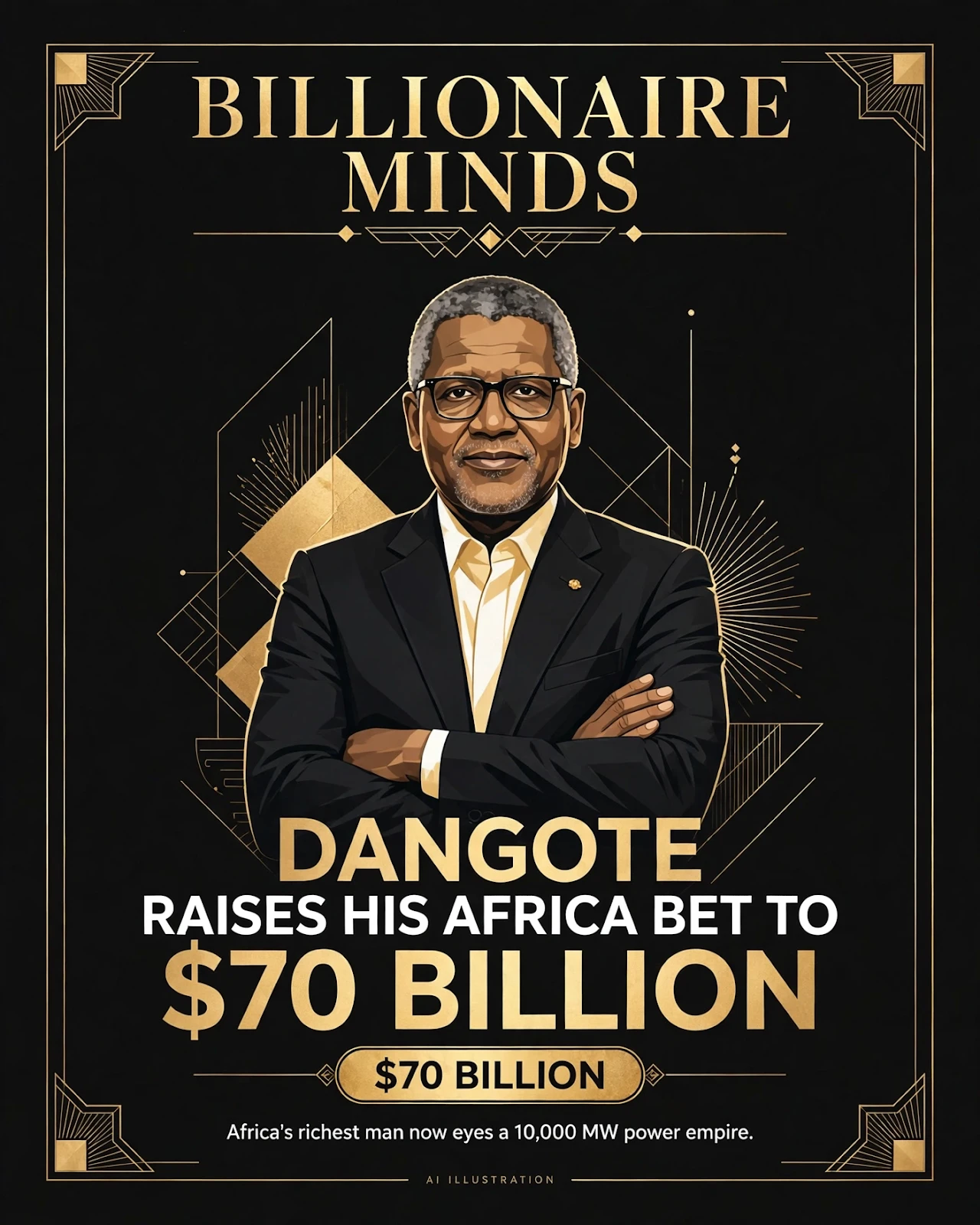
Dangote Raises His Africa Bet to $70 Billion — With a 10,000 MW Power Plan

Aliko Dangote — Africa's richest man — raises his Africa investment target to $70 billion and eyes a 10,000 MW power empire

Africa's richest man is thinking even bigger. Aliko Dangote has raised his group's planned investment across Africa to $70 billion — $10 billion more than the figure he gave just last week — and says he is now considering a 10,000-megawatt power programme spanning the continent.

From $50 billion to $70 billion in a week

The target has climbed fast. Dangote's group had planned about $50 billion of African investment by the end of the decade before he raised it to $60 billion at the launch of a fuel storage and pipeline project in Namibia on November 4. Now it is $70 billion. The Namibian project is part of a $2.5 billion plan with a 1,700-kilometre pipeline and storage for about 4 million barrels of fuel, due within 18 months. Announced projects across Africa already add up to more than $35 billion, including a planned 700,000-barrel-a-day refinery in Kenya.

A return to power

Electricity is the new frontier. In May, Dangote told the International Finance Corporation in Washington: "We are now going into power, 20,000 megawatts." In June his group outlined a port and a 2,000-megawatt power plant in Tanzania, and in September he set a target of more than $10 billion of investment in power. Nigeria has about 13,000 megawatts of installed capacity, but the national grid often delivers barely a quarter of that — which is why Dangote's own plants generate much of their own electricity. This week he told Nigeria's petroleum explorers in Lagos that reliable electricity, affordable long-term loans and local supply chains are the building blocks of industrial growth.

Cash from the record refinery sale

The spending power is real. The initial public offering of his 650,000-barrel-a-day refinery near Lagos drew about ₦5.85 trillion ($4.3 billion) in applications from nearly 3.8 million investors — close to three times what the company sought, in the largest share sale in Africa's history. Dangote, 69, built his fortune in cement, sugar, salt and flour before moving into fertilizer and oil refining, and both Forbes and Bloomberg rank him as Africa's richest person.

Source: Billionaires.Africa, November 13, 2026. This is a fan/commentary summary of reported news. All figures are the sources' estimates. The portrait on this post is a stylised AI illustration, not a photograph of Aliko Dangote.

Adani Unveils a $120 Billion Spending Spree — India's Biggest Private Bet Ever

Gautam Adani just raised the stakes on India's infrastructure race. His Adani Group plans to invest more than $120 billion in capital expenditure over the next five years — about $20 billion a year — in what would be one of the largest private-sector spending programmes ever announced in India.

The plan was outlined by senior group executives in an interview with Fortune India published on November 10. It is bigger than the $100 billion five-year investment the group had previously outlined, and it puts energy firmly at the centre of the build-out.

Where the $120 billion goes

About 70% of the money — roughly $84 billion — will go to energy: renewables, thermal power, data centres, transmission and distribution. Around 20% is earmarked for transport and logistics — ports, airports and roads — while the remaining 10% goes to adjacent businesses such as cement, copper and aluminium.

"Over the next five years, we plan to invest about $120 billion — over $20 billion a year — across all our businesses," Pranav Adani, a director at flagship firm Adani Enterprises and the chairman's nephew, told Fortune India. The group describes it as a rolling five-year plan, with the first year firm and the remaining four years flexible.

Doubling the empire

The group expects the spending to double its asset base to ₹18 trillion (about $189 billion) and generate core earnings of ₹2.6 trillion to ₹3 trillion ($27.3 billion to $31.5 billion) over the five-year period. Annual capex is set to jump to about ₹3.5 lakh crore in FY27, roughly 75% higher than the current plan.

The announcement comes days after Adani Ports agreed on November 5 to buy Netherlands-based Evos, Europe's second-largest independent liquid storage operator, for $2.87 billion — and after an Adani Enterprises joint venture completed the purchase of the Vizag Mega Data Center Park on November 8.

Adani, 64, who dropped out of college and started as a diamond sorter in Mumbai before founding his commodities trading business in 1988, built his empire around the Mundra port in Gujarat — now India's largest commercial port. Forbes ranks him among Asia's richest people, with a fortune built largely on his stakes in the group's listed companies.

Source: Billionaires.Africa (Nov 11, 2026), reporting Reuters / Fortune India (Nov 10, 2026). This is a fan/commentary summary of reported news; all figures are the sources' estimates.

Musk's $24 Billion Texas Power Play — SpaceX Wants Its Own Gas Plant and Supercomputer at Starbase


Elon Musk's SpaceX wants to build its own power station — and its own supercomputer — in Texas. The company has asked the City of Starbase to approve a $24 billion project pairing a natural gas-fired power plant with a "super-compute facility" on a 444-acre site near the Port of Brownsville, according to a city notice published November 6.

The plan in numbers

The proposed plant would run on 35 gas turbines producing about 748 megawatts — enough electricity to run the giant AI data center without touching the Texas power grid at all. SpaceX has also applied for an air emissions permit and is seeking a property tax abatement and access to the Cameron County Enterprise Zone. The city commission is scheduled to hold a public hearing on the request on December 9.

Why SpaceX wants its own power

Texas has frozen new data centers from joining the state grid queue since August, while regulators audit the system — so building its own generation is the fastest way to keep the AI race moving. SpaceX merged with Musk's AI company xAI in February 2026 and is now aiming for roughly 13 gigawatts of AI compute capacity by the end of 2027. It already leases computing power to Google and Anthropic, and job postings openly reference the "Starbase supercomputer." The company is also building its own gas pipelines in Texas and Florida, and a separate gas-fired plant for a semiconductor factory it is building with Tesla near Houston.

The political risk

The timing is awkward. Democrat Gina Hinojosa, who won the Texas governor's race on November 3, opposes energy-intensive AI data centers — and she has already moved to freeze a possible sale of state park land next to Starbase to SpaceX. Musk hit back on X, saying "SpaceX and Tesla have prospered in Texas, because we were not constantly operating under an oppressive and extractive state government." Investors are watching closely: Tesla fell nearly 11% and SpaceX 9% in Thursday's broad market selloff, though analysts at Stifel reaffirmed a buy rating on SpaceX with a $190 price target.

Sources: CoinDesk (Nov 9, 2026), Crypto Briefing, TradersUnion, Chosun Biz reporting Bloomberg and Reuters. This is a fan/commentary summary of reported news; all figures are the sources' estimates. Image: AI illustration.

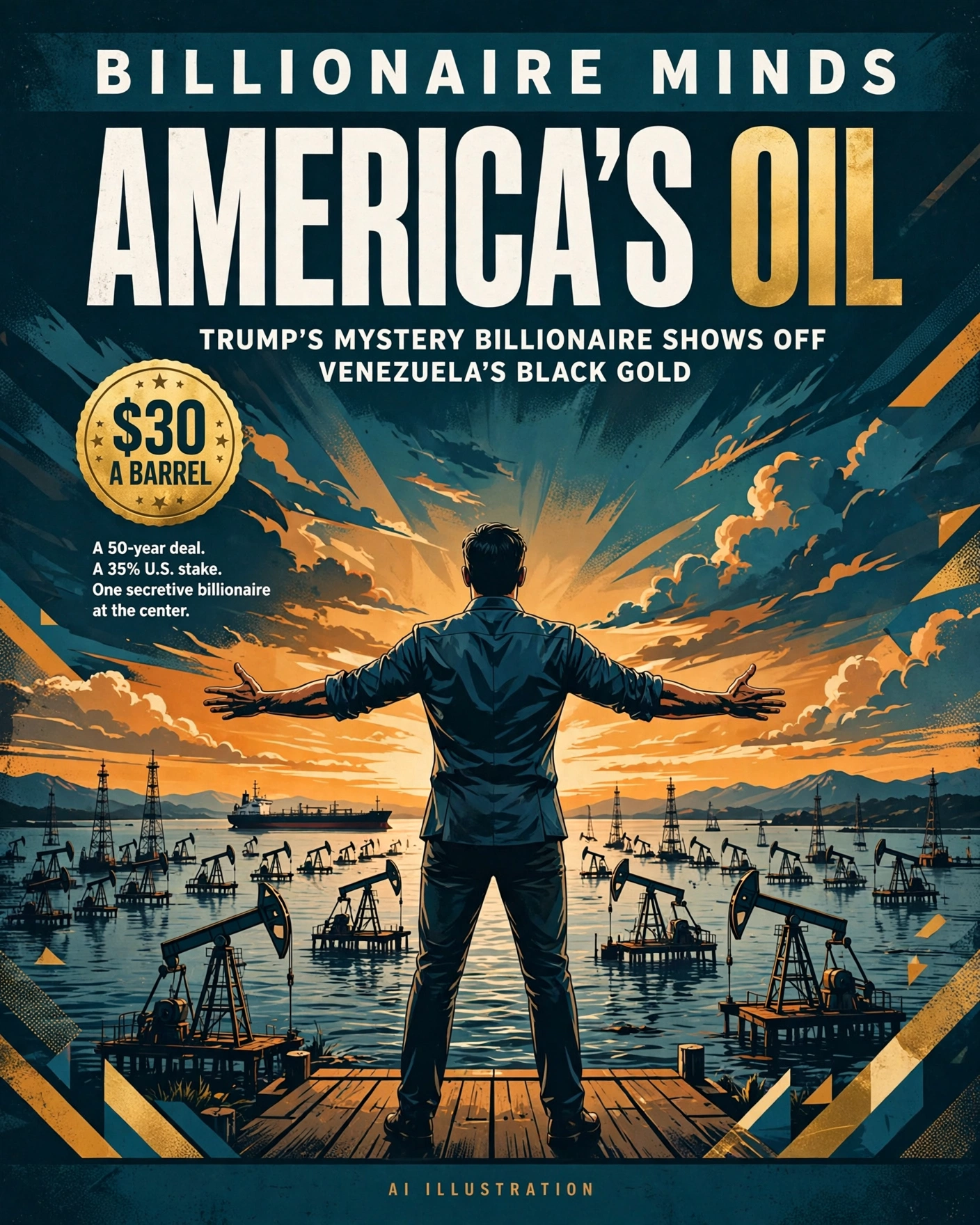
Trump's Mystery Billionaire Shows Off 'America's Oil' — the $30-a-Barrel Venezuela Deal

Alejandro Betancourt, the secretive billionaire behind Trump's Venezuela oil deal, stands before the oil platforms of Lake Maracaibo at sunset.

His helicopter buzzed the oil wells of Lake Maracaibo as Alejandro Betancourt — the secretive 46-year-old billionaire hand-picked by the Trump administration to be Venezuela's new petroleum king — spread his arms wide and smiled. "Welcome," he said, "to oil land."

Over two days, Betancourt gave The Washington Post the first public glimpse of a venture he calls "America's oil" — a sprawling, U.S.-backed oil empire in the making, built on fields believed to hold 63.7 billion barrels of crude, more than the entire reserves of the United States.

The 50-year deal behind the show

According to an 18-page contract reviewed by The Post, the deal gives the United States a 35 percent stake in Betancourt's company, North American Blue Energy Partners (NABEP), for nearly nothing. Betancourt must sell 20 percent of his production to the U.S. at a discounted $30 a barrel — less than a third of the current market price — while Washington gets first dibs on the rest at market rates. Venezuela, meanwhile, takes its share first, collecting between 16 and 40 percent of production as royalties.

Betancourt says he personally invested $700 million of his own money — "pretty much everything I had" — plus $300 million in equipment to rebuild the operation after his first Venezuelan oil firm was seized in 2020. Since restarting in late 2023, he claims production has jumped from 18,000 to roughly 223,000 barrels a day, with a target of 275,000 before year's end — and he insists he is on track to overtake Chevron as Venezuela's largest producer by early next year.

Critics call it smoke and mirrors

Not everyone is buying it. Opposition leader María Corina Machado, who has accused Betancourt of "obscene corruption," says the deal "does not reflect the levels of transparency Venezuelan society desires" and has suggested she might review the contract. U.S. Democrats, who now control both chambers of Congress, have raised alarm about the deal's legality. And oil analysts are sceptical: "I think it's 90 percent smoke and mirrors," said Francisco Monaldi of Rice University, noting that developing untouched fields in the Orinoco Belt could cost $15–20 billion and take five to ten years.

Betancourt brushes it all aside. Ploughing more than $5 billion of 2026 cash flow into expansion, he compares himself to Nelson Rockefeller and calls himself a wildcatter "on steroids." Whether the bet pays off — or collapses under politics and price — the world is now watching Venezuela's oil land.

Source: The Washington Post, "Mysterious billionaire shows off 'America's oil' — and Trump's Venezuela" (Nov 8, 2026). All allegations in the story are attributed; Betancourt denies any wrongdoing. Image: stylised AI illustration, not a photograph.

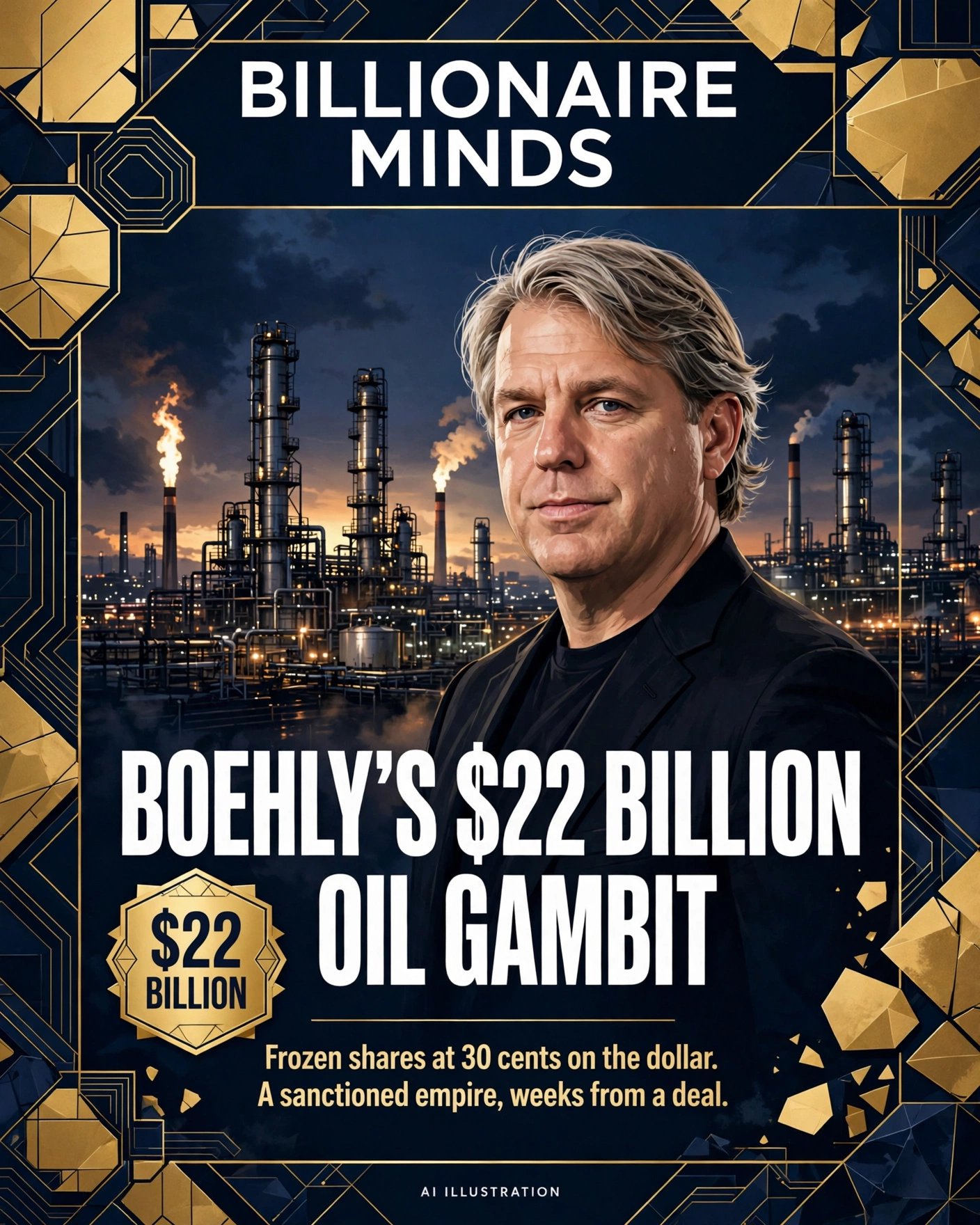
Billionaire Todd Boehly Is Buying a $22 Billion Oil Empire — for 30 Cents on the Dollar

Billionaire Todd Boehly before an oil refinery skyline — his consortium is closing in on Lukoil's $22 billion overseas empire, buying frozen shares at 30 cents on the dollar

A US billionaire who co-owns the Los Angeles Dodgers is closing in on one of the strangest deals in energy history: buying a sanctioned Russian oil giant's entire overseas empire — without paying cash, and at about 30 cents on the dollar.

The $22 billion swap

A consortium led by Todd Boehly is preparing a securities swap to acquire the international assets of Lukoil, Russia's second-largest oil producer, according to a Reuters exclusive published November 3. Four people close to the sale said a deal could be reached within weeks.

The portfolio was initially valued at about $22 billion when the sale process began more than a year ago: oilfields, refineries and petrol stations spanning Europe, the Middle East and Africa, including oil and gas interests in five African countries — Egypt, Cameroon, Ghana, Nigeria and the Republic of Congo. Its value has since slipped as sanctions disrupted some operations.

The mechanism is the remarkable part. A bank acting for the consortium has already bought billions of dollars of frozen Lukoil securities — from around 10 US and British investment funds and US depositary banks, among them Capital Group — at roughly 30 cents on the dollar of their face value. Those impaired securities would then be swapped for Lukoil's operating assets abroad.

Who is in the consortium — and the escrow twist

Alongside Boehly, the group brings in Emirati investors International Holding Company and Al Hail Holding, the Syrian-Qatari Al-Khayat brothers, and the US government's own International Development Finance Corporation, which is backing the bid.

The consortium moved further than earlier suitors by promising to park the frozen securities in an escrow account rather than handing them straight to Lukoil. The US Treasury rejected a proposal from American bank Xtellus Partners in December 2025; the escrow structure is what got this bid past that hurdle.

More than a dozen suitors chased the assets, among them oil majors Exxon Mobil and Chevron, private equity firm Carlyle — which dropped out in October 2026 — and Bernd Bergmair, the former owner of Pornhub.

The clock is ticking

The deal is far from done. The Treasury's current licence permits negotiations, due diligence and contingent contracts, but it does not authorise the actual transfer of Lukoil's assets — and it expires on November 21, 2026. The consortium needs separate Treasury approval before taking control of anything.

Boehly, whose fortune Forbes estimates at about $9.3 billion, sold his interest in English football club Chelsea in September 2026. If the swap closes, the Dodgers and Lakers co-owner will have turned frozen paper bought at a 70% discount into a working oil empire spanning three continents — one of the boldest distressed-asset plays of the decade.

Source: Reuters, November 3, 2026, via Euromaidan Press, Mazech and Azat TV. This is a fan/commentary summary of reported news; all figures are the sources' estimates. Portrait: AI illustration.

Adani's $2.9 Billion European Gambit: Asia's Third-Richest Man Buys Into Europe's Energy Backbone

Gautam Adani stands before a European port at dusk — Adani Ports buys Evos for $2.9 billion

Asia's third-richest man just made his boldest move into Europe. Gautam Adani's Adani Ports & Special Economic Zone (APSEZ) has agreed to acquire Amsterdam-based liquid storage operator Evos BV in a $2.9 billion all-cash deal — a purchase that plants the Indian ports giant firmly on European soil.

The Mumbai-listed company announced the agreement in a filing late Thursday. Japan's MUFG underwrote the deal and is providing financing commitments of up to €2.8 billion.

What Adani Just Bought

Evos is one of Europe's largest liquid storage operators, with 6.3 million cubic meters of storage capacity across eight terminals in the Netherlands, Germany, Spain, Belgium and Malta. Its pipelines link directly to major infrastructure, including Amsterdam's Schiphol Airport and the Central Europe Pipeline System.

In 2025 alone, Evos handled 37 million metric tons of liquids — from gasoline, diesel and jet fuel to cleaner alternatives like sustainable aviation fuel, biofuels, methanol and bioethanol.

Why This Deal Matters

Once the transaction closes, APSEZ's global network will grow to 28 ports and terminals across 10 countries. The company already operates 16 facilities in India, runs a fleet of 138 vessels, and handles about 27% of India's total port volumes.

"This marks an important milestone in APSEZ's trajectory towards handling 1 billion tons of cargo and building a truly global, integrated transport platform," said Karan Adani, the company's managing director and Gautam Adani's elder son.

The $83 Billion Man Behind the Move

Gautam Adani, who chairs the Ahmedabad-based Adani Group, is worth an estimated $83 billion in real time. In Asia, he ranks behind only Mukesh Ambani ($90.5 billion) and TikTok co-founder Zhang Yiming ($84 billion).

With this deal, Adani is betting that whoever controls Europe's fuel storage controls a key piece of the continent's energy future — and he just bought himself a very large piece of it.

Source: VnExpress International. Image: AI-generated stylized illustration.