Posts

Showing posts with the label Mergers and Acquisitions

Billionaire Nassef Sawiris Just Seized 67% of OCI — Egypt's Richest Man Tightens His Grip Ahead of the Orascom Merger

Nassef Sawiris — Egypt's richest man, now controlling 67.45% of OCI after his family's cash offer went unconditional

Egypt's richest man just tightened his grip on a corporate empire. Billionaire Nassef Sawiris will now control 67.45% of OCI N.V. after his family investment company, NNS Holding, declared its cash offer for the Dutch-listed group unconditional — clearing the final hurdle before OCI is folded into Orascom Construction.

The €4.10 Cash Offer That Broke the Deadlock

NNS, the Cyprus-based Sawiris family vehicle, offered €4.10 ($4.59) in cash for every OCI share it did not already own. The offer closed on November 17 and was declared unconditional on November 18. There was no minimum acceptance level, so NNS was always going to buy whatever shares were tendered once regulators signed off — and family members holding about 9.07% of OCI had committed not to sell into it.

The bid was launched in late June to break a deadlock over the merger, after some OCI investors balked at taking Orascom shares. NNS crossed 55% of OCI in July through market purchases priced just below the offer, and held about 57.5% by late August. The unconditional declaration lifts that to 67.45%.

What Happens Next: Delisting, Then a New Orascom

OCI shareholders approved the combination with Orascom Construction on October 30, with 99.85% of votes cast in favour. Under the deal, OCI moves nearly all its assets into a subsidiary and hands it to Orascom in exchange for 97.2 million new shares, distributed at 0.4634 Orascom share for each OCI share. OCI's final day of trading on Euronext Amsterdam is expected to be November 26, with delisting the following day; shareholders should receive their Orascom shares from around December 8, and OCI will then be liquidated. The two companies must complete the deal by December 30.

Because NNS now owns a larger slice of OCI, it will receive a bigger share of the new Orascom stock — lifting the Sawiris family's grip on the enlarged company, which will be renamed Orascom and run infrastructure, construction and investment divisions. Sawiris himself is set to become its non-executive chairman.

The Man Behind the Move

Sawiris, 65, is the youngest son of Onsi Sawiris, who founded the Orascom business in 1950. He built OCI into one of the world's largest nitrogen fertilizer producers before selling most of its plants. He also chairs Adidas AG, where he owns close to 6%, and co-owns Aston Villa Football Club. Forbes estimates his net worth at $9.6 billion, making him Egypt's richest person — and after this week, one of the most powerful industrial owners in the region.

Source: Billionaires.Africa (Nov 18, 2026); Wisevoter; Securities.io. This is a fan/commentary summary of reported news; all figures are the sources' estimates. Portrait image is an AI illustration.

Prem Watsa Sells His $370 Million IIFL Stake to Fund the $5.6 Billion IDBI Bank Takeover

Prem Watsa — Fairfax sold its entire IIFL Finance stake for $370 million to fund the $5.6 billion IDBI Bank takeover

Canadian billionaire Prem Watsa is cashing out to go bigger. His Fairfax Financial has sold its entire stake in Indian lender IIFL Finance in a $370 million block deal — and every dollar is earmarked for the biggest acquisition in the company's history.

A Clean Exit at a Premium

Fairfax sold more than 56 million IIFL Finance shares on November 18 at a floor price of 611 rupees each, valuing the deal at about 34.54 billion rupees ($370 million), according to a Reuters report citing a source with direct knowledge of the transaction. The sale ends Fairfax's 13.64% holding in the lender — a complete exit. IIFL shares jumped as much as 6.5% to 678.10 rupees after the deal was done.

The $5.6 Billion Prize

The money is headed straight for IDBI Bank. Fairfax was named the winning bidder for a 60.72% stake in the state-backed lender, valued at about 528.78 billion rupees ($5.6 billion) — the largest investment in Fairfax's history. The group plans to turn IDBI into a major universal bank, combining its lending and deposit operations with insurance distribution through Go Digit and investment banking and wealth management through its other Indian interests.

What's Next

The IDBI Bank acquisition still requires regulatory and government approvals, with Fairfax previously indicating that it expects the deal to close early next year. Watsa — often called Canada's Warren Buffett — has spent decades building Fairfax into a global insurance and investment group, and the IIFL sale shows how far he is willing to go to rearrange his portfolio for the one deal that matters most.

Source: Billionaires.Africa, reporting Reuters (November 18, 2026). Portrait image is an AI illustration.
Billionaire David Hoffmann Offers Just $37 Million for 342 Radio Stations — Townsquare's Board Is Expected to Say No

David Hoffmann — billionaire offers $37 million for Townsquare Media's 342 radio stations

Missouri-born billionaire David Hoffmann has made one of the boldest lowball offers in media history: just $37 million in cash for all of Townsquare Media — the company behind 342 radio stations across 74 American markets.

Hoffmann's family company sent an unsolicited letter to Townsquare's board on Monday, offering $2.03 per share. That is roughly a 50% premium over the stock's $1.35 intraday price — but the shares have lost about two-thirds of their value in the past month, closing at just $1.28 on Monday and leaving the whole company worth only around $25 million on the market.

The $467 Million Problem

The headline price is not the real price. Townsquare carries $467.5 million in debt against just $4.6 million in cash, so any buyer would be taking on close to half a billion dollars of obligations. Hoffmann's letter puts the enterprise value at roughly $490 million and warns the company could face insolvency without a restructuring.

Hoffmann already owns 112,941 Townsquare shares bought on the open market. His letter says he has stopped buying shares in favour of bidding for the whole company.

The Board Is Expected to Say No

Townsquare chief executive Bill Wilson told trade publications the board "feels that it does not reflect the underlying value of the company" and expects to reject the offer once its review is complete.

The bid is Hoffmann's second big radio move this year. In June he agreed to pay $20 million for six Audacy stations in St. Louis, including the legendary news-talk station KMOX. If the Townsquare deal ever closed, his media empire would stretch to 193 newspapers and 360 radio stations.

Source: Radio & Television Business Report / Radio Ink

Image: AI illustration. This is a commentary post based on public reporting.

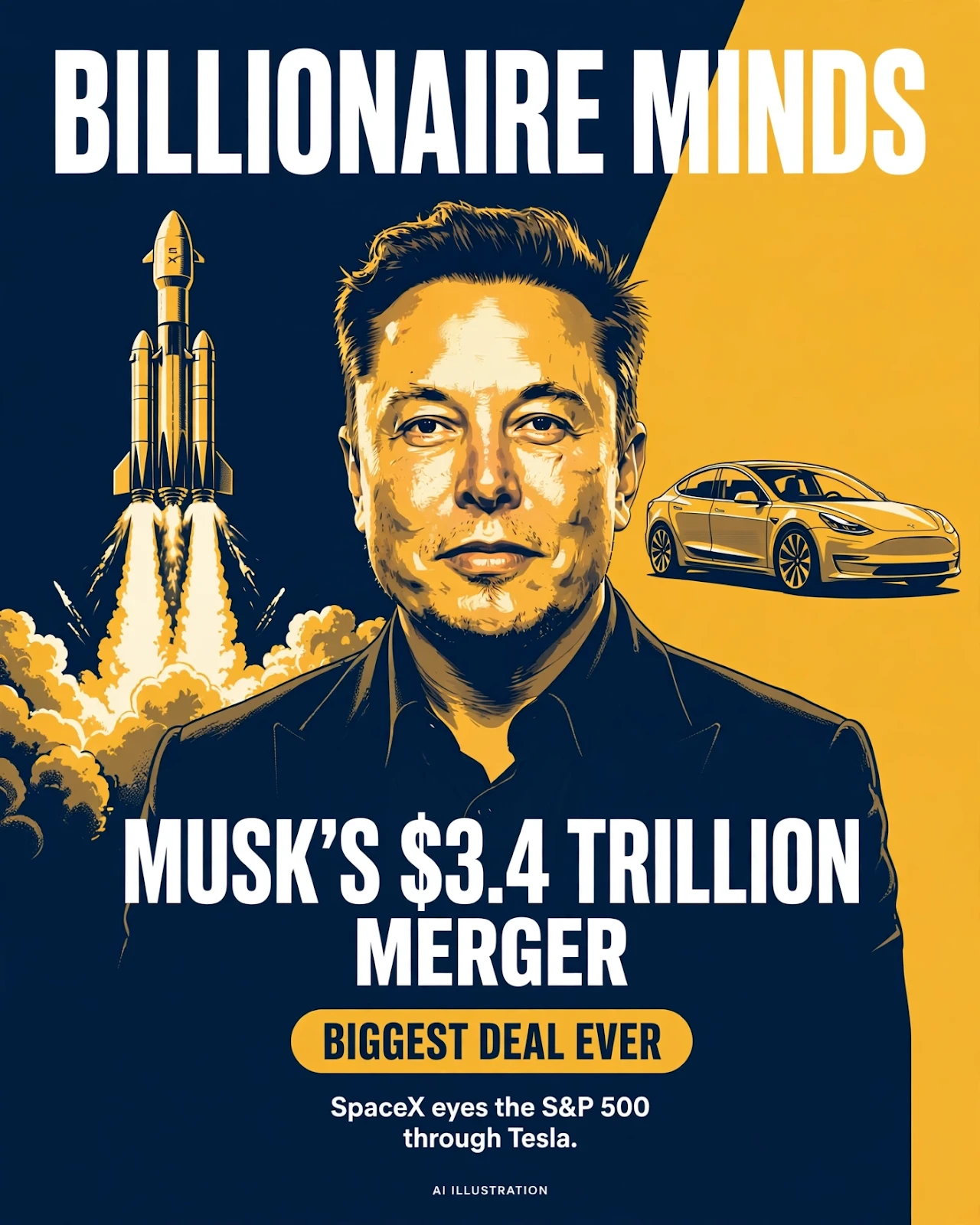
Elon Musk's SpaceX–Tesla Merger: A $3.4 Trillion Deal to Sneak SpaceX Into the S&P 500

Elon Musk's SpaceX and Tesla merger — a $3.4 trillion deal that could sneak SpaceX into the S&P 500

Elon Musk is chasing the biggest deal in corporate history — and the prize is a backdoor into the S&P 500. The world's richest person is pushing to merge SpaceX with Tesla, a combination worth about $3.4 trillion that would dwarf every merger ever attempted.

The logic, reported by Bloomberg on November 14, is simple. Tesla has been an S&P 500 member since December 2020, while SpaceX — which listed on Nasdaq in June — was refused a fast track into the index. Folding the rocket company into Tesla would hand it the membership it could not win alone, and index membership matters: trillions of dollars in index funds automatically buy member stocks.

A December Announcement?

Talks have moved faster in recent weeks, and an announcement could come as early as December, according to a November 12 report. Musk wants a deal that can close while President Donald Trump is still in office, Bloomberg reported in October. Both boards have set up special committees, and analysts at JPMorgan Chase expect an all-stock deal led by SpaceX. The pair were worth about $3.7 trillion combined in October; a slide in SpaceX shares since the US midterm elections has trimmed that to about $3.4 trillion.

Who Holds the Cards

Musk owns about 42% of SpaceX and controls more than 80% of its votes, so approval there is not in doubt. The harder sell is Tesla, where he holds about 20% and shareholders will have the final say — Musk himself has warned that winning them over could be difficult, and no terms have been agreed. The companies already work closely together, including a $16.8 billion joint chip plant in Texas, and SpaceX absorbed Musk's AI company xAI before its listing. Musk, 55, calls the merger a "good idea" — while comparing the negotiations to "tap dancing through a minefield."

Source: Bloomberg / The New York Times, November 16, 2026. This is a fan/commentary summary of reported news; all figures are the sources' estimates. Image is an AI illustration.

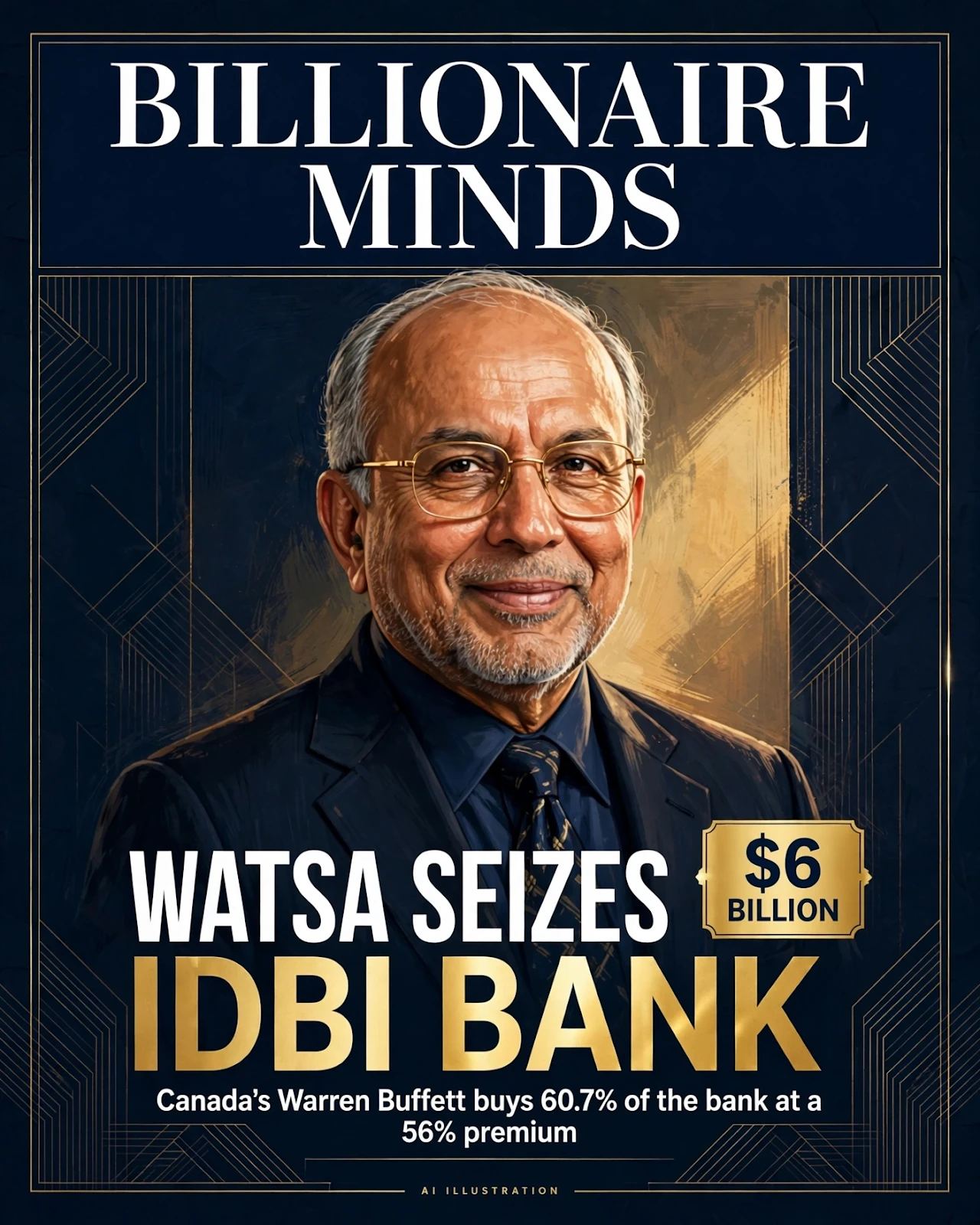
Billionaire Prem Watsa Just Seized Control of IDBI Bank — a $6 Billion Bet at a 56% Premium

Prem Watsa — billionaire investor whose Fairfax just seized control of IDBI Bank in a $6 billion deal at a 56% premium

Canada's Warren Buffett just pulled off one of the biggest bank takeovers in Indian history. Billionaire Prem Watsa's Fairfax Financial Holdings has clinched a landmark deal to buy a controlling 60.72% stake in IDBI Bank for Rs 52,878 crore — roughly $6 billion — beating rival bidders from around the world.

And he did not get it cheap. Fairfax offered Rs 81 per share, comfortably above the Indian government's own benchmark valuation of Rs 75.99 — and a full 56% premium over the bank's regulatory book value. When a value investor famous for never overpaying decides to pay up, the market pays attention.

A $6 Billion Bet on a Bank That Was Once on Life Support

IDBI Bank is a remarkable turnaround story in its own right. The lender spent four years — from 2017 to 2021 — under the Reserve Bank of India's Prompt Corrective Action framework, the regulator's intensive-care ward for struggling banks. Today it earns close to Rs 10,000 crore a year in profit.

Under the privatisation framework, the Indian government and the Life Insurance Corporation will keep a combined 34% stake, staying invested in the bank's future growth. Fairfax takes management control — and it has big plans for what comes next.

Fairfax Wants to Build a Financial Superstore

This is not just a bank purchase. Fairfax plans to fold its wider Indian financial portfolio into IDBI, bringing Go Digit General Insurance, Go Digit Life Insurance and IIFL Capital Services under the same roof. The goal: one integrated financial powerhouse offering banking, insurance, investment banking and wealth management — a challenger to giants like HDFC Bank and ICICI Bank.

Fairfax President and COO Peter Clarke said the lender "holds the potential to become a premier universal Indian bank with global reach." The deal still needs regulatory, shareholder and statutory approvals before it closes.

Why Watsa's Track Record Makes This One to Watch

Watsa, who built Fairfax from a small Canadian insurer into a global investment empire and earned the "Canada's Warren Buffett" nickname for his value-investing discipline, has done this before. Fairfax engineered successful turnarounds at CSB Bank and ICICI Lombard in India — buying unloved assets, fixing them, and holding them for the long term.

If IDBI follows the same playbook, the $6 billion cheque could look like a bargain in a decade. For now, one thing is clear: the quietest billionaire in the room just made the loudest banking move of the year.

Source: The Kolkata Mail (Nov 13, 2026); Lokmat Times. The portrait on this post is an AI-generated illustration.

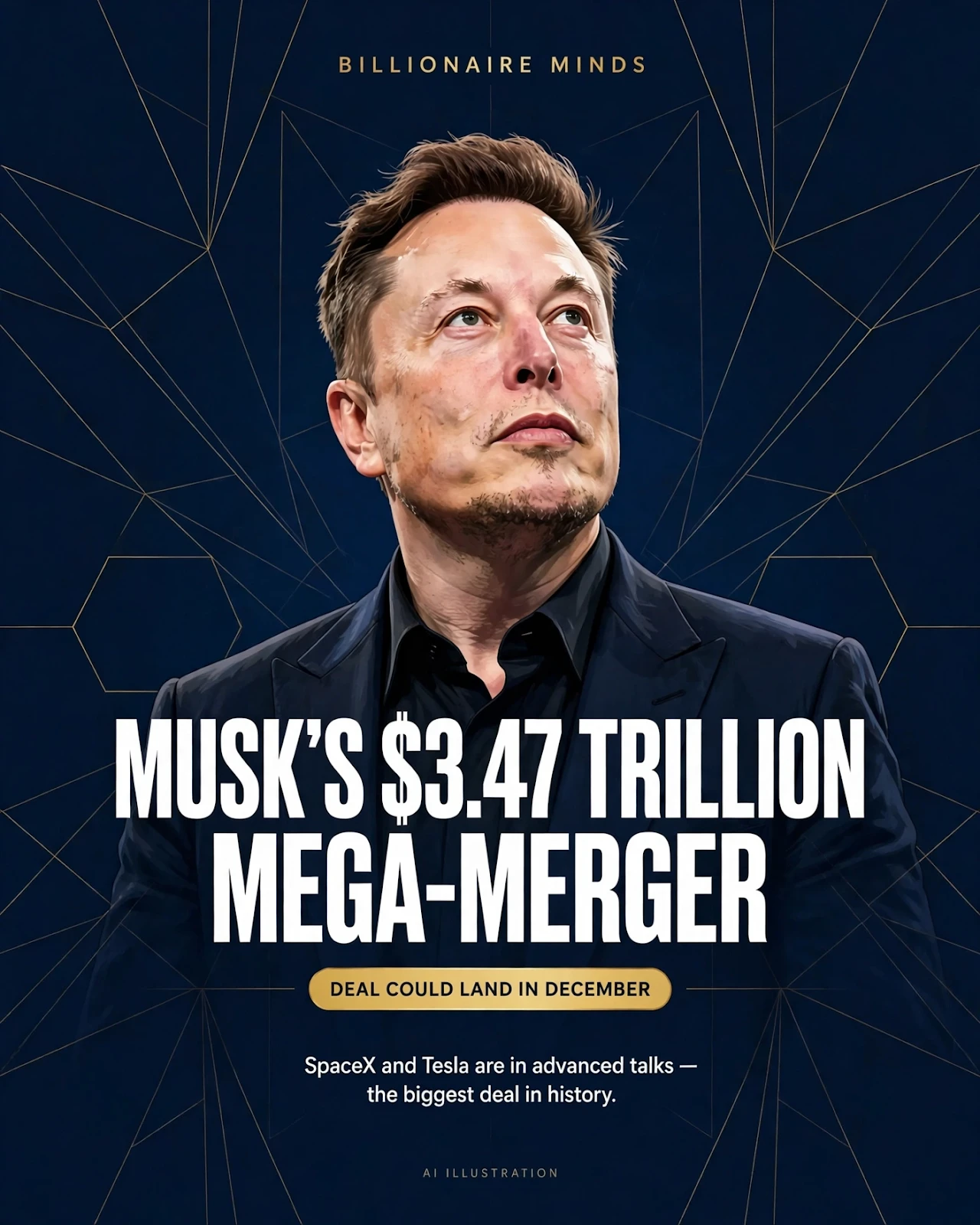
Musk's $3.47 Trillion Mega-Merger Is Moving Fast — SpaceX and Tesla Could Announce in December

Elon Musk — SpaceX and Tesla are in advanced merger talks on a $3.47 trillion deal that could be announced as early as December

Elon Musk is moving fast on the biggest deal in corporate history. SpaceX and Tesla are progressing in their merger negotiations, Bloomberg reported on Thursday, and the two companies could announce the combination as soon as December.

The deal would unite Musk's two largest companies — SpaceX, worth more than $1.9 trillion after its June IPO, and Tesla, worth about $1.5 trillion — into a single $3.47 trillion giant spanning rockets, satellites, electric cars, batteries, AI and humanoid robots.

The biggest deal in history

The boards and advisers of both companies are now hammering out the terms of the tie-up and the governance structure of the combined entity, according to people familiar with the matter. Musk said in October that both boards had formed special committees of independent directors to consider combining. Tesla shares jumped to a session high, rising as much as 1.9%, on Thursday, while SpaceX stock gained 0.5%.

An announcement could also slip into early 2027, the sources said. Bloomberg had earlier reported that the companies were pushing to announce a deal by the first half of next year, with the aim of closing it before the end of President Donald Trump's term. One factor under discussion is how many SpaceX shares Tesla investors would receive. Tesla is slated to hold its annual shareholder meeting on December 3.

Why Musk wants one company

The rationale, Bloomberg reports, is a shared ambition to leverage artificial intelligence across space, driverless cars and humanoid robots. The companies already cooperate closely, including a joint effort to build a semiconductor plant in Texas called Terafab. SpaceX has transformed from a rocket maker into a crucial supplier of AI infrastructure — including to Anthropic — and a top provider of satellite internet.

The obstacles standing in the way

The deal still faces steep hurdles. The companies must work out how to ring-fence Tesla's operations in China, while national security sensitivities around SpaceX's US government and defence contracts loom large. JPMorgan analyst Rajat Gupta called those "key dynamics that are at odds with each other" when it comes to winning regulatory and shareholder approval.

It will also be a major test of the political mood after the US midterm elections, in which Democrats took control of Congress and pledged to probe Musk's business and political dealings. But if the talks hold, December could deliver the largest merger the world has ever seen.

Source: Bloomberg via The Hindu BusinessLine (Nov 13, 2026); Reuters via bdnews24 (Nov 13, 2026). This is a fan/commentary summary of reported news. All figures are the sources' estimates. The portrait on this post is a stylised AI illustration, not a photograph of Elon Musk.

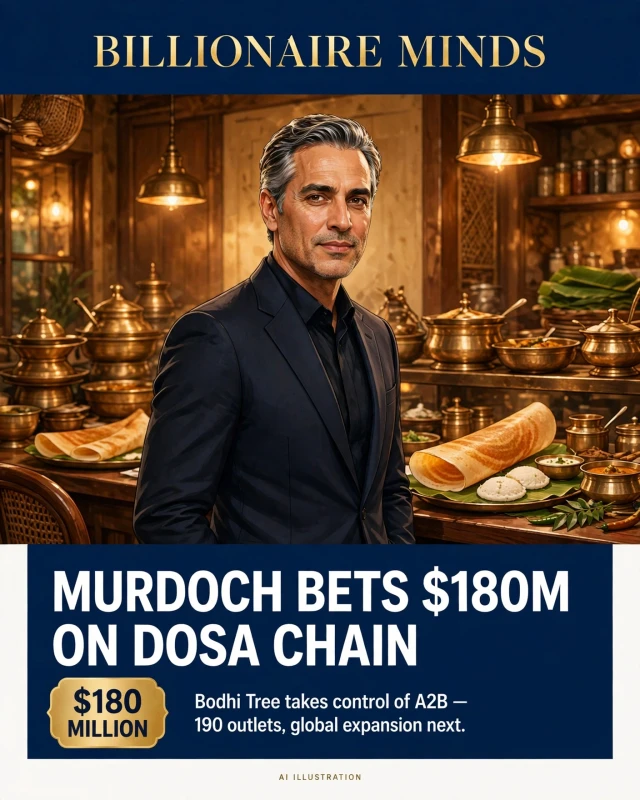
James Murdoch Just Bet $180 Million on Dosas — His Firm Took Control of India's Famous A2B Chain

James Murdoch's Bodhi Tree is paying $180 million for control of Adyar Ananda Bhavan, the 50-year-old South Indian vegetarian chain

James Murdoch just placed his biggest bet yet outside media — on dosas. His investment firm Bodhi Tree Systems has agreed to pay $180 million for a majority stake in Adyar Ananda Bhavan, the 50-year-old South Indian vegetarian restaurant and sweet-shop chain known across India as A2B. The deal was announced in a joint statement on Thursday, and it is Bodhi Tree's first ever investment in the food business.

A 50-year-old sweet shop goes global

A2B began as a small sweet shop in Chennai, founded by brothers K.T. Srinivasa Raja and K.T. Venkatesan, and grew into one of South India's best-known food brands. Today it runs about 160 outlets across India and more than 30 overseas, in Singapore, the United States, Australia, Malaysia and Britain, selling dosas, idlis, sweets and packaged snacks. The money from Bodhi Tree will fund expansion at home and abroad, plus digital upgrades and modernised kitchens and manufacturing. Uday Shankar, Bodhi Tree's co-founder, will chair A2B's new board.

What $180 million buys

The companies did not disclose the exact size of the stake, but an industry source put the deal's valuation of A2B at roughly $350 million. The chain reported sales of 14.87 billion rupees — about $158.8 million — in the year to March 2025, with a net profit of 362 million rupees, or about $3.9 million, according to regulatory filings. Revenue is still growing: it was close to 1,600 crore rupees in the year to March 2026, up from 1,502 crore the year before. The deal is the latest bet by global investors on legacy Indian food brands as demand for Indian snacks and cuisine grows overseas.

The Murdoch family money, redeployed

James Murdoch, 53, is the younger son of Rupert Murdoch. He ran 21st Century Fox as chief executive until its entertainment assets were sold to Disney in 2019, then left the family business and set up Lupa Systems, his own investment firm. Bodhi Tree, which he co-founded with former Disney executive Uday Shankar in 2021, is his third big swing: it previously put $600 million into test-preparation company Allen Career Institute and became a strategic investor in the Reliance-Disney joint venture JioStar. In September 2025, Rupert Murdoch settled the long family-trust fight by handing control of News Corp. and Fox to eldest son Lachlan — and buying out James and his sisters Elisabeth and Prudence for about $1.1 billion each. James is now putting that money to work far from Hollywood: in dosas, idlis and sweets.

Source: Reuters (Nov 12, 2026); Economic Times (Nov 12, 2026); VCCircle (Nov 12, 2026); CNBC-TV18 (Nov 12, 2026); The Hindu (Nov 12, 2026); Business Standard (Nov 12, 2026); Billionaires.Africa (Nov 12, 2026). This is a fan/commentary summary of reported news. All figures are the sources' estimates. The portrait on this post is a stylised AI illustration, not a photograph of James Murdoch.

Billionaire Mike Ashley Just Seized Control of Hugo Boss — His Own Man Is Now CEO

Billionaire Mike Ashley's Frasers Group has seized control of Hugo Boss — David Epstein takes over as CEO on January 1, 2027lt=

Billionaire Mike Ashley has completed his takeover of Hugo Boss. The German fashion house announced on Thursday that Frasers Group executive David Epstein will take over as chief executive on January 1, 2027 — putting one of Ashley's own men in charge of the company he spent six years chasing.

From a failed €2 billion bid to majority control

Frasers first bought into Hugo Boss six years ago, and in June it launched a takeover offer worth about €2 billion for the shares it did not own. The bid failed. But in October, Frasers quietly lifted its stake above 50% — buying 198,666 shares for about €7.63 million — and took control of the company anyway. Hugo Boss is valued at roughly €2.7 billion.

Ashley's men now run the boardroom

The CEO appointment is the final piece of the takeover. In September, Frasers chief executive Michael Murray — Ashley's son-in-law — was named chairman of Hugo Boss's supervisory board. Now Epstein, who has served as Frasers' chief brand partnerships officer since 2024, takes the day-to-day job. Outgoing chief executive Daniel Grieder, who has led Hugo Boss since 2021, is stepping down at his own request. The company's chief financial officer departed in October and its chief sales officer leaves at the end of November.

The Sports Direct billionaire's luxury play

Ashley, 62, founded the business that became Frasers in 1982 with a single sports shop in Maidenhead, England, and built it into a retail empire of about 1,500 stores. He is worth about $4 billion and owns roughly 73% of Frasers. The group has been pushing hard into premium and luxury fashion — and Hugo Boss, whose profit fell 51% to €18 million in the first three months of the year, is now its biggest prize.

Source: Reuters (Nov 12, 2026); Billionaires.Africa (Oct 24, 2026); CEO Magazine Poland (Nov 12, 2026). This is a fan/commentary summary of reported news. All figures are the sources' estimates. The portrait on this post is a stylised AI illustration, not a photograph.

SpaceX's 12% Slide Just Made Musk's Tesla Buyout a Lot More Expensive — Tesla Investors Would Own the Combined Company

Elon Musk's dream of folding Tesla into SpaceX just hit a very expensive snag — and the stock market did it. SpaceX shares have fallen roughly 12% since the company reported strong third-quarter results on October 21, while Tesla stock has stayed flat over the same stretch. That gap has quietly rewritten the price of the biggest merger in stock market history.

The math just flipped

Most Wall Street analysts expect SpaceX to act as the buyer in an all-stock deal, paying a premium for Tesla. But a lower SpaceX share price means the rocket company must hand over far more stock to buy the carmaker. At a 15% premium at current prices, SpaceX would have to give Tesla investors about 3.2 SpaceX shares for each Tesla share — and based on fully diluted share counts from FactSet, that exchange rate would leave Tesla shareholders owning more than 50% of the combined company.

Compare that with earlier this year, when SpaceX traded at $200 a share. Back then, a 15% premium would have cost just 2.3 SpaceX shares per Tesla share, leaving SpaceX investors with roughly 57% of the merged business. The 12% slide has flipped majority control to the other side of the table.

A $3.5 trillion question with no deal yet

Talk of a tie-up jumped after Musk told investors on October 20 that the boards of both companies had formed special committees to review a deal. Bringing the two together would create an AI giant controlling power generation, chip making, AI models, software agents and humanoid robots. Barclays has even put a $450-a-share value on Tesla in a deal — roughly a 20% premium — and called the merger a key part of the Tesla bull case.

But there is still no agreement, no merger proposal and no shareholder vote scheduled. Any deal would need approval from a majority of all outstanding Tesla shares, and Musk himself cannot take part in the committees' discussions because he leads both companies.

The warning sign is already flashing elsewhere. Traders recently punished chipmaker Marvell and optical firm Lumentum after the pair announced an all-stock merger in early November — Marvell's share price sat well below its 52-week high, so it had to issue far more shares to pay the same price. SpaceX faces the same hurdle. Unless its shares bounce back soon, the sheer cost of issuing so much new stock could stall the buyout talks altogether — and leave Musk's mega-merger on the launch pad.

Source: TipRanks (Nov 12, 2026); The Motley Fool / Barclays (Nov 1, 2026). SpaceX is valued at roughly $2 trillion and Tesla at about $1.5 trillion. No merger agreement has been announced.


Billionaire Brad Jacobs Bets $1 Billion on Company No. 9 — Takes Over CKX Lands to Build His Next Empire

Billionaire dealmaker Brad Jacobs is back — and he is betting $1 billion on his next empire. Jacobs Private Equity II, the investment firm led by Jacobs, announced on Monday that it will invest $1 billion in cash into CKX Lands, Inc., a small Louisiana land company listed on the NYSE American exchange. Jacobs will become chairman and CEO of the company while continuing to lead QXO, the building-products distributor he runs today.

"The launch of my ninth company"

"I love building multibillion-dollar market leaders, and this $1 billion investment marks the launch of my ninth company," Jacobs said in the announcement. "After concluding my chairmanships of XPO, GXO, and RXO last year, I now have the capacity to create this new venture while continuing to lead QXO to its massive potential." The deal puts $900 million from Jacobs' firm and $100 million from co-investors led by HRTG Partners, formerly Sequoia Heritage, into CKX — giving the group a majority stake.

What happens to CKX Lands?

CKX will be renamed and run as a standalone public company, with the industry it targets still to be decided. Existing shareholders get a $20.8 million cash dividend — $10.1312 per share — and keep their land business while also getting a piece of whatever Jacobs builds next. The deal, unanimously approved by CKX's board, is expected to close in early 2027, subject to shareholder approval. Shareholders holding about 28% of the voting power have already agreed to vote for it.

A serial empire-builder's track record

Jacobs has founded and led eight billion-dollar or multibillion-dollar companies, including six iconic public companies: QXO, XPO, GXO Logistics, RXO, United Rentals and United Waste Systems. Across those ventures, his teams have completed roughly 500 mergers and acquisitions. His formula, repeated in the announcement: attract world-class talent, drive operational excellence, use best-in-class technology, and scale through disciplined dealmaking. Wall Street will now watch which industry company No. 9 targets first.

Sources: The Manila Times / GlobeNewswire. This is a fan/commentary summary of reported news; all figures are the sources' estimates. Image: AI illustration.

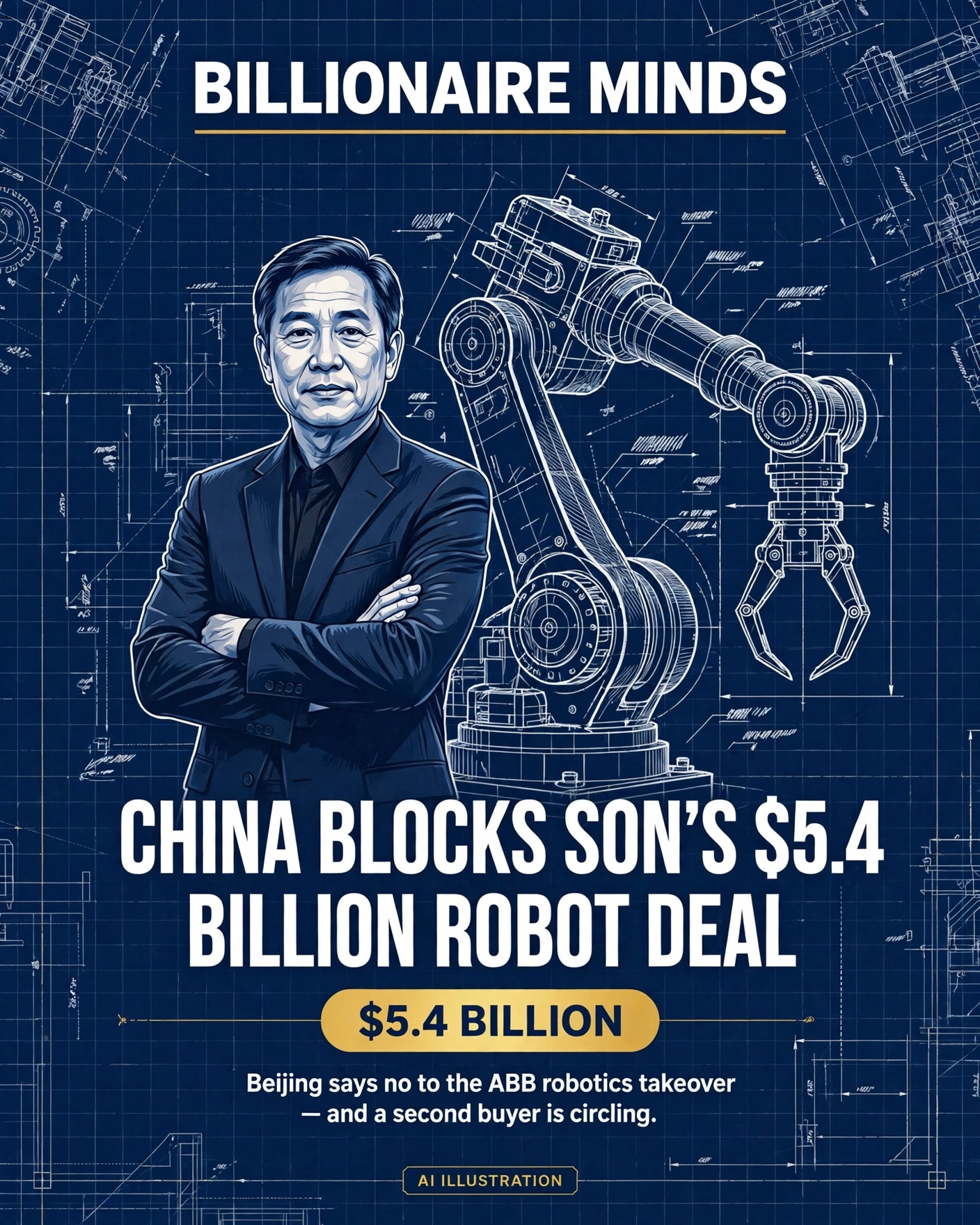
China Just Killed Masayoshi Son's $5.4 Billion Robot Deal — and a Second Buyer Is Already Circling

Masayoshi Son beside an industrial robot arm — China blocked SoftBank's $5.4 billion ABB robotics takeover

China has just slammed the door on one of the biggest robotics deals in history — and it is a direct blow to Masayoshi Son, Japan's richest man and the founder of SoftBank. Beijing's powerful state planner has blocked SoftBank's $5.4 billion purchase of ABB's robotics division, a deal Son had called a cornerstone of his push into what he calls "physical AI" — artificial intelligence that lives in machines, not just in software.

The Financial Times first reported the block on Thursday, November 5, and ABB confirmed it the same day: China's foreign-investment security review office had "prohibited the acquisition of the ABB Robotics business in China." SoftBank had agreed to buy the Swiss engineering giant's robotics division in October 2025 for $5.375 billion, with completion planned for mid-to-late 2026. The European Commission cleared the deal unconditionally in March. Beijing said no anyway.

Why Beijing Said No

The fear, according to people familiar with the review, is data. ABB's robots work on factory floors across China, collecting reams of production data — and Chinese regulators worried that data could be shipped overseas and used to train advanced AI models, including those built by OpenAI, in which SoftBank is a major investor. During the review, Beijing reportedly demanded that some of the robotics unit's manufacturing capacity and intellectual property stay in China. The decision surprised SoftBank: the deal had already cleared China's competition review in February, and people close to the company expected the separate security review to pass too — until last week.

What Happens Next

Neither company has called the deal off. ABB says the two sides "are in close dialogue and are working constructively on the transaction," while SoftBank is weighing whether it can reapply. But the clock is ticking: Reuters reported on November 8 that carving the Chinese operations out of the deal is now under consideration, and Bloomberg added that ABB is simultaneously exploring a sale to another interested party — with valuations of just $2–3 billion, barely half of what Son agreed to pay. ABB's robotics unit generated $2.3 billion in revenue in 2024 and employs roughly 7,000 people. SoftBank reports its half-year results on November 10 — the first moment Son will have to tell investors whether he will fight for the deal, restructure it, or walk away.

Source: PYMNTS, reporting Reuters; Nikkei Asia; SWI swissinfo.ch. Image is an AI illustration.
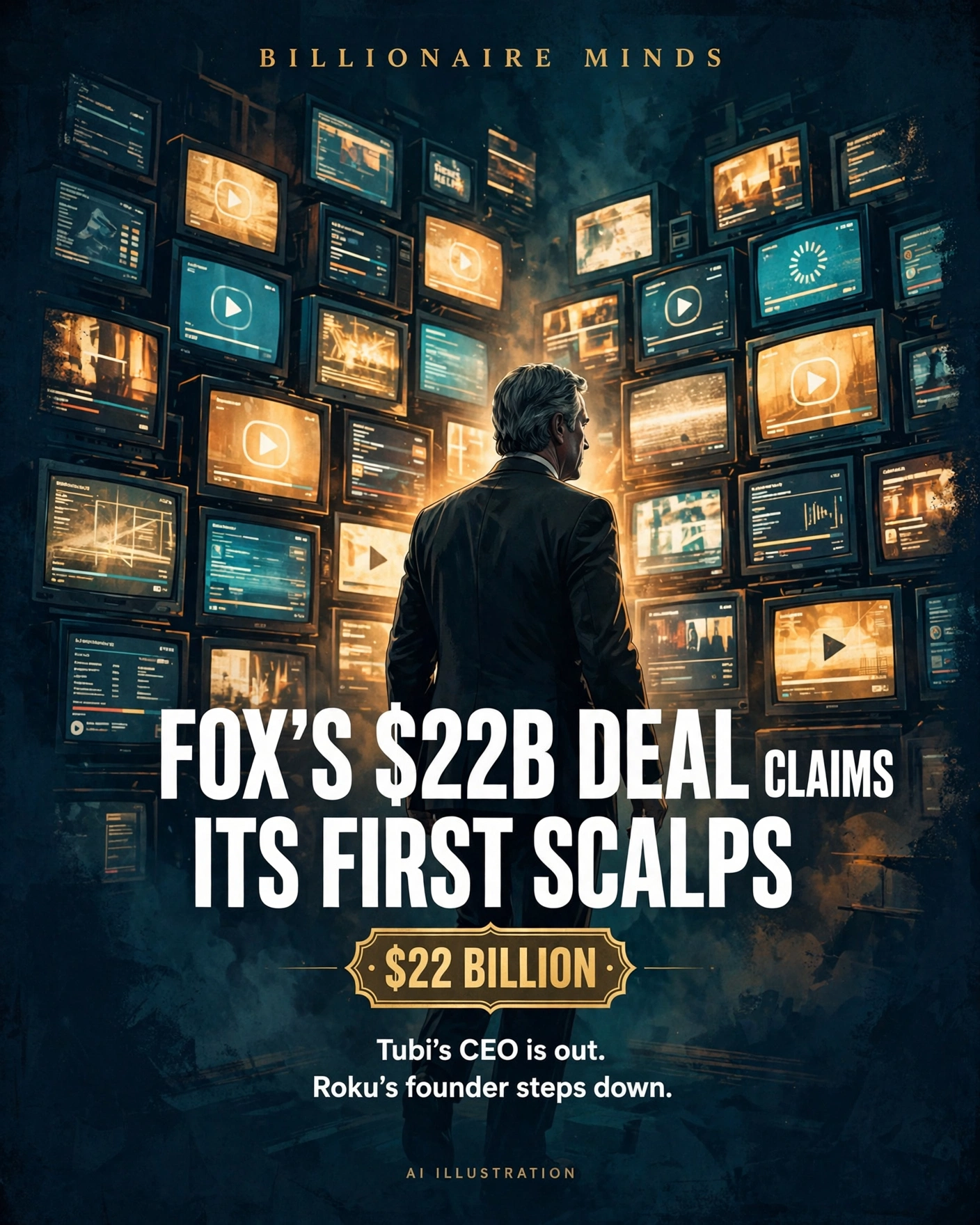
Fox's $22 Billion Roku Deal Claims Its First Scalps — Tubi's CEO Is Out and Roku's Founder Steps Down

Fox's $22 billion Roku deal claims its first scalps — Tubi CEO Anjali Sud is out and Roku founder Anthony Wood steps down

Fox Corporation closed its $22 billion acquisition of Roku on November 6 — and the leadership shakeup started the very same day. Tubi chief executive Anjali Sud is leaving, and Roku founder Anthony Wood is stepping down as chief executive of the platform he built more than two decades ago.

Tubi's chief is out

Sud took the helm of the free streaming service in 2023 after a six-year run as chief executive of Vimeo. She is leaving to pursue a role outside the company and will stay on temporarily to help with the transition. In a joint memo to staff, Wood and Paul Cheesbrough said Sud "and her team have helped take Tubi from a challenger brand to a free streaming force" and thanked her for her "extraordinary contributions." Pete Distad, chief executive of Fox's direct-to-consumer business and a former Apple executive who helped launch Fox One, will now oversee Tubi along with Roku's Frndly TV. Mike Bidgoli, an early Tubi investor who previously led its product and engineering teams, has been promoted to president of Tubi.

Roku's founder hands over the remote

Wood is not leaving the building entirely. He joins Fox's board of directors and will co-chair the newly formed Fox Digital Platforms division alongside Cheesbrough, who becomes co-chair and chief executive of the unit — which houses Roku, Tubi, Fox One and Red Seat Ventures. Mustafa Ozgen, who previously led Roku's device, product and technology organization, succeeds Wood as chief executive of Roku and will also oversee the Roku Channel, the AdRise advertising technology business and subscriptions. Other departures include Charlie Collier, president of Roku Media since 2022 and a former chief executive of Fox Entertainment; Chris Handman, Roku's general counsel; and Robyn Peterson, an executive at AdRise.

Under the merger terms, Roku stockholders received $95.30 in cash and 0.9799 shares of Fox Class A common stock per share. Former Roku shareholders own roughly 26% of the combined company, while existing Fox shareholders hold about 74%. Roku shares have ceased trading on the Nasdaq, and Fox expects approximately $400 million in annual cost savings within two years.

"The closing advances the long-term strategy of Fox," said Lachlan Murdoch, Fox's executive chair and chief executive, adding that the top priority is to "continue to relentlessly serve audiences and partners, while reinforcing the openness and choice that is the essence of the Roku platform." The combination gives Fox control of two of the largest free streaming services — Tubi and the Roku Channel — plus a major connected-TV platform that reaches more than 100 million households. For 95-year-old Rupert Murdoch, it is the biggest purchase in Fox's history — and the clearest sign yet that the family is betting its future on streaming.

Source: Cord Cutters News, November 7, 2026, reporting The Wrap. This is a fan/commentary summary of reported news; all figures are the sources' estimates.

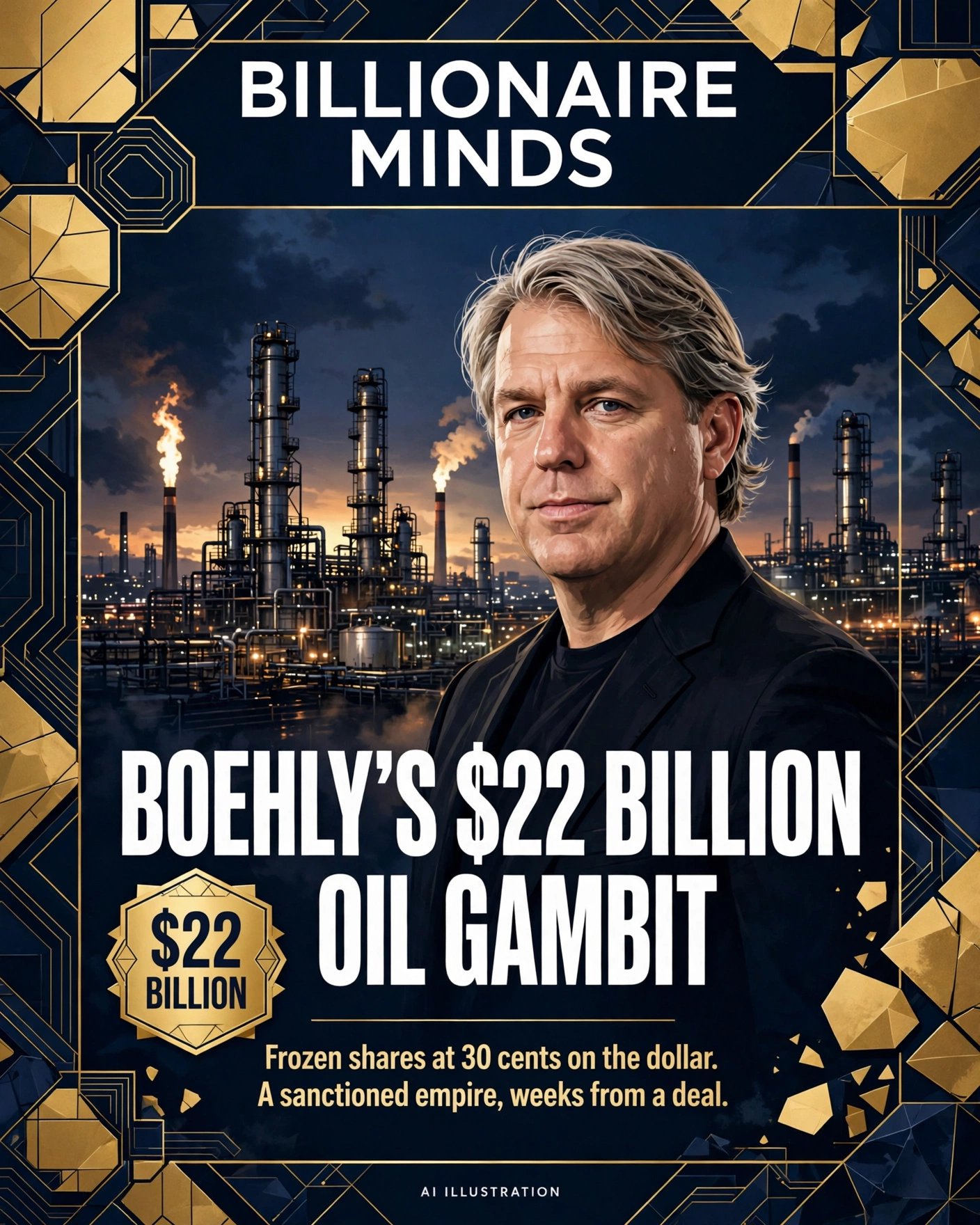
Billionaire Todd Boehly Is Buying a $22 Billion Oil Empire — for 30 Cents on the Dollar

Billionaire Todd Boehly before an oil refinery skyline — his consortium is closing in on Lukoil's $22 billion overseas empire, buying frozen shares at 30 cents on the dollar

A US billionaire who co-owns the Los Angeles Dodgers is closing in on one of the strangest deals in energy history: buying a sanctioned Russian oil giant's entire overseas empire — without paying cash, and at about 30 cents on the dollar.

The $22 billion swap

A consortium led by Todd Boehly is preparing a securities swap to acquire the international assets of Lukoil, Russia's second-largest oil producer, according to a Reuters exclusive published November 3. Four people close to the sale said a deal could be reached within weeks.

The portfolio was initially valued at about $22 billion when the sale process began more than a year ago: oilfields, refineries and petrol stations spanning Europe, the Middle East and Africa, including oil and gas interests in five African countries — Egypt, Cameroon, Ghana, Nigeria and the Republic of Congo. Its value has since slipped as sanctions disrupted some operations.

The mechanism is the remarkable part. A bank acting for the consortium has already bought billions of dollars of frozen Lukoil securities — from around 10 US and British investment funds and US depositary banks, among them Capital Group — at roughly 30 cents on the dollar of their face value. Those impaired securities would then be swapped for Lukoil's operating assets abroad.

Who is in the consortium — and the escrow twist

Alongside Boehly, the group brings in Emirati investors International Holding Company and Al Hail Holding, the Syrian-Qatari Al-Khayat brothers, and the US government's own International Development Finance Corporation, which is backing the bid.

The consortium moved further than earlier suitors by promising to park the frozen securities in an escrow account rather than handing them straight to Lukoil. The US Treasury rejected a proposal from American bank Xtellus Partners in December 2025; the escrow structure is what got this bid past that hurdle.

More than a dozen suitors chased the assets, among them oil majors Exxon Mobil and Chevron, private equity firm Carlyle — which dropped out in October 2026 — and Bernd Bergmair, the former owner of Pornhub.

The clock is ticking

The deal is far from done. The Treasury's current licence permits negotiations, due diligence and contingent contracts, but it does not authorise the actual transfer of Lukoil's assets — and it expires on November 21, 2026. The consortium needs separate Treasury approval before taking control of anything.

Boehly, whose fortune Forbes estimates at about $9.3 billion, sold his interest in English football club Chelsea in September 2026. If the swap closes, the Dodgers and Lakers co-owner will have turned frozen paper bought at a 70% discount into a working oil empire spanning three continents — one of the boldest distressed-asset plays of the decade.

Source: Reuters, November 3, 2026, via Euromaidan Press, Mazech and Azat TV. This is a fan/commentary summary of reported news; all figures are the sources' estimates. Portrait: AI illustration.

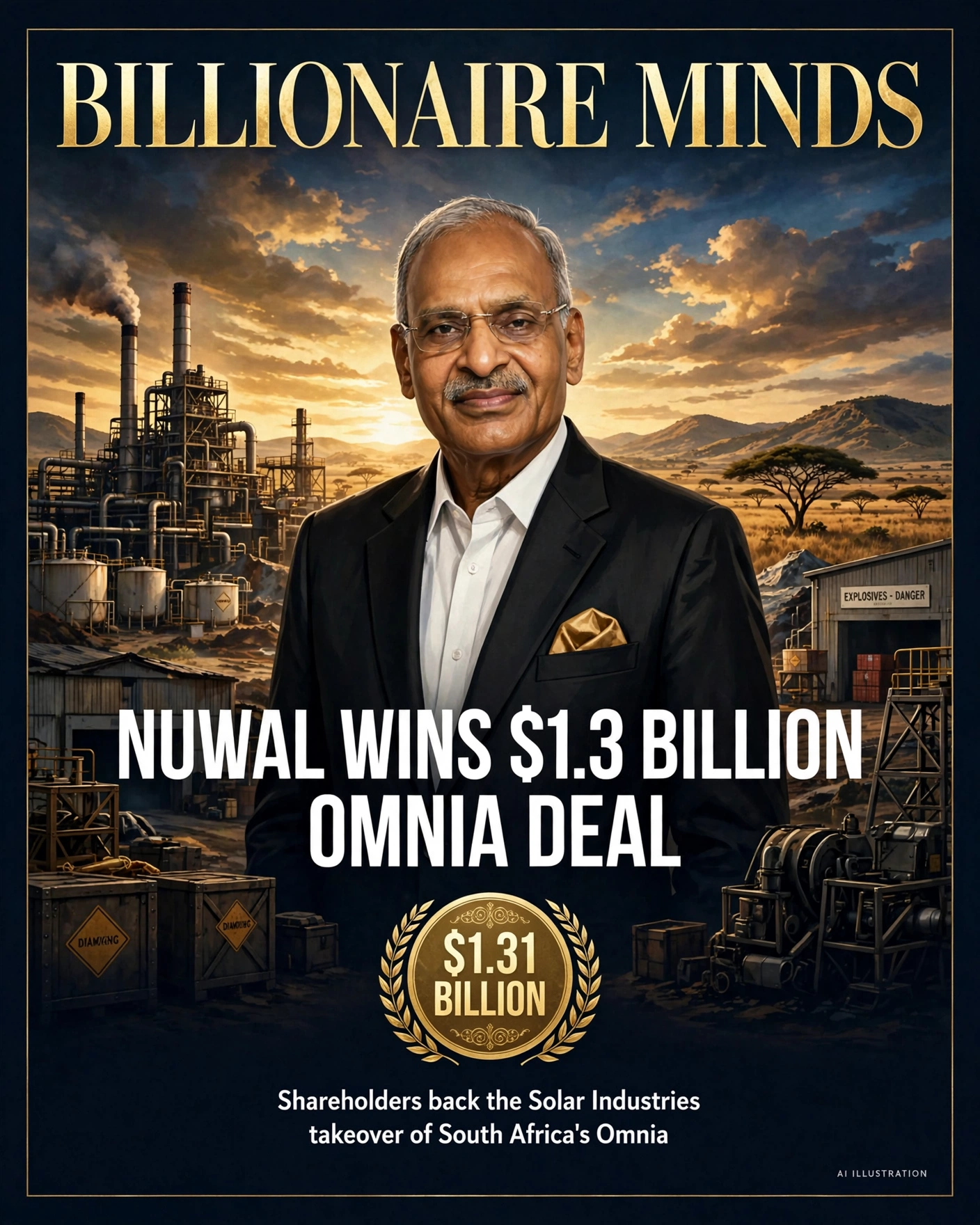
Billionaire Satyanarayan Nuwal Wins $1.3 Billion Omnia Buyout Vote — His Explosives Empire Goes Global

Indian billionaire Satyanarayan Nuwal in front of an industrial explosives plant at sunset — his Solar Industries just won backing for a $1.31 billion takeover of South Africa's Omnia

Image: AI illustration.
Indian billionaire Satyanarayan Nuwal just cleared the biggest hurdle in his boldest deal yet. Shareholders of South Africa's Omnia Holdings have backed a R21.8 billion ($1.31 billion) cash takeover by Nuwal's Solar Industries India, putting the 46-year-old explosives and fertilizer maker on course to leave the Johannesburg Stock Exchange. The vote, held online on Thursday, November 5, passed comfortably — holders of about 31.8 million shares, or 19.6% of the company, had already indicated their support before the meeting.

A premium price for a 46-year-old listing

Under the scheme of arrangement, Solar will pay R134.50 ($8.10) in cash for each of Omnia's roughly 162 million shares through its South African unit, Solar SA Investments, backed by an irrevocable bank guarantee. The price is 14.3% above Omnia's closing price on September 11, the last trading day before Solar made its firm offer, and about 71% above where the stock ended 2025. Once the scheme takes effect, Omnia will be delisted from the JSE and its secondary listing on the A2X exchange will end. "Omnia is a high-quality business we have long admired," said Manish Nuwal, Solar's managing director and chief executive and the founder's son, when the offer was announced in September. Omnia CEO Seelan Gobalsamy said the deal "accelerates the execution of our growth strategy."

From one explosives plant to a $21 billion empire

Nuwal founded Solar in 1995 with a single explosives plant. The Nagpur-based company has grown into India's largest maker and exporter of industrial explosives, and also makes ammunition and other defense products. It was worth about ₹2.02 trillion ($21.2 billion) in September, after its shares rose about 80% in a year, and the Nuwal family controls the company — the source of most of his fortune. Solar already has a footprint in Africa, with operations in Ghana, Nigeria, Tanzania and Zambia, and owns Problast, a South African mining explosives company. Omnia, which first listed on the JSE in 1980, would give it a much larger presence on the continent and beyond: it supplies explosives and blasting services to miners through its BME business and sells fertilizer to farmers, with revenue up 6% to R24 billion ($1.45 billion) in its most recent financial year and operating profit up 28%.

What still has to happen

The shareholder vote was only one of several hurdles. The deal still needs competition and regulatory approval in South Africa and from authorities covering the COMESA, East African Community and ECOWAS trade blocs, plus Botswana, Namibia, Mali and Nigeria. Four companies with material contracts with Omnia must also consent to the change of control, and the Takeover Regulation Panel must issue a compliance certificate. All conditions have to be met by July 31, 2027. If they are, one of Africa's oldest listed industrial names disappears from the market — and an Indian billionaire's explosives empire goes truly global.

Source: Billionaires.Africa, November 7, 2026. This is a fan/commentary summary of reported news; all figures are the source's estimates.

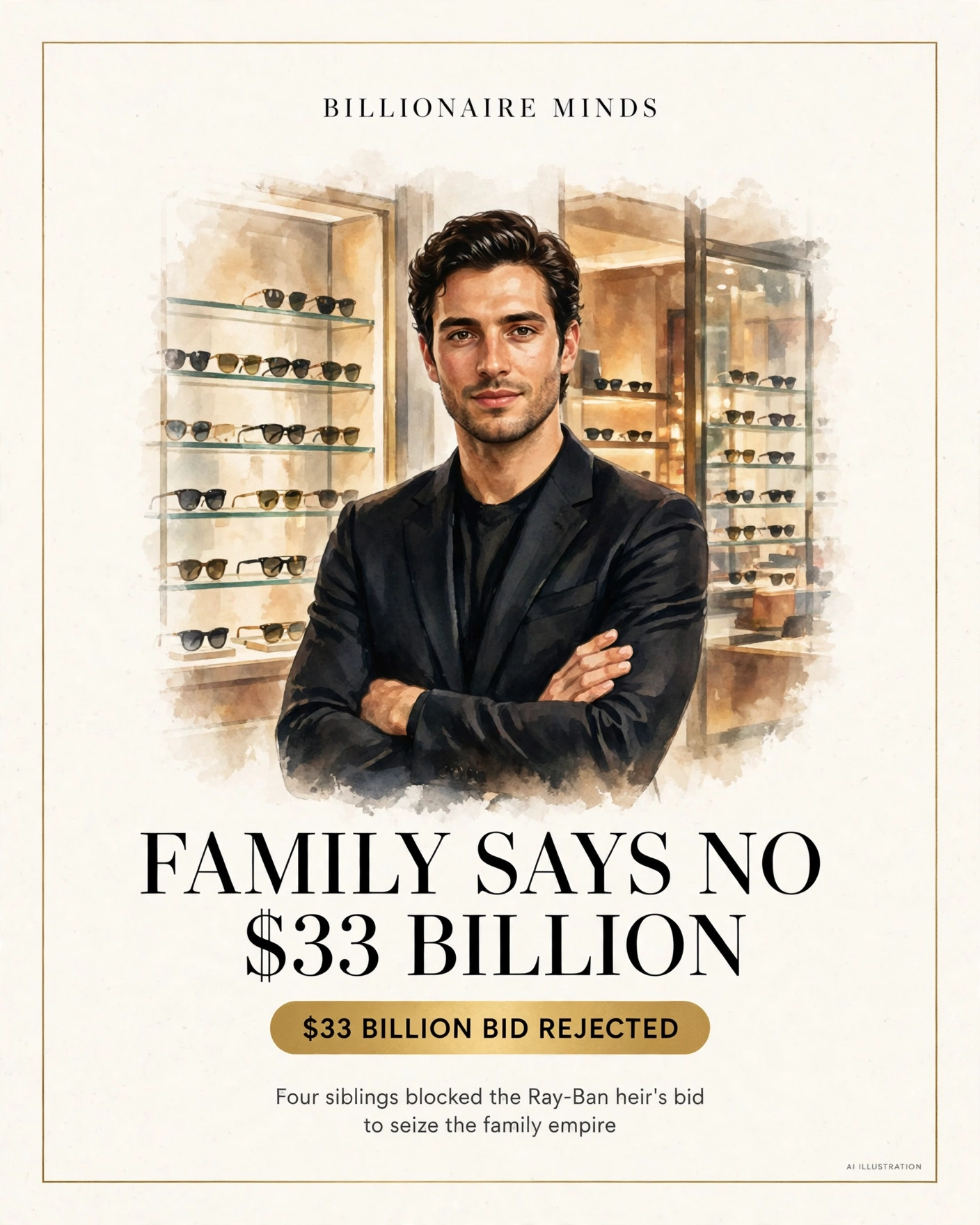
Ray-Ban Heir's $33 Billion Bid to Seize the Family Empire Just Got Rejected by His Own Siblings

Leonardo Maria Del Vecchio, the 31-year-old Ray-Ban heir, in front of a luxury eyewear boutique — his $33 billion bid to take over the family empire was rejected by his own siblings

Image: AI illustration.

It is the closest thing to real-life Succession — and the family just voted it down. Leonardo Maria Del Vecchio, the 31-year-old heir to the Ray-Ban fortune, offered about €3.7 billion (roughly $4.1 billion) to each of his seven co-heirs to buy them out of Delfin, the Luxembourg holding company behind EssilorLuxottica. The total price tag: about €29.6 billion, or $33.2 billion. Citigroup had signalled it was highly confident it could arrange up to €22 billion ($24.6 billion) of financing. He wanted to end up with between 62.5% and 87.5% of the company — and he invited the family to meet him by November 7 to hear the plan.

Four siblings said no — and that ends it

Four of his siblings — Rocco Basilico, Paola, Luca and Clemente Del Vecchio — answered first, in a joint letter saying they were "not interested in considering or discussing the proposal." Together the four hold half of Delfin, which leaves the offer with no path to the majority he was seeking. Three heirs — Zampillo, Claudio and Marisa Del Vecchio — did not sign the rejection letter. Delfin, chaired by EssilorLuxottica chief executive Francesco Milleri, has not commented.

The rival bid that started it all

Leonardo Maria's offer was itself a counter-move. Czech arms billionaire Michal Strnad, owner of Czechoslovak Group, offered about €30 billion ($33.6 billion) for all of Delfin on October 20 — on the condition that its bylaws be changed to drop the rule limiting ownership to Del Vecchio's heirs. The same four siblings had already turned that approach down. The founder, Leonardo Del Vecchio, died in 2022 and left his fortune split equally among eight heirs, each holding 12.5% of Delfin — a structure that has left the family deadlocked ever since.

What is at stake

Through Delfin, the family controls 32.4% of EssilorLuxottica, the maker of Ray-Ban and Oakley sunglasses, plus stakes in banks including UniCredit and Monte dei Paschi di Siena. The firm's publicly disclosed stakes are valued at roughly $50 billion, according to Bloomberg. Leonardo Maria asked for 30 days for the heirs to accept and 60 days of exclusive talks to draft the agreements. With half the family now on record against it, the $33 billion family takeover looks dead — unless the three heirs who stayed silent decide to break the tie.

Source: Reuters, November 2, 2026; Bloomberg via The Edge Singapore, November 2, 2026; billionaires.africa, November 3, 2026. This is a fan/commentary summary of reported news; all figures are the sources' estimates.

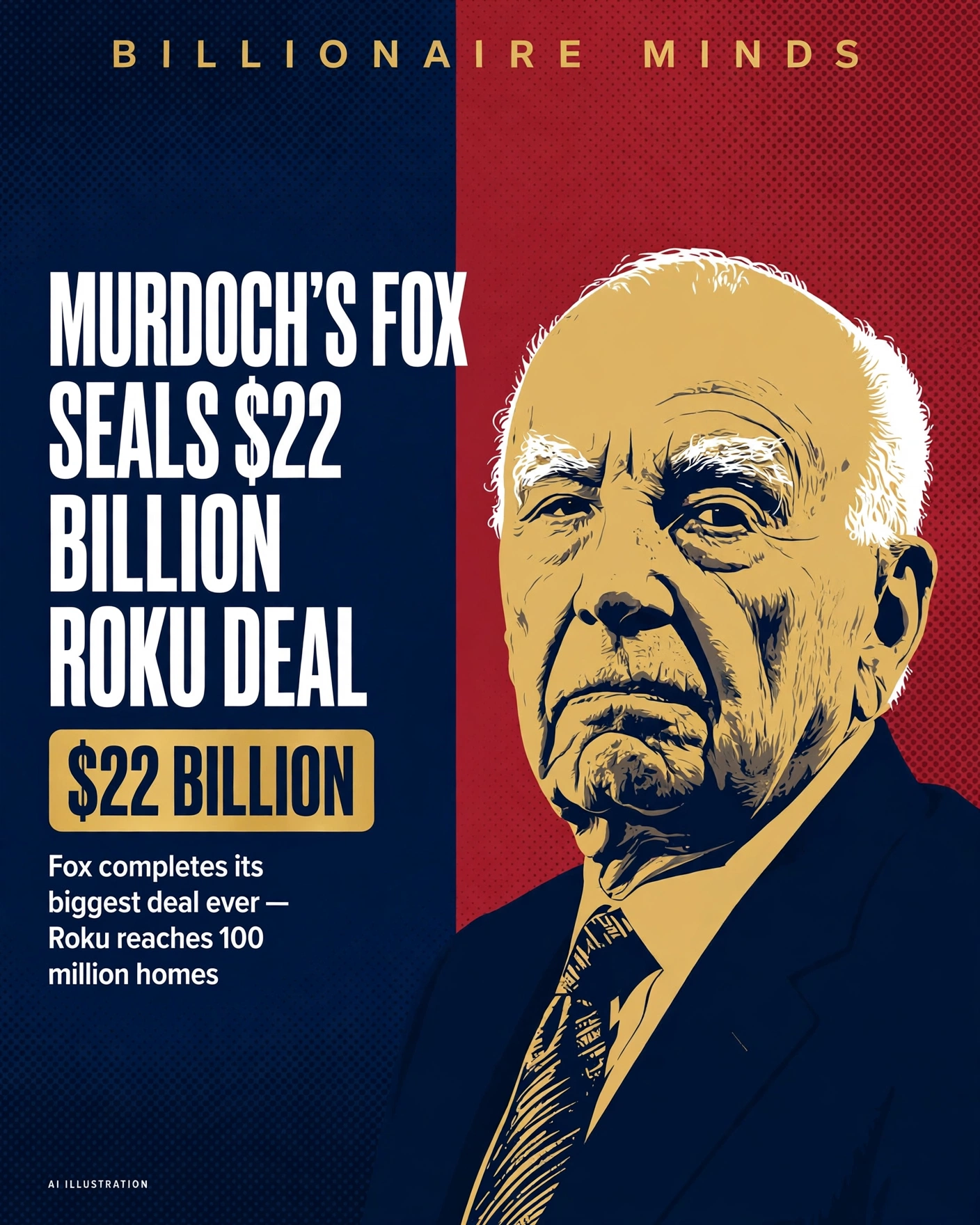
Rupert Murdoch's Fox Completes $22 Billion Roku Takeover — Its Biggest Deal Ever

Rupert Murdoch — Fox Corp. has completed its $22 billion takeover of Roku, its biggest deal ever

Rupert Murdoch's Fox Corp. has completed its $22 billion takeover of Roku, giving the family-controlled broadcaster one of the most widely used TV streaming platforms in the United States — and closing the deal months earlier than planned.

Fox said on Friday, November 6, that the acquisition had closed. The company announced the deal on June 15 and at the time said it expected to complete it in the first half of 2027. It is the largest purchase in Fox's history.

What Roku Shareholders Get

Under the terms agreed in June, Roku shareholders receive $160 a share, made up of $96 in cash and about 0.97 of a Fox Class A share for each Roku share. The price was a 33.7% premium to Roku's closing price on the Thursday before reports emerged that the company was exploring a sale.

Fox is paying about $14.6 billion in cash, with the rest in stock, and took on about $8.3 billion of new debt to fund the purchase. Fox shareholders own about 73% of the combined company, and former Roku shareholders about 27%.

Roku's Founder Joins the Fox Board

Roku founder Anthony Wood, who started the company more than two decades ago and ran it as chairman and chief executive, joins Fox's board. He will also co-chair a new division called FOX Digital Platforms, which brings together Roku, the free streaming service Tubi, the FOX One subscription service and the digital media company Red Seat Ventures. Paul Cheesbrough, a longtime Fox technology executive, becomes the division's co-chair and chief executive.

"We started Roku more than two decades ago to give people a better way to watch TV," Wood said. Lachlan Murdoch, Rupert's eldest son and Fox's executive chair and chief executive, said the closing "advances the long-term strategy of FOX" and that the combined company's top priority is to "continue to relentlessly serve audiences and partners," while "reinforcing the openness and choice that is the essence of the Roku platform."

Two of America's Biggest Free Streamers Under One Roof

Roku's operating system and devices reach more than 100 million households, and the company also owns the Roku Channel, a free, ad-supported streaming service. Combined with Tubi, Fox now controls two of the largest free streaming services in the U.S., alongside its broadcast network, Fox News and Fox Sports.

Fox expects about $400 million a year in cost savings within two years of closing, along with extra revenue from selling advertising across Roku's platform. The deal marks a return to the entertainment business for the Murdochs: in 2019 the family sold most of 21st Century Fox, including its film studio and cable entertainment channels, to Walt Disney Co. for $71 billion, keeping the broadcast network, news and sports assets that became Fox Corp.

The deal closed as Democrats prepare to take control of Congress in January after sweeping Tuesday's midterm elections. Several Democrats have said they plan to examine media and technology mergers approved under President Donald Trump's administration.

Rupert Murdoch, 95, built his empire from a single newspaper in Adelaide, Australia, into a group that includes Fox Corp. and News Corp., owner of the Wall Street Journal, the New York Post and The Times of London. He became a U.S. citizen in 1985 and is chairman emeritus of both companies.

Source: Billionaires.Africa (Nov 6, 2026). Portrait: AI illustration.